

![MultipartFile resource [file_data]](/assets/img/articles/юни-заглавна-1.jpg)
In June, agrometeorological conditions will be determined by unstable weather with precipitation, around and above the monthly norm, which will maintain good and very good moisture reserves in the 50cm and 100cm soil layer – above 75-80% of FC. Lower levels of soil moisture reserves are predicted in places in the extreme northeastern and southwestern regions (Razgrad, Ruse, Silistra, Sandanski), where May's precipitation was below the monthly norm.
At the beginning of June, the development of agricultural crops will proceed at an accelerated pace, under above-normal thermal conditions.
During most days of the second ten-day period, agrometeorological conditions will be determined by temperatures close to the usual for the period.
During the third ten-day period of June, above-normal thermal conditions are predicted, with maximum temperatures forecast up to 35-36oC.
In fruit nurseries
Seedbeds are fertilized with 6-8 kg of ammonium nitrate or the same amount of another nitrogen fertilizer per decare and hoed. If necessary, irrigate. Mother plantations are fertilized with 10-15 kg of ammonium nitrate or the same amount of another nitrogen fertilizer per decare and earthed up. If necessary, they are irrigated before earthing up. In the nurseries, disbudding is carried out to facilitate the normal growth of the grafts. Rootstocks and nurseries are prepared for budding.
In fruit plantations
Care is taken to ensure that the ties on the branches of re-grafted fruit trees and wild forms do not dig in, and they should be loosened in a timely manner if necessary. Competing shoots that have grown from the mother plant should be removed promptly.
Newly planted trees are regularly hoed. If necessary, water them.
After the second ten-day period, young fruit plantations are fertilized with 15-20 kg of ammonium nitrate per decare, and shallow soil cultivation is carried out. When forming a palmette, the skeletal branches are bent when they reach a total length of 2 – 2.5 m for the first tier, 1.5-2 m for the second, and 1 m for the third. For slow-growing trees, they are placed at an angle of 45-50o, and for vigorous trees – at 45-45o to the horizontal. When a tier has skeletal branches of different lengths, only the strong one is bent, while the weak one is left to grow and is bent later.
Mechanical thinning of peach fruits continues.
In areas with guaranteed irrigation, crops for green manuring are sown.
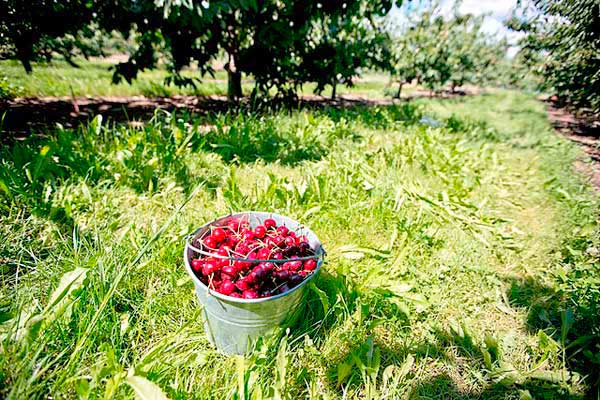
The mass harvesting of cherries and sour cherries begins.
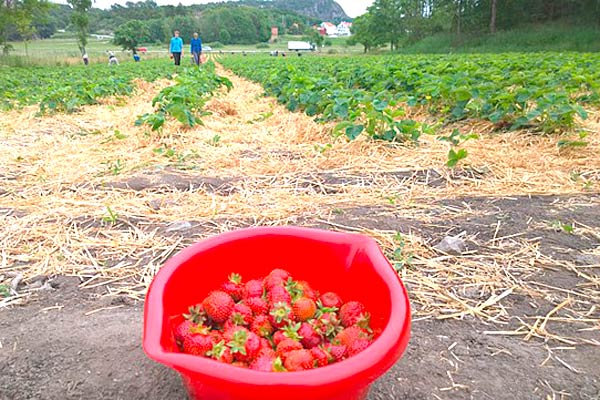
In strawberry plantations
The last strawberry seedlings, stored in the refrigerator, are planted. Weeding of young and newly planted crops continues. If necessary, irrigate. Harvesting continues. Do not harvest during the hot hours of the day or when dew has formed. For fresh consumption, they are harvested together with the calyx.
In warmer growing locations, after the last fruits are harvested, the straw is immediately collected and removed. The plantations are fertilized with 8-10 kg of ammonium nitrate or the same amount of another nitrogen fertilizer per decare, and the first post-harvest cultivation is carried out. If irrigation is necessary, it is performed before fertilization.
In raspberry plantations
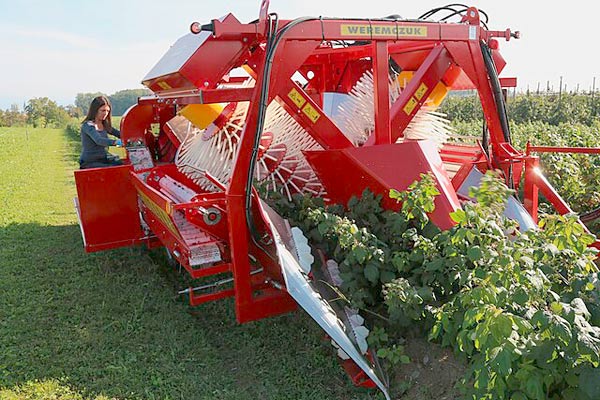
Regular soil cultivation is carried out. If necessary, water. In fruiting plantations, the cleaning of rows from very weak and excess suckers continues. The wire structure is kept strong. In some areas, around mid-June, the harvesting of fruits from early varieties begins. When ripening begins, bee colonies are moved to other plantations, but at a distance of no less than 5 km.
In blackcurrant plantations
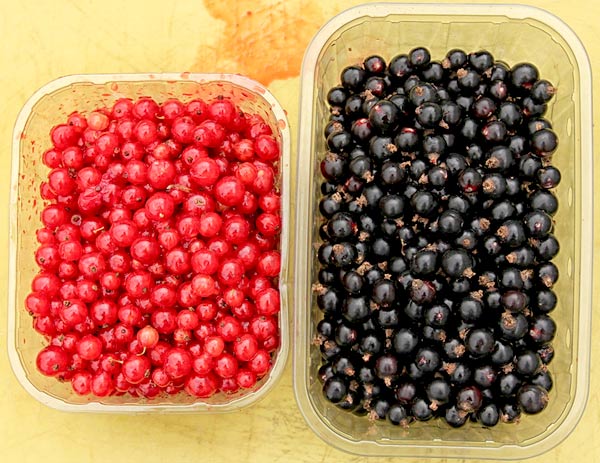
The soil in the rooting beds is cultivated 2-3 times depending on irrigation, rainfall, and the presence of weeds. Regular cultivation is carried out on both young and fruiting plantations. Around the middle of the month, in some warmer growing locations, fruit harvesting begins.
In plantations with other crops
The budding of lemon rootstocks continues. Care for the outdoor rooting of cuttings from pomegranate, fig, and sea buckthorn continues, with the nursery being regularly hoed and watered. Necessary treatments against weeds are carried out. Towards the end of the month, last year's uncultivated rootstocks are budded with persimmon buds. The tying of actinidia vines to auxiliary stakes continues. Fertilization is carried out with the last 1/3 of the annual nitrogen norm determined for actinidia. Lateral shoots on the main stem of actinidia are removed to stimulate its development and overall shaping. It is shaped like the letter T.