

![MultipartFile resource [file_data]](/assets/img/articles/негован-заглавна-1.jpg)
Floriculture - past and future, this was the theme of the seminar, organized jointly by the Institute of Ornamental and Medicinal Plants IOMP-Sofia and the Federation of Independent Trade Unions in Agriculture, part of the trade union's work calendar in 2024 - the European Year of Skills.
On April 24, a team from the Institute of Ornamental and Medicinal Plants-Sofia at the Agricultural Academy presented at a seminar before a professional audience some visions from their scientific project for profitable, lucrative, and competitive floriculture.
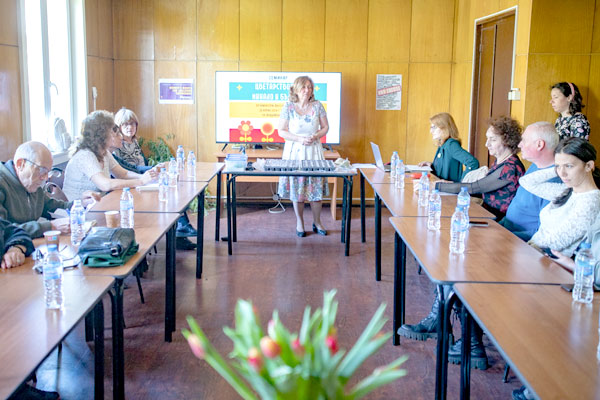
The Institute of Ornamental and Medicinal Plants (IOMP) in Negovan is the only specialized scientific unit of its kind in the Balkans with such a profile and scale. It possesses a wide-format gene pool and a rich collection of ornamental and medicinal plants, modern kits for in vitro propagation of flowers, innovative technologies for cultivation and yield management, and risk phytosanitary factors for mini carnations, lilies, gladioli, snake plant, gypsophila.
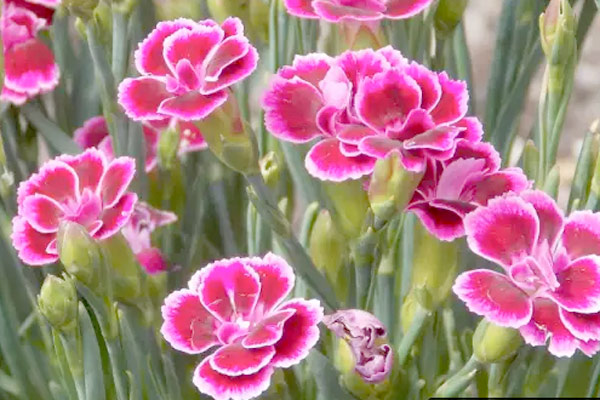
The institute's pride: the collection of mini carnations
Chief exp. Ralitsa Gavrilova took an extensive journey around the world for the development of floriculture from ancient times to the present day. The conclusion: Today, floriculture is an industry with remarkably high added value, a tool for conquering new markets. At the highest level, this business increases its intensity, reactivity, and productivity in the Far East - China and Japan. In Europe, there is already a new player in the market – Polish floriculture successfully competes with the global industry leader, the Netherlands. We are witnessing a social phenomenon: flowers continue to conquer the world at a high pace - with beauty, love, and emotional charge!
The father of Bulgarian floricultural scientific and applied science is Prof. Stefan Georgiev, who lectured on the topic at Sofia University in 1896. His work was continued by the distinguished Bulgarian woman and scientist Gena Papazova. In 1960, active research began in Bulgaria on floriculture - introduction, selection, technologies, regulatory legislation. In 1964, the State Economic Association "Bulgarflower" was created with 43 farms across the country. In 1986, the Complex Experimental Station in Negovan evolved into the Institute of Floriculture.
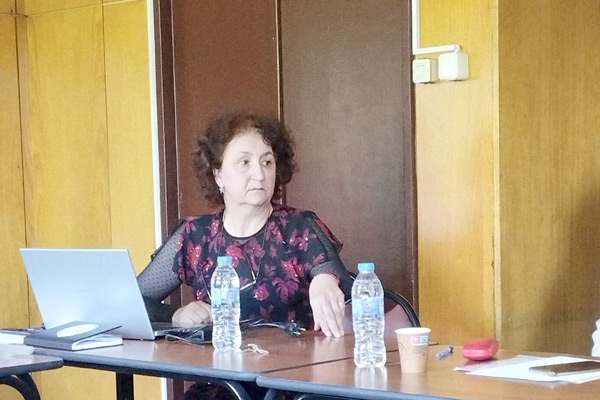
Assoc. Prof. Stela Dimkova
Assoc. Prof. Stela Dimkova informed the seminar attendees about the achievements of our breeders, recipients of national and international awards. These awards are a marker of a deserved place in floricultural science.
Prof. Bistra Atanasova created a representative varietal collection of mini carnations that combine all advantages - biosecurity, intensity, pest resistance, high yield, aroma. Bulgarian and foreign markets are well familiar with the varieties Krasina, Regina, Ira, Naslada, Yanita, Rositsa, Niki, Bilyana, Rusalka, Feya, Emaz, and Sofia.
Assoc. Prof. Diana Nencheva is another big name at IOMP. Her selection of chrysanthemums Milka, Zheni, Zhoro, and Lidiya are standards, an indispensable factor in the production of this wonderful flower.
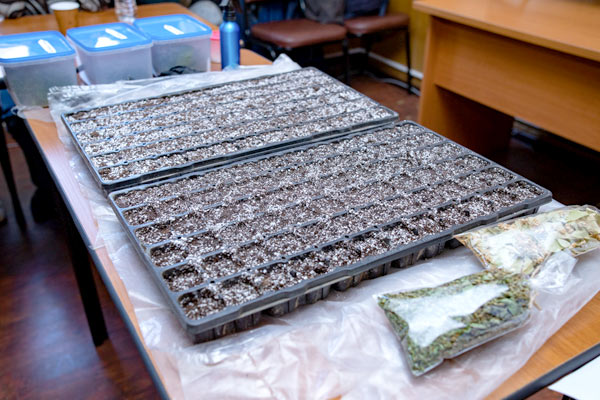
Part of the event was dedicated to a current informational talk and practical skills. Assistants Kiril Krastev and Yana Mitkova introduced the attendees to annual and perennial flowers, as well as methods for rooting geranium, petunia, and rose geranium.
Even today, at the institute, under conditions of an underfunded budget and a host of other deficits, the creation of new generations of lily, gladiolus, dahlia, and peony continues.
Despite traditional Bulgarian skepticism, we remain hopeful that the state and the political class will realize how with little effort, including modest financial aid and a few regulatory changes, our floriculture could quickly and successfully be transformed into a profitable business.
Photos: Pazari Sever EAD and Plant Protection