

![MultipartFile resource [file_data]](/assets/img/articles/родопски-заглавна-1.jpg)
Scientists from the Bulgarian Center of Plant Systems Biology and Biotechnology for Excellence – CPSBB, together with researchers from the University of Potsdam and the Max Planck Institute of Molecular Plant Physiology in Germany, have successfully sequenced the genome of Haberlea rhodopensis – a species endemic to Bulgaria, a “resurrection plant” also known as the Orpheus flower or Rhodopi silivryak.
The characteristics of the genome of the Rhodopi silivryak are described in an open-access scientific article “The genome of Haberlea rhodopensis provides insights into the mechanisms for tolerance to multiple extreme environments” published in the specialized journal “Cellular and Molecular Plant Sciences”.
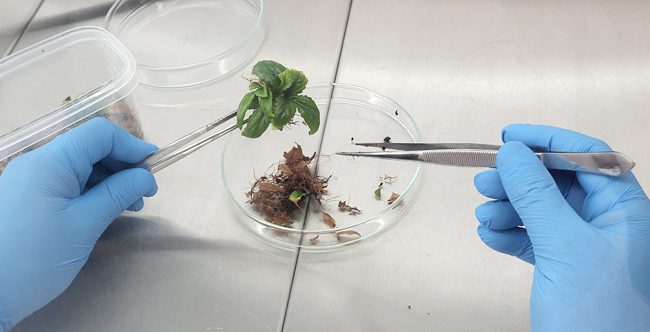
Laboratory work with the plant Haberlea rhodopensis
The results will support scientists worldwide working in the field of plant biology, especially those dealing with issues of abiotic stress in plants. It is noteworthy that nearly 24% of the identified 44,306 genes in the plant are unique and specific only to it, with no similar genes found in any other studied species. This makes the genome of the Rhodopi silivryak an extremely valuable resource for future research.
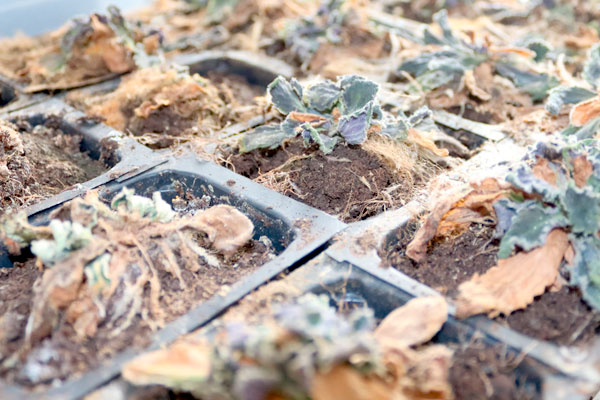
Plants dried out due to drought
The Orpheus flower demonstrates enormous potential for future discoveries benefiting agriculture, medicine, pharmacy, and the cosmetics industry. Sequencing its genome will facilitate researchers in the search for genes to improve the tolerance of economically important crops to adverse environmental conditions, as well as for natural molecules that can benefit human health.
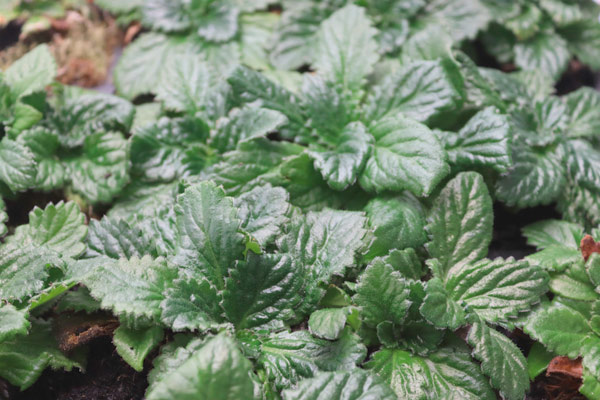
Plants recovered after drought
A major focus of scientific research at CPSBB is the high drought tolerance of Haberlea rhodopensis – even after extreme drought and complete desiccation, upon subsequent irrigation the plant “resurrects” and fully recovers. Haberlea rhodopensis also exhibits tolerance to other extreme conditions such as low temperatures and prolonged darkness. Scientists at CPSBB are investigating the molecular mechanisms by which the plant adapts to such types of abiotic stress. The main goal is for the research results to be applicable to economically important crops in order to increase their tolerance to adverse conditions.