

![MultipartFile resource [file_data]](/assets/img/articles/японски-бръмбар.jpg)
At the beginning of March, the Council of the EU and the European Parliament reached an agreement on the revision of the Plant Health Law. The aim is to simplify the provisions and to establish an EU task force to combat emerging pests.
“The Plant Health Law contains provisions to protect the EU against the introduction and spread of new plant pests, the so‑called “quarantine pests”. In addition, pests that are already present in the EU and do not yet have quarantine status must also be combated,” said in his press statement the Belgian Deputy Prime Minister and Minister of Agriculture David Clarinval, who chairs the Agriculture Council.
MEPs agreed to establish an emergency team to help EU countries prevent the emergence and spread of new pests. In doing so, they followed a proposal by the Agriculture Committee of the European Parliament.
The team will be composed of experts appointed by the Commission on the basis of proposals from the Member States. They will come from various expert fields related to plant health and will assist the Member States in combating quarantine species.
The task force will provide assistance to third countries bordering the EU, at the request of one or more Member States, in the event of pest outbreaks that may affect the entire Union.
The EU has updated its provisions in the Plant Health Law several times since 2000. After farmers’ groups and Members of the European Parliament called for action, the Commission presented a proposal last October to simplify the rules and increase efficiency.
These pests are spreading increasingly due to global trade and climate change and can have significant social, environmental and economic impacts.
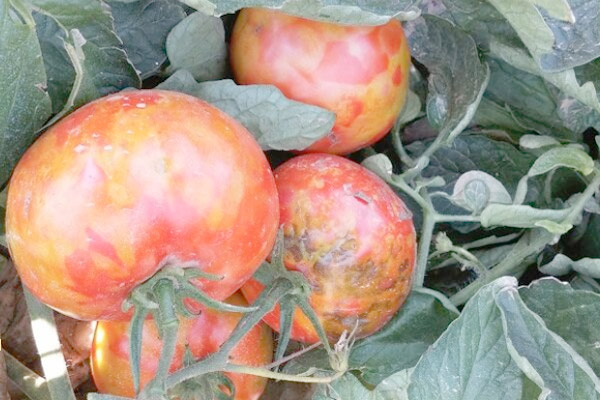
Tomato brown rugose fruit virus (ToBRFV) is highly virulent and successfully overcomes the resistance genes to the tobamoviruses known so far – TMV and ToMV. Yield losses in commercial tomato varieties and hybrids range from 30 to 70%.
The most important points of the agreement
The revised version of the Plant Health Law aims to strengthen procedures for high‑risk plants, simplify reporting requirements and expand digitalisation.
The agreement provides for better use of the electronic system for submission of declarations and reports by the Union countries. It is envisaged that, before a plant passport required for trade in plants within the EU is issued, the movement of the respective plant, plant product or other object shall be accompanied by an electronic phytosanitary certificate contained in the system, or by a certified copy of the original phytosanitary certificate.
The Council and the Parliament also agreed to extend the duration of the multiannual risk assessment programmes, which ensure the timely detection of dangerous pests every five to ten years, and to review and update the programmes on the basis of phytosanitary requirements. This is intended to reduce bureaucracy and the administrative burden for the competent authorities and companies.
Header photo: Japanese beetle P. japonica
P. japonica originates from Japan. It attacks more than 700 plant species. Adults attack leaves and fruits. The species can cause serious damage to fruit trees, vegetable crops, ornamental herbaceous plants, shrubs and vines. The larvae feed on the roots of host plants. P. japonica develops one generation per year, and in cooler regions development lasts 2 years. In the territory of the EU, P. japonica occurs in the Azores (Portugal), Lombardy and Piedmont (Italy), where it is under official control. P. japonica is a quarantine pest for Europe.
The hosts are widely distributed in the EU, and the climatic conditions in Central and Southern Europe are suitable for the development of this pest. At present, there is no evidence that P. japonica has been detected in Bulgaria, reports the Risk Assessment Centre on Food Chain. In the territory of Bulgaria, P. japonica can develop 1 generation per year, with the exception of the mountainous regions and the Sofia valley, where 1 generation may develop over 2 years. In the absence of control, negative impacts can be expected on a number of economically important plants, both for Europe and for Bulgaria.
P. japonica is polyphagous. Adult individuals can be found on more than 300 species in 79 families. Hosts include hundreds of ornamental plants, fruit trees, cultivated crops and tree species. It also attacks crops such as strawberry, blackberry and grapevine, asparagus, soybean and maize. It is known that the larvae feed on the roots of grasses such as fescue (Festuca), meadow‑grass (Poa), ryegrass (Lolium) and pasture plants such as clover (Trifolium).
P. japonica is included in list A2 of pests recommended for regulation as quarantine pests for the EPPO region (EPPO, 2021), which means that the pest is present in the region but is not widely distributed.