

![MultipartFile resource [file_data]](/assets/img/articles/заглавна-разсади-февруари-1.jpg)
Abstract
The rules, main stages and parameters in seedling production are described. Ensuring healthy and hardened seedlings with high-quality indicators is of primary importance in vegetable crop production. In order for the seedlings to be of high quality, they must be free from diseases and pests; have well-developed root and leaf mass; be resistant to adverse conditions during establishment; Good Agricultural Practices must be observed during their production, as well as some basic rules, which include: the presence of a specialized seedling unit; selection of suitable containers for production; selection of an appropriate variety; disinfected seeds with high sowing quality; well-prepared, disinfected and weed-free substrates, providing a favourable water-air and nutrient regime for the plants; observance of agrotechnical requirements related to sowing, pricking out and care during the growing period.
The production of healthy and hardened seedlings with high-quality indicators is of primary importance in the production of vegetable crops both in greenhouses and in the open field. Although there are no exact standards, seedlings are considered to be of high quality when they have the following characteristics: absence of diseases and pests; ability to survive in an unfavourable environment after transplanting; well-developed root system; well-developed leaf mass, without visual defects on the leaves such as chlorosis or necrosis. The use of such seedlings saves at least one treatment with plant protection products (PPP) after planting in a permanent place. Good Agricultural Practices (GAP) must be observed during their production. There are basic rules in seedling production and they include:
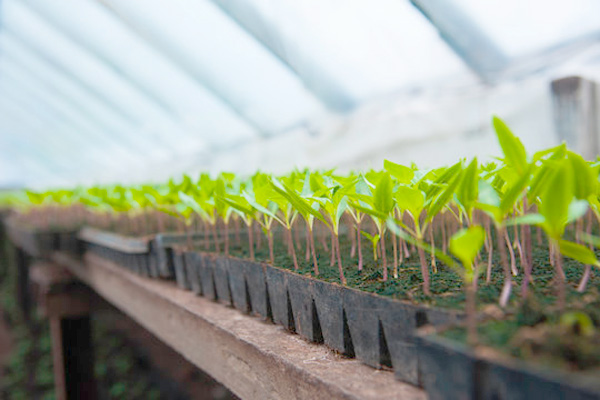
Seedling unit
GAP do not allow seedling production to be carried out in greenhouses together with the previous crop, because the requirements of the plants for environmental conditions are different. When young plants are grown in facilities together with old ones, there is a real risk of pathogens and pests passing from the old plants to the young seedlings. Therefore, production must be carried out in a specialized, isolated seedling unit. The location and orientation are crucial for the successful production of seedlings. It must be located so that it is evenly illuminated by the sun throughout the day. Young seedlings are usually very sensitive to abiotic and biotic stress. Therefore, the seedling unit must be well equipped to provide optimal growing conditions corresponding to the biological requirements of young plants – light, temperature, humidity and compliance with phytosanitary requirements.
A good seedling unit should have a germination compartment – a small separate room or chamber with controlled temperature and relative humidity. Air circulation is important to ensure uniform temperature and humidity throughout the chamber, thereby avoiding uneven germination and plant development.
Seedling rooms are preliminarily cleaned of plant residues from the previous vegetation, of weeds and volunteer plants. If seedlings are grown in trays, flats or pots that are placed directly on the soil, its surface must be well levelled. A polyethylene film is placed on it, which insulates the seedling containers from the soil and does not allow pathogens and pests to pass through.
A positive element is the presence of a structure for keeping the trays at a distance of ≥ 5 cm above soil level. When the roots of the seedlings grow out of the trays, their tips die. In this way, the plants are stimulated to form new roots in the trays. This process is known as air pruning of roots.

Containers for seedling production
Containers are usually used for the production of quality seedlings, which results in more uniform growth, excellent drainage and aeration of the substrate, improved root system structure, reduced stress and loss of root system during pricking out and transplanting, and more efficient use of water and nutrients. It is important to use suitable containers for the seedlings. They must correspond to the cell size, the root characteristics of the crop, the desired size of the seedlings, the available space in the seedling unit and the possibility of planting the seedlings in a permanent place in due time. Trays, cell flats or pots are the most common containers used for seedling production. They are available in a wide range of materials, cell sizes and cell shapes.
Variety selection is a very important element of seedling production. It must be consistent with the period and duration of crop cultivation, the cultivation technology and varietal characteristics – earliness, productivity, resistance to biotic and abiotic environmental factors, plant habit, product quality.
Seeds
They must be authentic, certified, disinfected; calibrated and with high sowing quality:
- germination above 96%
- varietal purity above 98%
- moisture 6 – 8%
The main factors determining the success of seedling production are an optimal nutrient medium, optimal thermal, light and irrigation regimes, and properly implemented prophylaxis against diseases and pests.
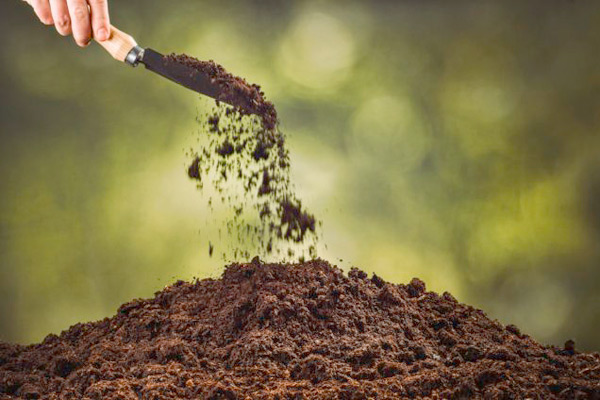
Soil mixture: It must be well prepared, disinfected and free from weed seeds. It should provide a favourable water-air and nutrient regime for the plants.
Soil mixtures must:
• provide easily accessible nutrients to maintain stable and healthy plant growth;
• retain appropriate moisture. Excess water must drain quickly and proper aeration must be ensured to stimulate the formation of a healthy root system and prevent the presence of fungal pathogens;
• provide a suitable medium for anchoring and development of the roots;
• not contain pathogens and weed seeds that can compromise crop development and growth;
• have a pH close to neutral (required for almost all vegetable
crops);
• not contain excessive salts that can cause water imbalance and compromise nutrient uptake.
Before organizing seedling production, it is necessary to develop sample mixtures that should be analysed for compliance with the requirements of the cultivated crops. This step is mandatory for large industrial seedling producers. GAP do not allow the use of mixtures containing soil for the purposes of industrial seedling production. The implementation of these practices will lead to a reduction in treatments with PPP.
When growing dense and pricked-out seedlings, agrotechnical requirements related to sowing, pricking out and care during the growing period must be observed in order to produce healthy and high-quality seedlings. The more important of these are:
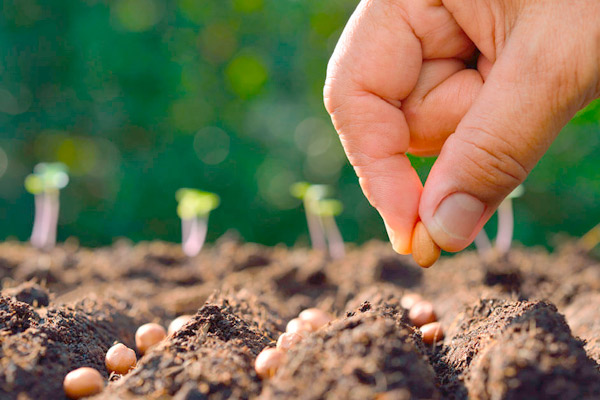
Sowing
- Sowing with a vacuum seeder is more efficient compared to hand sowing. This is a relatively expensive device, but it saves time and labour costs and pays off after several seasons. It is useful for sowing crops with round and pelleted seeds, but is less effective when sowing flat and elongated seeds such as those of cucumbers and tomatoes;
- Sowing is carried out in a substrate moistened with water to 70 – 75% of field capacity and compacted, in order to prevent the seeds from sinking;
- Shallow covering of seeds and drying of the mixture are not allowed, as this will lead to abnormal elongation of the sprouts. The resulting weak and deformed seedlings are predisposed to pest attack and require treatment with PPP;
- The requirements for the pricking-out mixture are the same as for dense seedlings.
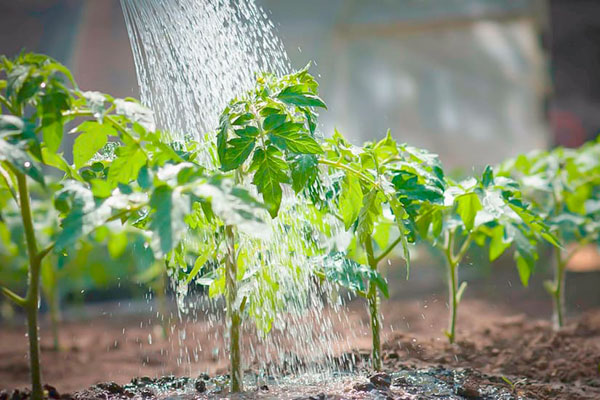
Irrigation
It is important to know when and how much to irrigate the plants to produce healthy seedlings. It is generally recommended to maintain moisture in the range of 50–60% of field capacity. Providing too much water or watering too frequently can lead to losses due to root rot caused by lack of oxygen in the soil environment. Inconsistent water supply during germination can result in poor germination. Insufficiently deep watering after the plants have germinated leads to restricted seedling growth because the plants do not have access to the necessary water and nutrients that support healthy development. Providing the exact amount of water at the appropriate frequency will result in uniform germination, emergence and seedling development. Depending on the way irrigation is carried out, it can be manual, with semi-automated and automated sprinkler systems.
For manual irrigation, equipment costs are minimal. Only a water source, hoses, shut-off valve, pipe and a water breaker or similar nozzle for watering with fine droplets are needed. Disadvantages of manual watering are the required time and labour, the likelihood of uneven operation of the installation and the likelihood of uneven water supply to all plants.
A well-designed sprinkler system can deliver water evenly to all plants with little required time or labour.
In semi-automated systems, the water supply and shut-off are provided by a mechanical controller. The grower must assess irrigation needs independently, depending on some factors – weather conditions, plant growth stage, size of the unit and substrate volume. This type of system can provide extremely uniform water delivery and saves labour. When climatic conditions and crop development stage change, growers must reprogram controllers or schedules to meet the new requirements and conditions.
In fully automated systems, there are environmental sensors linked to the weather forecast and a set of setpoints determined by the grower. Computer programs have been developed that are linked to the current environmental conditions and optimally meet the needs of the seedlings. Although much more expensive to set up, well-designed automated systems usually have a rapid payback, provided by better quality and higher yield.
Temperature
Each crop has an optimal temperature at which the germination percentage is highest and the number of days to seedling emergence is lowest. This is the target range that growers should aim for. The difference between day and night temperatures should not exceed 6 – 8оC in order not to provoke “false damping-off” of the seedlings. The substrate temperature should be 20–25оC. Warm-loving vegetables such as tomatoes, pepper, eggplant and cucumbers germinate best when air and soil temperatures are 24–26оC. Many seasonal crops germinate best in the range of 16–24оC.
Air circulation
Constant air circulation provides sufficient oxygen for plant respiration and protects them from attack by fungal pathogens. Therefore, it is advisable to have a ventilation system installed in the seedling unit. With open ventilation openings, the entire volume of air can be exchanged within minutes, which leads to better surface aeration of the soil, moisture exchange and an environment in which pathogens that can damage the cultivated crops are less likely to be present.
Light
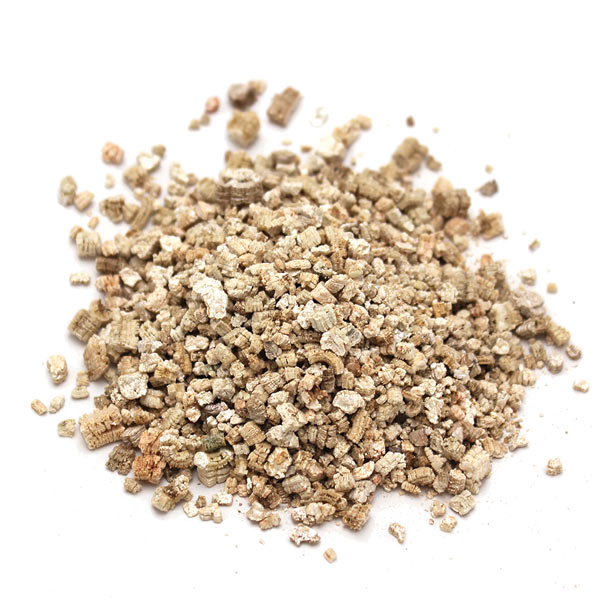
Seeds germinate best in the dark, so they should be lightly covered with substrate or a moisture-retaining component such as vermiculite. After germination, sunlight is crucial for the plants. Through photosynthesis they will produce nutrients and achieve strong cell growth. If germination takes place in a chamber, the seedlings must be moved to the seedling unit early or late in the day, when light intensity is low, so that the transition to full sun is relatively gradual.
Availability of nutrients
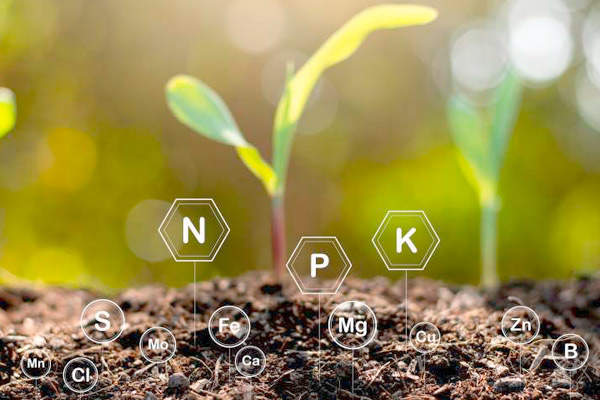
During the germination phase, seeds rely on their own nutrients for their initial development. Subsequent development depends on the provision of balanced nutrients to support the roots and above-ground parts and to promote healthy, continuous growth. Excess nutrients can lead to lush growth and attract aphids and other insects that feed on nitrogen-rich crops. Their deficiency can lead to weak, slowed growth, limited root development, poor above-ground mass and premature flowering. The nutrient regime must ensure: pH = 6.2 – 6.8; total salt concentration of the substrate – EC = 1.2 – 1.8 mS/cm depending on the seedlings (dense, pricked-out) and the crop.
Fertilizers are usually applied through the irrigation system (fertigation). Their frequency and concentration vary depending on the crop, development stage and climatic conditions (solar radiation and temperature). Some of the commercially available seedling mixtures have a “starter charge” of fertilizers, so fertilization is not necessary during the first days.
Nitrogen (N) is the nutrient that determines the growth of young plants. Vegetable crops differ in their response to fertilization and top dressing. For example, tomatoes respond strongly to fertilizers and excess reduces seedling quality. If it is adopted to fertilize the plants at every watering, the applied concentration is 50–100 mg litre-1 N, depending on the stage of plant development; when fertilizing every few days, a concentration of 100–200 mg litre-1 is used. Pepper and eggplant require more fertilizers than tomatoes. If fertilization is carried out at every watering, approximately 100 mg litre-1 are used;
Phosphorus (P) and potassium (K) are important for ensuring stable and balanced growth of vegetable seedlings. Together with nitrogen, they are applied as combined nutrient solutions. The solution must contain appropriate amounts of them: N (50–200 mg litre-1), P (10–40 mg litre-1) and K (100–300 mg litre-1). The use of combined fertilizers (0.5–1 g litre-1) with a 2 : 1 : 3 ratio of the main nutrients (N : P2O5 : K2O), enriched with Mg and microelements, is also recommended.
CO2 enrichment
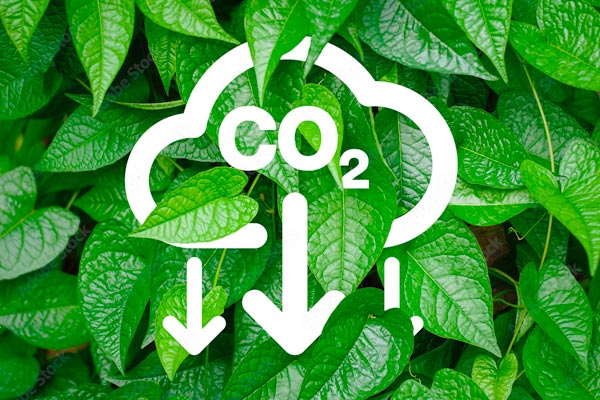
The normal concentration of carbon dioxide (CO2) in the atmosphere is about 380 ppm. During seedling production in winter, its concentration in the seedling unit can drop to critical levels, which will lead to a reduction in the rate of photosynthesis and a slowdown in seedling development. Artificially increasing the CO2 concentration (from 800 to 1,000 ppm) improves growth. During the cycle, additional CO2 must be used, but only in sunny weather.
Pest control
The control of diseases and pests in the seedling unit starts with good sanitary practices. These include periodic cleaning or disinfection of all materials and facilities used. They are supported by regular monitoring for early detection of the occurrence of diseases and pests and preventive plant protection, in accordance with the economic threshold of harmfulness (ETH).
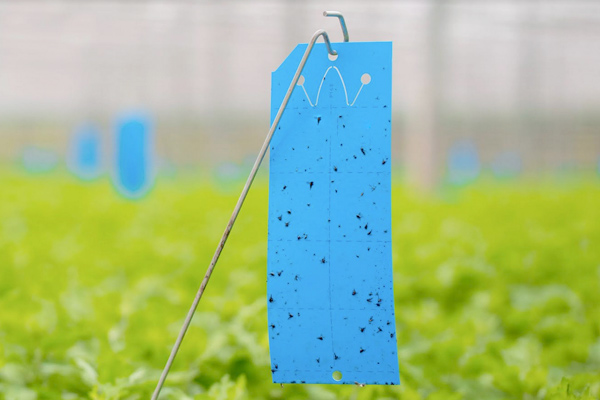
To detect and trap flying forms of small insects (greenhouse whitefly, aphids), yellow sticky traps are hung; against thrips – light blue ones, and against leaf-mining flies – orange-yellow ones. Pheromone traps can also be used to detect the beginning of the flight of the tomato leaf miner and to reduce its population. Leaves and petioles with disease spots, aphid colonies, egg clusters, larvae, mines, etc. are removed, taken out of the greenhouse and destroyed.
References
- Bogatsevska N., Y. Stancheva, Hr. Boteva, St. Masheva, E. Loginova, V. Kharizanova, H. Samaliev, D. Hristova, D. Karadzhova, V. Nikolova, V. Aleksandrov, T. Toshkova, D. Grozdanova, 2008. Guide for Integrated Pest Management in Vegetable Crops. NSRZ. Ministry of Agriculture and Forests. Sofia. 238.
- Ganeva D., V. Todorova, N. Velkov, G. Antonova, V. Petkova, S. Kalapchieva, E. Nacheva, S. Sofkova-Bobcheva, S. Genova, Hr. Boteva, St. Masheva, V. Yankova, D. Kostova, M. Mihov, T. Cholakov, O. Georgieva, Tsv. Dincheva, B. Arnaudov, D. Markova, G. Pasev, 2014. Technologies for the Production of Vegetable Crops and Potatoes. “Blakom” Printing House – Plovdiv, 245.
- Balliu D., Marsic N., Gruda N., 2017. Seedling production, In book: Good Agricultural Practices for greenhouse vegetable production in the South East European countries - Principles for sustainable intensification of smallholder Edition: Plant Production and Protection Paper 230 Chapter 6 of Part IIPublisher: FAO.
- Gullino M., R. Albajes, Ph. Nicot, 2019. Integrated Pest Management for Greenhouse Crops, Book.
- Riikonen J., J. Luoranen, 2018. Seedling Production and the Field Performance of Seedlings, Forests, 2-4.