

![MultipartFile resource [file_data]](/assets/img/articles/георгиева-вътов.jpg)
The NatGenCrop project is of exceptional importance not only for the CRSSB, but also for the development of Bulgarian science in the field of plant systems biology. The scientific team formed under NatGenCrop is working on a large-scale experiment to characterize a large set of tomato and pepper lines under field and greenhouse conditions with normal irrigation or in the presence of water deficit.
Interview with Dr. Alicja Wieteska-Georgieva – agronomist, CRSSB, and Dr. Emil Vutov – molecular biologist, CRSSB
What scientific activities are you responsible for in the NatGenCrop project?
Alicja Wieteska‑Georgieva, Agronomist:
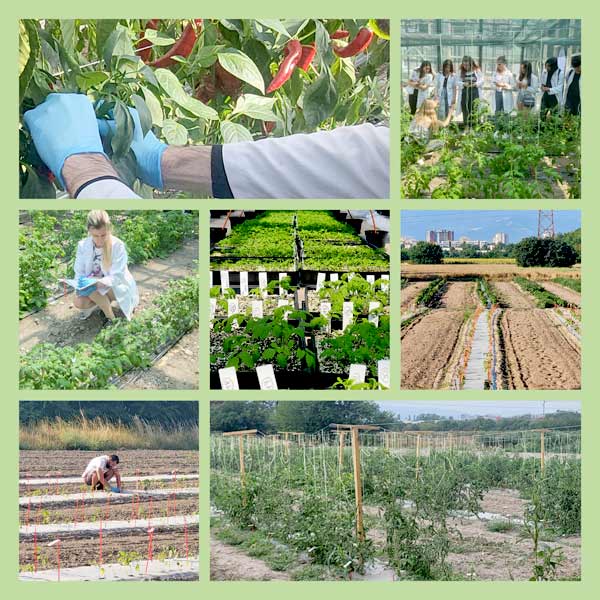
My main task is to ensure the proper cultivation of crops for research purposes at the CRSSB, as well as to participate in the establishment and implementation of the NatGenCrop experiments. I am responsible for the entire cultivation process – seedling production, plant protection, proper treatment and application of drought stress, seed production, as well as phenotypic analysis and collection of leaf and fruit samples for subsequent laboratory analyses within the project.
Emil Vutov, Molecular Biologist:
I assist in the statistical analysis of the data and in the preparation of the experimental designs for the project. It is necessary to plan randomization and replications in order to extract optimal statistical information. I am also actively involved in the overall process of plant cultivation both in the CRSSB greenhouses and in the experimental field on the territory of the Maritsa Vegetable Crops Research Institute (VCRI “Maritsa”), which has been a long‑standing partner of the CRSSB.
How many varieties and how many types of vegetables are included in the project? Why were they chosen specifically?
Alicja Wieteska‑Georgieva:
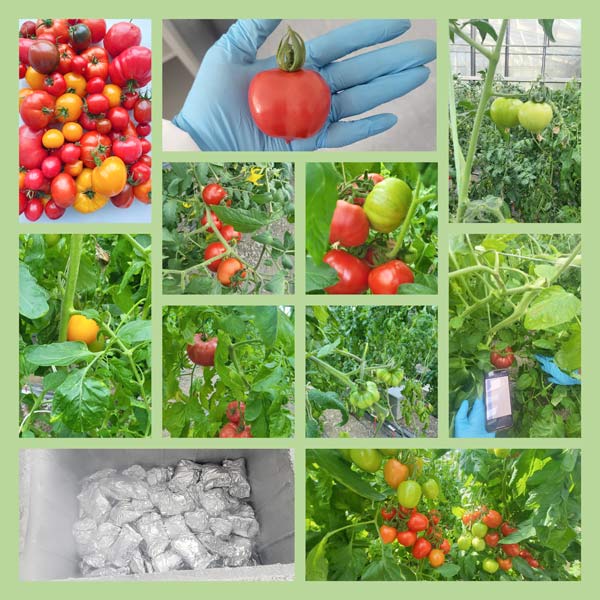
The project focuses on two of the most popular crops for our geographical region. We cultivate over 500 tomato lines from 21 countries worldwide and pepper from six Balkan countries. In addition, the results of the research under this project have the potential to be applied in future studies on other crop species.
What has been done during the last year since the start of the project?
Alicja Wieteska‑Georgieva:
The year 2023 was extremely dynamic for the project. The scientific team was formed and the experimental procedures were established. We carried out the planting and parallel cultivation in greenhouses and in experimental fields of hundreds of tomato and pepper varieties, and for the panel of lines intended for genome‑wide association studies (GWAS) within the project, we worked with 180 pepper lines and 152 tomato lines. Additionally, in the greenhouse we cultivated two BILs (backcrossed inbred lines) populations, including 56 tomato lines and 110 pepper lines.
During cultivation, a detailed phenotypic analysis of the plants was carried out in terms of height, diameter, stem thickness, flowering time, weight, number and size of fruits. Interesting traits such as blossom‑end rot and other diseases were also recorded. Leaf samples were taken during flowering and fruiting, as well as fruit samples for metabolic and elemental analysis. When we repeat the experiment next year, we will have a solid statistical basis on which to build in order to select lines of interest for our research and to obtain even more precise data for analysis.
What remains to be done by the end of the project?
Dr. Emil Vutov:
All collected samples from plant leaves during flowering and fruiting, as well as from fruits, which Dr. Wieteska mentioned, are to be analysed for mineral and nutritional composition. Gene expression in the samples will also be investigated. This is associated with significant bioinformatics work within the project. Furthermore, the experiment under greenhouse and field conditions will be repeated to optimise the statistical data and their scientific analysis.
After the experiment conducted in the first year, we know which plants perform better in the greenhouse and which – under field conditions, which show higher tolerance and which are susceptible to drought. This is an important basis that guides us in the search for the optimal balance between the studied phenotypic characteristics (stress tolerance, nutritional and taste qualities, yield, etc.).
These traits will be linked to their respective genomic locations in both species, and protocols will be developed for the characterization of the identified genes and their interaction with drought.
We already have several candidate genes associated with traits of interest for our research, which are yet to be studied and analysed. We also plan to apply another type of stress in the course of the studies – soil salinization.
What do you think will be the contribution of the NatGenCrop project to the development of agriculture and science?
Dr. Emil Vutov:
In recent years, the challenge facing every research project in our field has been the same – how to support the adaptation of economically important crops to the climate change of the 21st century. In this context, the project will undoubtedly make its contribution with valuable fundamental, practical and statistical information from a large set of studied crop lines that are of economic importance for countries around the world.
Both Dr. Wieteska‑Georgieva and I are young scientists, and a project like this gives us an exceptional opportunity to develop our research careers and enrich them with new knowledge and experience. We have the honour to work together with established scientists from Bulgaria and abroad, under whose guidance the research activities under this project are carried out. We believe that the results we will achieve will contribute to improving plant tolerance under conditions of drought and soil salinization.