

![MultipartFile resource [file_data]](/assets/img/articles/заглавна-нова-вегетация.jpg)
Abstract
What are the sources of diseases and pests in greenhouses? The answer to this question is very important, because it will make it possible to prevent yield losses caused by plant pathogens and pests. The article highlights the main sources of pests in greenhouse crops. These are soil infested with pathogens and pests, plant residues from the previous crop; plants that are grown year-round; weed vegetation; planting material introduced from other greenhouses; irrigation water; air currents. The sanitary activities that can limit the spread of pests are indicated – cleaning the areas from plant residues and weeds; disinfection of the structures and equipment. Sanitary activities must accompany all stages of crop development: clean planting material; monitoring of seedlings for diseases and pests; strict requirements for workers; removal of sources of diseases and pests; agrotechnical practices; treatment of old plants before removal from the greenhouse, etc.
Sources of infection
Infested soil
Many plant pathogens and pests can be found in the soil: fungi of the genera Fusarium, Verticillium, Botrytis and Rhizoctonia; oomycetes of the genera Pythium and Phytophthora; bacteria Clavibacter; TMV and nematodes (mainly root-knot nematodes of the genus Meloidogyne), as well as cutworms of some noctuid moths (grey worms). Fungi of the genus Pythium are most commonly found and occur in all substrates. When crops are planted in mixes containing these pathogens, they are stimulated by root exudates of the plants and can cause diseases in them. Therefore, the mixture for containers and pots must be free of pathogens before sowing and planting. The disinfected mix must be stored on a clean surface, moved with clean tools and placed in clean containers, trays and pots. No matter how careful the grower is, diseases caused by soil-borne pathogens can always occur. Even when working with a peat-perlite mix, soil is found in many places in the greenhouse. It can be brought in on workers’ shoes, on machines used for moving materials, together with crates and trays stored outdoors or on the soil. It is very important that soil which may be contaminated does not get into the seedling substrate. Tools, hoses and other items that may come into contact with soil containing pathogens must be thoroughly cleaned and disinfected before work. If old containers are filled with soil, it must be sterilised or covered with clean polyethylene in order to separate it from the trays and potted plants placed on it. Areas with infestations of root-knot nematodes above the economic threshold must be disinfected before being used for vegetable crops.
Plant residues from the previous crop
Most plant pathogens have a stage in their individual development during which they are in a latent state. In this way they survive periods when temperatures are extreme or moisture is insufficient for development and growth. Some pathogens survive in a latent state in dead leaves, stems and roots where they previously caused disease. Inside these tissues they are protected from the unfavourable conditions of soil and air and are far from competition with other organisms. They have a ready supply of nutrients until conditions once again become favourable. Bacteria of the genus Erwinia, fungi of the genera Botrytis, Verticillium, Fusarium, Alternaria, oomycetes of the genera Pythium, Phytophthora, foliar nematodes (Aphelenchoides) and tobacco mosaic virus, cucumber green mottle mosaic virus and others survive for months, and some for years, in plant residues.

The official name of cucumber green mottle mosaic is CGMMV (Cucumber Green Mottle Mosaic Virus). In Bulgaria it is also known as English mosaic, since it was discovered in England in 1935. Cucumber green mottle mosaic is a viral disease, similar to ordinary cucumber mosaic. The main difference between them is not so much in the symptoms as in the mode of infection. In cucumber green mottle mosaic, the carriers of the infection are the seeds used for sowing themselves.
Diseases caused by them may reappear if infected plant residues are left in the greenhouse where they can come into contact with the new crop. Plant residues can also harbour larvae of leaf-mining flies and caterpillars of noctuid moths, tomato leafminer and other pests. Therefore, the areas must be thoroughly cleaned of them.
Plants grown year-round
Pathogens that are obligate parasites need living plant tissues in order to grow, reproduce and survive. A considerable proportion of plant viruses such as CMV and others survive only in living plant cells. Hosts of this virus are both cultivated and weed plants – spinach, chickweed and others.
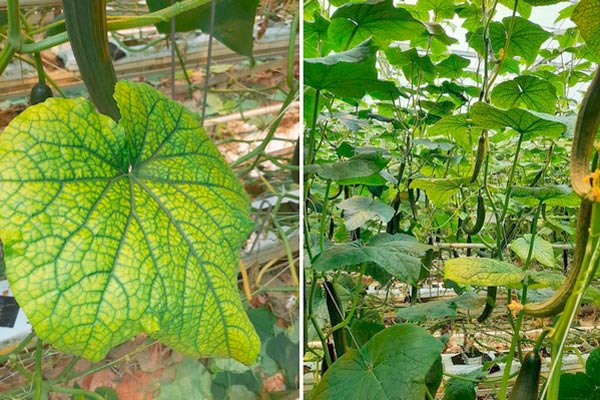
Infectious yellows in cucumbers
The main reservoirs of the virus of infectious yellows in cucumbers are dandelion, shepherd’s purse, black nightshade and lamb’s-quarters – all widespread weeds. The causal agents of powdery mildews also survive on living plants, but also on the structure. The situation is similar for rust diseases, but they must pass through an alternate host during their life cycle. In the absence of such a host they die within a week. When conditions in the greenhouse (light, humidity and temperature) are favourable for the development of these pathogens, the disease can occur and spread rapidly. Many polyphagous pests such as aphids, thrips, whiteflies and mites can develop on plants year-round and pose a risk to the main crop. Some of them can cause damage not only directly, but also indirectly as vectors of viral diseases. Consequently, plants grown in the greenhouse throughout the year act as reservoirs of pathogens and pests and must be continuously monitored. Some weeds can grow in greenhouses in hard-to-see places – under heating pipes, at the ends of rows, around doors. Such plants not only harbour pathogens, but are also excellent refuges for thrips, whiteflies, aphids and mites.
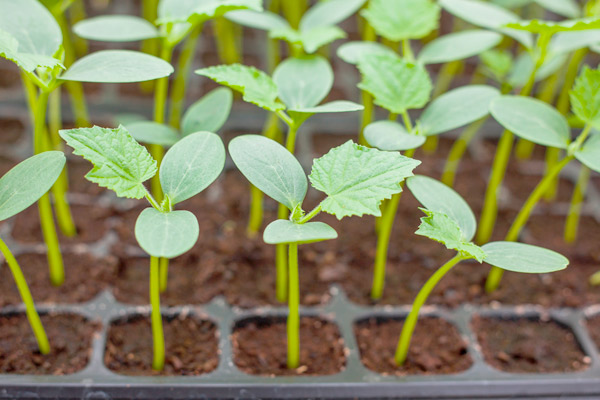
Planting material introduced from other greenhouses
Very often producers purchase ready-made seedlings of tomato, cucumber, pepper to plant them in their own greenhouses. Although the supplying producer carefully selects the plants, it is still possible that some of them are carriers of diseases and pests in an initial phase, when they are still difficult to detect. The client must also carry out a careful and thorough inspection of the purchased planting material and assess its health status. If necessary, and if the supplier has not done so, treatment with a mixture of broad-spectrum fungicides and insecticides is carried out before planting the seedlings in their permanent place.
Water
Oomycetes of the genera Phytophthora and Pythium, which cause root and stem rot, are the main pathogens that can be introduced into the greenhouse with water. Surface waters such as lakes and rivers contain these pathogens. When water drains from them, they can be transported to open water sources and from there enter the greenhouse.
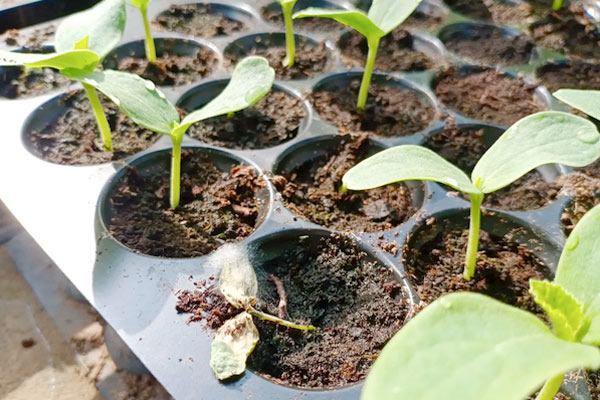
Pythium and Phytophthora are a major problem in hydroponic systems.
Air
Spores of the causal agents of powdery mildew, grey mould, brown leaf spots and others can be carried by air currents from plants outside the greenhouse. Therefore, even if efforts are made to remove other sources of pathogens, certain disease-causing organisms can be transmitted by air. For this reason, during warm periods when vents are open, sources of pathogens outside the greenhouse must be eliminated as far as possible. This also applies to pests.
Sanitary activities
Strict hygiene rules must be applied in greenhouses. During vegetation, sanitary requirements are observed with the aim of suppressing and limiting the development of pests and diseases. At the end of each growing season, before planting the next crop, a major sanitary cleaning of the greenhouse compartments is carried out. It includes removal of plant material from the previous vegetation, followed by cleaning and disinfection of the greenhouse structure and the equipment used in it. This process minimises the transfer of pests and sources of diseases to the new crop and ensures a clean start for the new growing season. The advantages of a clean start include:
- Effective limitation of pests and diseases;
- Management of the development of resistance to pesticides;
- Improved biological control programmes;
- Development of a healthy, productive crop.
For maximum effectiveness, sanitary measures must be practised at all stages of production, starting from sowing and planting and continuing until the end of the growing season.
Preparation for the new growing season and measures during crop cultivation:
Clean planting material
Certified, healthy and disinfected seeds must be used for sowing in order to exclude the transmission of pathogenic organisms. Seeds may contain pathogens that are carried on the surface of the seed coat (mainly fungal) and located beneath it or in the endosperm – causal agents of bacterial and viral diseases. Seedlings must be kept free from diseases and pests. They must not be placed on a dirty floor or directly on the soil. This can damage the roots and infect them with soil-borne diseases (Pythium, Fusarium or root rot).
Monitoring of seedlings
Seedling plants must be inspected at least once a week for first signs of pest damage or disease symptoms. Yellow and blue sticky traps are used for early detection of pests – whiteflies, thrips and aphids.
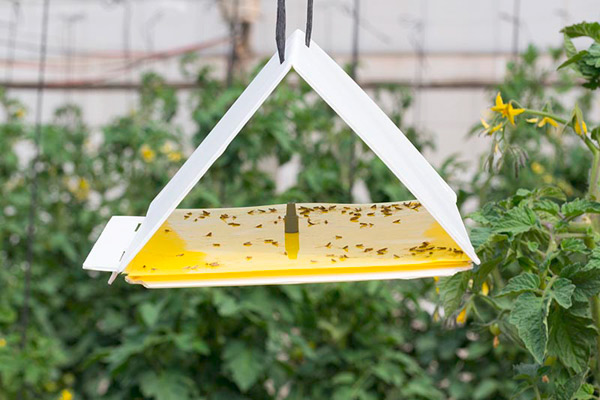
Pheromone traps can also be placed. Traps are placed along the paths and near doors and vents. They are checked at least once a week. When the presence of pests is established, the necessary treatments are carried out. Before transplanting, all plants must be inspected and diseased or pest-infested plants must be removed and destroyed safely.
Minimising the possibility of transferring pests and diseases
To prevent the possibility of pests and disease-causing agents being transferred from the older crop to the seedlings, workers from the seedling compartment must work only there. If this is impossible, they must work first in the seedling compartment before moving to the production crops.
Requirements for workers: they must be dressed in clean or disinfected work clothing (including work aprons or overalls, shoes or boots, gloves); at the entrance to the seedling compartment there must be a footbath for disinfection of the feet of workers and other persons entering; a disinfection mat must be installed for all small vehicles entering the compartment; the baths and mats must contain fresh disinfectant at all times and must be used by workers on every entry.
Removal of potential sources of pests and diseases
All weeds inside and immediately outside the greenhouse must be removed. They can be a significant source of insects and mites throughout the year.
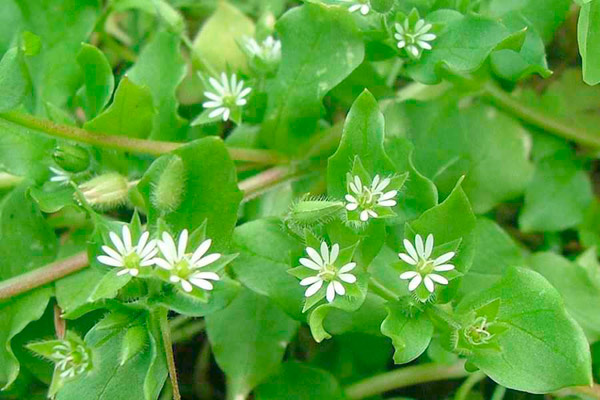
Chickweed
For example, chickweed, one of the most widespread weeds, is a host of CMV. Dandelion, shepherd’s purse, black nightshade and lamb’s-quarters are hosts of the virus causing infectious yellows in cucumbers. Leafhoppers, which are vectors of phytoplasma, overwinter in the roots of bindweed. Hanging ornamental plants must not be placed in the seedling compartment and in greenhouse cells, because they can be a source of pests and diseases. Water dripping from them can create conditions for infection by diseases.
Agrotechnical practices
To reduce the frequency and spread of diseases in the greenhouse, all plant residues in the paths, under heating pipes and around doors must be removed. It is known that a large part of them are hosts of diseases and pests. Good drainage must be constructed and maintained in order to prevent puddles and waterlogged surfaces that are ideal for pest reproduction. Leveling of the soil in the greenhouse will have a similar effect.
A permanently mown strip around the facilities, at least 10 m wide, must be maintained. If this strip is treated with herbicides, treatment near fans and other devices that can draw some of the herbicide inside and damage the plants must be avoided. Home vegetable gardens are excellent habitats for pests – insects and mites. They must be located at a sufficient distance from the greenhouse, because they are a potential source of infection.
Where possible, appropriate insect-proof nets must be installed in order to exclude or maximally limit them. Screening is an effective and easy method for early detection of pests and diseases and limitation of their spread. When infected plants are detected, it is necessary to:
- Mark and block the rows where infected plants have been found;
- Workers in infected areas must wear special work clothing, boots and gloves. They must not touch the remaining plants while working in the isolated areas;
- Plants showing symptoms of attack by diseases and pests are carefully removed and placed in strong polyethylene bags. Care is taken so that the infected plant does not touch neighbouring healthy plants;
- An additional 3-6 plants on both sides of the diseased plant are also removed and placed in the polyethylene bags;
- The bags are carefully taken out of the row without touching other plants;
- The collected infected plants are stored in covered containers until their proper disposal is organised;
- The collected plant material is burned or buried deeply in special landfills. Infected plant material must not be left in the open or on usable soil areas;
- If possible, the substrate at the sites with diseased plants is removed or treated in an appropriate manner. The drippers of the drip irrigation system in these areas are also replaced or disinfected;
- If the disease or pest infestation is not over a large area, work in these areas must be done last. After completion of work, tools are disinfected. Work clothing and boots are left for disinfection;
- Production will benefit if workers are trained to identify symptoms on diseased plants;
- External visitors are not allowed in work areas. If necessary, they are provided with disposable overalls, caps and boots, which are discarded afterwards;
- Trays, trolleys, packaging, tools, etc. are thoroughly cleaned after each use and disinfected;
- Disinfection mats are placed at entrances to disinfect the wheels of trolleys and forklifts;
- Trolleys, containers, trays and crates must not be moved from infected to uninfected zones;
- Tools and equipment must not be exchanged between separate blocks;
- Products from external sources must not be used for repacking the produce.
- Employees working in the sorting and packing area must not work in production areas. When this is necessary, all requirements for safe entry must be observed.
Cultural practices:
- Immediate removal of all plant residues from paths and drainage channels;
- Proper removal and disposal of plant residues, which are discarded at the landfill;
- Irrigation water and recirculated water are disinfected when necessary;
- Plant residues and waste must not be left in or near the greenhouse. Infected plant material can be brought back inside on feet and tyres;
- Ornamental and other plants must not be placed in the greenhouse, because they can serve as alternative hosts for pests and sources of diseases;
- Leveling of the soil surface and maintaining good drainage to eliminate standing water and wet surfaces.
- End-of-year cleaning – To minimise the transfer of pests and diseases, it is best for greenhouses to have a crop-free period. This is especially important for breaking the cycle of persistent disease organisms and pests that can disrupt the biological control programme in the new crop.
- Treatment of crops before removal – To reduce the transfer of pests, crops are treated before removal and disposal of plant residues. This will prevent them from dispersing and entering the soil, the greenhouse structure, packaging and tools. It also limits the possibility of pests moving outdoors to overwinter in weeds or to enter neighbouring greenhouses. It is important during this period to provide high temperatures (25-30°C), which will keep pests active and more susceptible to pesticides. Treatment can be carried out with chemical (total herbicides or effective insecticides) or non-chemical means (high temperature, low humidity for 3-4 days). This will reduce pest populations.
- Disposal of the crop. After removal of plant residues, yellow sticky traps are placed close to the soil surface to monitor remaining flying pests such as thrips, whiteflies and aphids. If pests are found on them, additional corrective actions must be taken.
- Neutralisation of plant residues. They must be removed immediately and discarded at the waste disposal site.
- Cleaning and disinfection. Before disinfection, the greenhouse structure and all equipment (drippers, tools, crates, irrigation equipment and vehicles) are cleaned and washed. Residues of organic matter on surfaces can react with the disinfectant and deactivate it. After removal of plant and other residues and thorough cleaning and washing, disinfection with a broad-spectrum disinfectant follows. Work proceeds from the back to the front of the greenhouse.
Irrigation system. The drip system can be replaced or cleaned and disinfected. Depending on the pH tolerance of the material from which the drippers are made, the system is filled with acid (pH 1.5-2.0). It is left for 24 hours to remove possible deposits. It is then rinsed with clean water. The lines and tanks are flushed with disinfectant several times over a 24-hour period and then rinsed with clean water.
Tools and equipment – are washed and disinfected. This also applies to forklifts and tractors.
Disinfection of the growing medium. A new growing medium must be used for each crop. If it has to be reused, it must be disinfected. This will reduce the possibility of transferring pests, especially mites and thrips. Between August and September, diapausing mites move downwards and can hide in mineral wool slabs, under plastic packaging and covering polyethylene on the soil, in residues of the old crop. They remain there until favourable conditions are restored. Thrips can survive in the soil, where part of their life cycle takes place. Residues of old plants can contain pathogens that attack the roots. Therefore, the growing medium must be disinfected. This can be done by means of steam, fumigation or solarisation.
After all necessary measures have been carried out and the greenhouse structure is clean, good sanitary conditions must be maintained throughout the next growing season. They include disinfection mats for transport vehicles and footbaths at all entrances, overalls and hand disinfectants for everyone entering the greenhouse. It is advisable to limit visits even along the main paths in order to minimise the risk to the crop.
References
- Moorman, G., 2023. Sources Of Plant Disease In Greenhouses, PennStateExtension
- Reeves, E., Meadows I., 2022. Prevention and Management of Soilborne Diseases of Ornamental Plants and Vegetables in the Greenhouse, NC State Extension Publications.
- Schnelle, M., E. Rebek, 2017. IPM- Scouting and Monitoring for Pests in Commercial Greenhouses, Oxate.Edu Extension.