

![MultipartFile resource [file_data]](/assets/img/articles/заглавна-януари-1.jpg)
In January, the forecast minimum temperatures – down to minus 13oC – will not pose a risk to the perennial crops. The unseasonably warm weather has triggered premature and undesirable bud swelling in some early-flowering shrub and fruit species such as dogwood, apricot, peach and cherry, in places in the far southwestern regions.
Temperatures have now decreased and a change in agrometeorological conditions is being observed. The expected cold spell until around the middle of the month will prevent untimely development of the early-flowering shrub and fruit species, which would otherwise lead to a reduction in their winter hardiness. The expected rain and snowfall will help to increase soil moisture reserves in the 100 cm soil layer.
During the second and third ten-day periods, the agrometeorological conditions will be determined by temperatures close to the climatic norms.
During the month, more favourable conditions for carrying out winter pruning of pome fruit species will occur at the beginning of the first and during most days of the third ten-day period. Winter spraying is not appropriate in areas with precipitation.
Agricultural technical activities
In fruit orchards
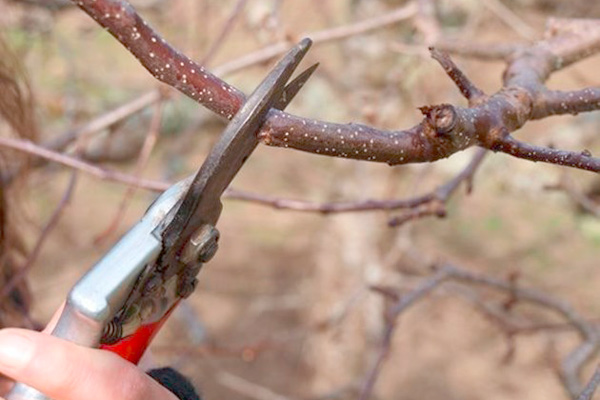
- Work continues on mechanized contour and manual pruning in apple and pear orchards;
- In cold stores, compliance with the storage regime is monitored.
- Work continues on repairing old and constructing new support structures.
- Transporting and spreading of farmyard manure in the orchards begins, in suitable weather.
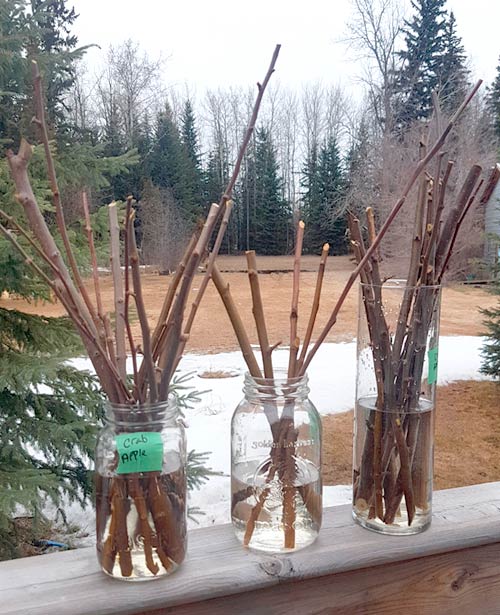
- Scion wood for spring grafting is collected.
- Care is taken to protect seeds placed for stratification.
- The area for planting new orchards is determined.
In strawberry plantations
- The soil around the strawberry plants planted in autumn, which have been lifted by sharp temperature fluctuations and lack of snow, is firmed.
- Heating of greenhouses for forced production of strawberry fruits begins.
- Plastic tunnels for early strawberry production are constructed.
In raspberry plantations
- New support structures are built and old ones are repaired.
- To protect young plants from being lifted, the soil around them is firmed, and, where possible, they are earthed up to about 10 cm above the root collar.
In blackcurrant plantations
- Pruning for fruiting continues.
- Collection of cuttings continues.
- Care is taken for the preservation of rooted plants intended for spring planting.
- Rooting beds are inspected and, in case of risk of lifting and frost damage, the soil around the plants is firmed.
- Particular attention is paid to preventing fruit in cold stores from heating and spoiling.
- Requirements for mineral fertilizers are determined and, where possible, the necessary quantities for spring fertilization are secured.
In plantations with other crops
- Collection of cuttings from Actinidia, chokeberry, pomegranate, sea buckthorn and fig continues.
- Collection of seeds from Actinidia, which are placed for stratification, continues.
- Seeds of Caucasian persimmon subjected to stratification, which will be used as rootstock for persimmon, are regularly moistened.
- Chokeberry seeds are cleaned of the fleshy part, carefully washed and placed for stratification in cellars with clean river sand.
- Construction of wire trellis structures in Actinidia plantations continues.
Plant protection measures
Winter spraying may be carried out on woody species and raspberry.
The results of winter spraying are good when the solutions are applied in the form of large droplets and all parts of woody and semi-shrub species are covered with the solution. In woody species this is achieved by applying 100–150 dm3 per decare with powerful sprayers in calm weather.
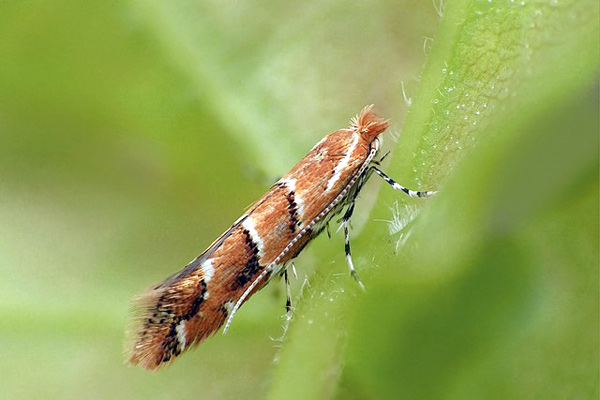
the leaf-mining moth
For woody species:
Spraying is carried out with a 3% solution of Para Zomer or Acarzin against scale insects and aphids, psyllids, woolly apple aphid, eggs of winter moths, mites, pupae of the leaf-mining moth, etc., which overwinter on the trunks and in the crowns of the trees. Spraying is performed only when the population density of some of the pests is above the economic threshold of harmfulness.
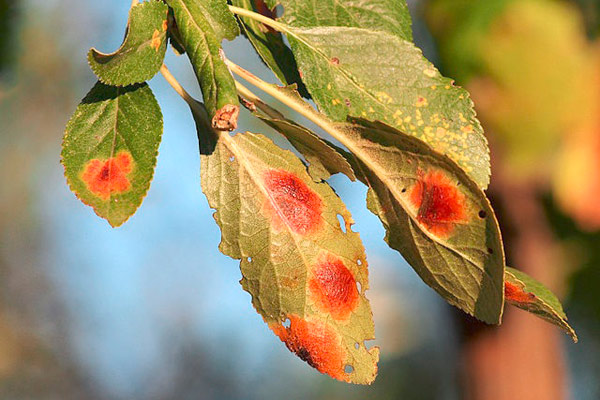
red leaf spots on plum
Spraying is carried out with a 2% Bordeaux mixture or other copper-based products against plum pockets in plum trees, fire blight in pome species, peach leaf curl, shot hole disease in stone fruits, brown rot, bacterial dieback, fallen leaves to destroy overwintering scab inoculum in apple and pear, red leaf spots on plum, walnut anthracnose, cercospora leaf spot and scab in almond.
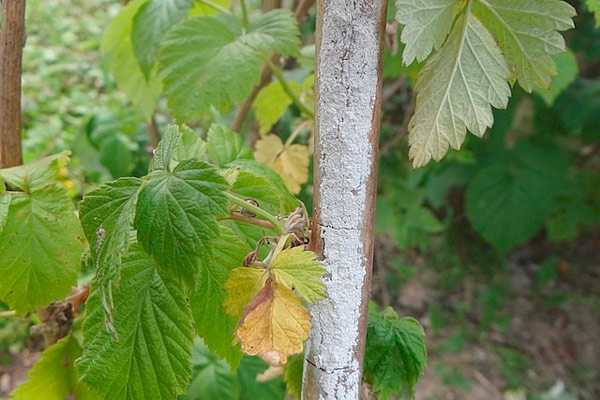
didymella on raspberry
For raspberry:
Against didymella, coniothyrium, anthracnose and leaf spots, treatment is carried out with a 2% Bordeaux mixture or other copper-based products, and the fallen leaves are also sprayed.
Against California red scale, treatment is carried out with a 3% solution of Para Zomer or Acarzin.
Repair of horticultural machinery, irrigation equipment, sprayers, dusters and others continues.
Care is taken to protect plant protection products from moisture; the required quantities are purchased and arranged in warehouses.
Entomological cages, frames, isolators and light traps are made. Yellow sticky cards and other materials necessary for forecasting plant protection measures against economically important pests of fruit crops are supplied.
New poisoned baits against mice are placed in trenches for fruit planting material.
Varieties are selected for planting new orchards.