

![MultipartFile resource [file_data]](/assets/img/articles/заглавна-cop28.jpg)
COP28 is likely to be the most attended climate change conference so far. Many issues are expected to be discussed, with the aim of finally ensuring that global warming is limited to no more than 1.5°C. In recent months, various UN events have taken place that have defined the topics for the conference, but there are concerns that the wars in Gaza and Ukraine could undermine the efforts, and in addition COP28 will be held in an oil-producing country with an authoritarian regime. For the first time this year, Bulgaria will participate with its own pavilion at the conference, in the hope of securing the hosting of COP29 next year. All this comes at a time when global temperature and greenhouse gas concentrations are at record levels, and the realistic time horizon for implementation of the Paris Agreement is almost over.
This year, from 30 November to 12 December, in Dubai, United Arab Emirates (UAE), the 28th annual Conference of the Parties will be held, better known as COP28. At it, representatives of nearly 200 countries will discuss and negotiate important issues related to limiting and addressing climate change.
Delegates from 197 countries are expected to take part in the conference, including representatives of numerous organisations, with the total number of all participants expected to reach up to 70,000 people, which would make this year’s COP the most attended in history.
What will be the main topics this year?
Let us recall that at the end of last year’s conference, agreement was reached for the first time on the establishment of a “Loss and Damage” fund, which should compensate poor countries for the consequences of climate change. However, this and the other commitments announced at COP27 are not legally binding, even if they represent progress.
On the basis of the negotiations held so far and the pledges of individual countries, as well as the public pressure exerted, the most likely topics to be discussed are the following:
- The process of the first so-called Global Stocktake will be concluded – a detailed technical assessment of the progress made by the countries in the overall implementation of the goals of the Paris Agreement. This process is enshrined in the document and is key for setting further targets.
- Updating the Nationally Determined Contributions of the countries that have signed the Paris Agreement, something that did not happen last year. In recent years, most countries in the world have updated their targets, but they are still not sufficient for the 1.5°C goal.
- Reaching a global agreement to triple renewable energy by 2030 – supported by the USA and the EU, as well as by another 60 countries, including the host UAE. This target is among the necessary conditions for remaining within the Paris goals.
- Specifying the mechanism of the “Loss and Damage” fund – after agreement was reached at the last conference, it now has to take on a concrete form – in what way, for which countries and groups, and how much funding will be allocated.
- Adoption of a framework for achieving the Global Goal on Adaptation – such a goal is laid down in the Paris Agreement, but until now it has not had a specific form. It should include substantial support for measures such as early warning systems and the transformation of food systems in certain regions. A key question is financing, which should be doubled in accordance with the Glasgow Climate Pact of 2021.
- Official inclusion of a goal for the (gradual) phase-out of emissions from fossil fuels – at this stage such a goal is still not present in official climate agreements. The closest that countries have agreed to so far is the gradual reduction of coal production, but not its termination. At this stage only individual countries are calling for a complete phase-out of their use.
- Mitigation of climate change, emissions trading, finance, etc. These are outstanding issues from previous years, on which work is continuing.
Among the main challenges facing the conferences are the strained relations between key players – the USA, the EU, China and Russia.
For example, at this stage the hosting of COP29 in 2024 is still in question. It should be held in a country from the Eastern European region, but Russia, without whose consent in the UN a COP venue cannot be determined, is blocking the organisation of the forum in an EU country, most likely because of the war in Ukraine.
Among the good news is the fact that the presidents of the USA and China have reached mutual agreement on a significant acceleration of the increase in the share of renewable energy sources in their countries and a substantial reduction in that of fossil fuels.
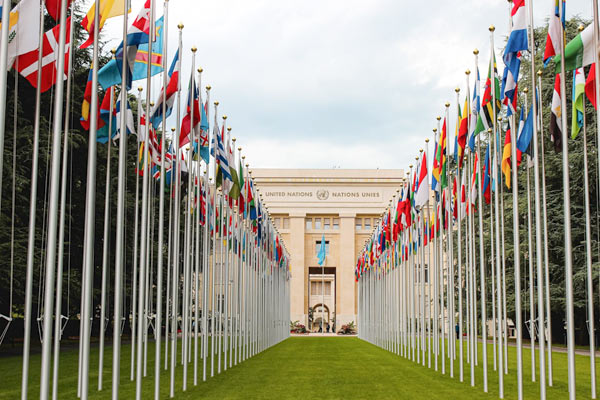
Tensions between states are among the possible obstacles to the negotiations in Dubai
Immediately before COP, however, the positions of China and Russia on fossil fuels remain opposed to the phase-out of their use. But it is also a fact that the USA and the EU likewise do not express particular support for such a goal. China and Russia are also against ending the unrestricted burning of fuels, i.e. they have no intention of taking measures to reduce emissions over the life cycle of fuels, whereas for the European Union this is defined as a priority objective.
This year, an inevitable source of tension among those attending the conference will be the war in Israel and Gaza, and probably again the war in Ukraine. Such forums are among the few opportunities for global addressing and seeking accountability for these issues, due to the gathering of so many world leaders and the public attention. It is possible, however, that these conflicts will prove to be an obstacle during the negotiations, especially on issues related to the affected regions. The war in Gaza is the most likely reason why US President Joe Biden is not expected to attend COP28.
Over the past few months, several other international forums organised by the UN have taken place.
And although these meetings did not in themselves mark significant progress, the discussions lay the foundations for the talks during COP28.
Among the most significant of these was the June summit in Bonn. Although slight progress was recorded on some issues, including the “Loss and Damage” mechanism, which remains a controversial topic, the outcome of the negotiations was described as unsatisfactory.
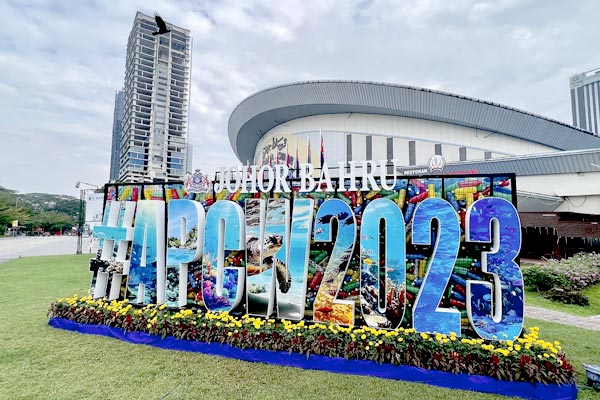
Asia-Pacific Climate Week
Other meetings included the four “climate weeks” of the Middle East and North Africa, of Africa, of Asia and the Pacific, and of Latin America and the Caribbean. During these forums, politicians, experts and representatives of business and civil society discussed local challenges for the respective regions – the risks of extreme events, as well as opportunities for action – for example, better disaster response, financing for affected communities, energy transformation, etc.
In the European Union some key developments were noted. On 16 November agreement was reached on the final form of a regulation that for the first time will regulate and limit methane emissions, although in its current form it will not succeed in achieving the planned reduction of methane emissions by 30% by 2030, as set out in the Global Methane Pledge of 2021. This year, the Energy Performance of Buildings Directive was also updated, including the targets for a 55% reduction in emissions by 2030 and climate neutrality by 2050 from the “Fit for 55” legislative package.
Overall, COP often turns out to be a place for raising countries’ current ambitions, so it is likely that there will be pledges for more ambitious targets.
Among the biggest criticisms of COP this year is the fact that the host country is an oil state with a low level of respect for human rights, where protests are banned. In addition, the President of COP – Sultan Al Jaber, is the director of the UAE’s national oil company. In his statements he calls for a reduction, instead of a gradual phase-out, of the use of fossil fuels. Climate activist Greta Thunberg described the UAE’s hosting as “ridiculous” earlier this year. While according to Helena Gualinga, a representative of an indigenous community from the Amazon, “this is a signal of where we are heading at the moment”.
Earlier this year, the UAE rejected the call of civil societies for the release of hundreds of unjustly punished political prisoners and dissidents, as well as for addressing the lack of protection for migrant workers.
Nevertheless, among the symbolic victories for this conference is the fact that from this year onwards every participant will have to declare their links with organisations and companies, which aims to limit the role of representatives of fossil fuel companies, whose number last year was greater than that of any state delegation.
As usual, COP will take place in two zones – blue and green. Among those present in both zones there will be many representatives of civil society, who every year find ways to organise impressive actions and demonstrations in support of decisive climate action. In the blue zone, actions are traditionally not permitted, but this year they are most likely to take place precisely there, since the blue zone will be managed by the UN, and due to the authoritarian regime in Dubai there are concerns that activists could be arrested at any attempt at any kind of demonstration, although last year the regime in Egypt did not fully manage to stop the activists.
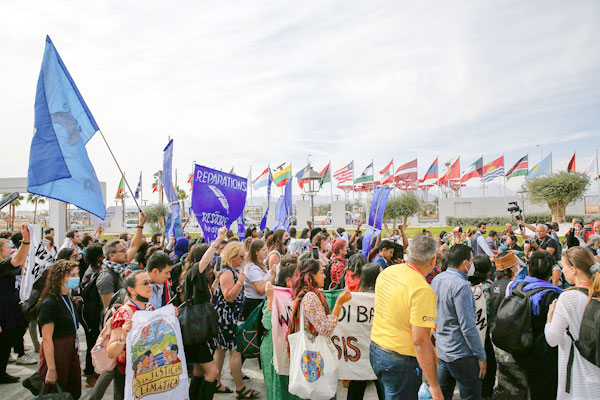
The authoritarian regime in Egypt did not prevent demonstrations by climate activists during COP27
Bulgaria will have its own pavilion for the first time
What is interesting this year is that our country will for the first time participate with its own pavilion in the blue zone of COP, with Bulgarian companies from various sectors, financing institutions, local authorities and scientists among the participants. The aim is to showcase achievements and innovations in Bulgaria in terms of sustainable development, for example in metallurgy. Instead of the traditional delegation of a handful of government representatives, now the total Bulgarian representation will include nearly 200 people, among them President Rumen Radev and the Minister of Environment and Water Julian Popov.
According to Minister Popov, Bulgaria’s main objective during COP28 is to put the country on the map of climate negotiations. Bulgaria conducts negotiations at COP as part of the EU, that is, the agreed targets are common to all Member States, Popov notes.
A likely reason for our country’s more active participation is Bulgaria’s desire to host COP29 next year. At this stage it is not clear whether this will happen, especially given Russia’s resistance, but shared hosting with other countries is also being discussed and proposed as an option.
During the conference Bulgaria is expected to join the international governmental Net Zero Government Initiative, which obliges countries to reach net zero emissions by 2050.
Although these are good news, the most serious challenge will be to implement the commitments undertaken.
Undoubtedly, this COP will be of particular importance
According to the World Meteorological Organization (WMO), it is almost certain that 2023 will be the warmest year in the history of meteorological observations on Earth, with each month – since June – having been record warm, and the anomalies have not spared our country either. At certain periods, the 1.5°C threshold was exceeded. There is a high probability that next year will be even warmer. Although the current temperature peak is caused by the natural phenomenon El Niño, the long-term warming trend is due to anthropogenic greenhouse gas emissions into the atmosphere. The concentration of carbon dioxide in the atmosphere has reached a record 420 ppm for the human era.
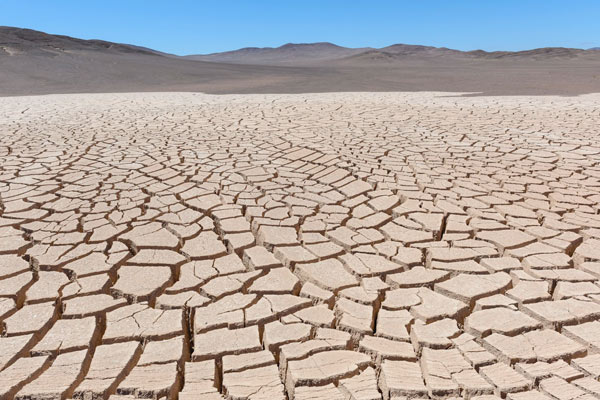
2023 will probably be the warmest year in the history of meteorological observations
Some experts believe that it is no longer possible to achieve the 1.5°C target, which is enshrined in the Paris Agreement to limit global warming to 1.5°C above pre-industrial levels. The carbon budget, or the emissions that can be released without reaching warming around and above 1.5°C, will be exhausted by 2029, according to a climatologist from Imperial College London. On the other hand, according to a recent report by the International Energy Agency (IEA), achieving the target is still possible, but on condition that by 2030 annual emissions decrease by 35% compared to the record peak in 2022.
But even if the target is no longer attainable, joint systemic efforts should be made to avoid warming of 1.6°C or 1.7°C, for example, which are the next thresholds with the lowest negative consequences. However, if current state policies continue, global warming by the end of the century will be about 3°C, according to a report by the UN Environment Programme (UNEP) from November this year.
Only 1 out of 42 key indicators is in line with what is needed to achieve the climate goals by 2030, according to the “State of Climate Action” report by the independent scientific network Climate Action Tracker. The only indicator that has been met is the growth of electric vehicles – an average of 65% per year over the last 5 years.
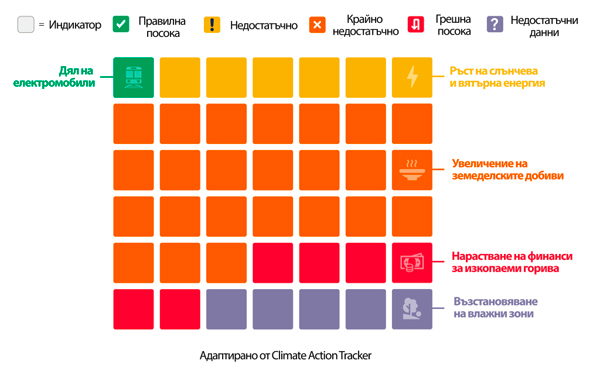
Assessment of progress towards achieving the 1.5°C target based on 42 indicators. Adapted from: Climate Action Tracker
Another positive development is that energy from renewable energy sources (RES) continues to grow substantially. This year the total capacity of energy from RES is expected to reach 440 gigawatts, which means an increase of ⅓ compared to last year, according to an IEA report. This sharp increase is among the necessary conditions for achieving the climate goals. Nevertheless, even greater efforts will be needed – it will be necessary to triple RES capacity by 2030 compared to 2022, instead of the currently planned doubling, according to a new report by the think tank EMBER. At the same time, under current policies we can already expect a reduction in annual carbon dioxide emissions by the end of this decade, although investments in fossil fuels are still twice as high as permissible for the 1.5°C target, according to the latest IEA report.
According to the IPCC, the peak of greenhouse gas emissions – or the moment after which they start to decline – must be before 2025. Although humanity will survive at a higher level of warming, this significantly increases the risk of irreversible consequences for the environment and society. At a higher level of global warming there would be a serious risk of widespread coral extinction, while some Pacific island states will be significantly more threatened by sea-level rise, which is why their representatives are calling for a substantial increase in measures in order to achieve the target of the Paris Agreement. The ball is now in the hands of all delegates and leaders at COP28.
Useful information about COP:
COP28 will take place on the territory of the Expo City Dubai complex. As usual, it will consist of two zones – blue and green. In the blue zone, negotiations between delegations will take place, and the individual pavilions of countries and various organisations (scientific and others) will also be located there. Access to it is restricted to accredited politicians and observers. The green zone is open to the public and will host various exhibitions and events, including those aimed at civil society.
Nikolay Petkov is an author at Climateka. He holds a Master’s degree in “Meteorology” from the Faculty of Physics of Sofia University “St. Kliment Ohridski”. His Master’s thesis is on “Climate indices – analysis of the climate over Southeastern Europe in the recent past and present”. He works at the environmental association “Za Zemyata” (For the Earth) as an expert and coordinator. He is currently pursuing a Master’s degree in “Integrated Climate System Sciences” at the University of Hamburg in Germany.
Source Climateka