

![MultipartFile resource [file_data]](/assets/img/articles/glyphosat-123.jpg)
On 16 November, during a vote in the appeal committee, the Member States once again failed to reach the required qualified majority either to renew or to reject the approval of glyphosate. The vote required a qualified majority of 15 out of the 27 EU countries to support or block the proposal.
The situation of 13 October was repeated and the countries did not succeed in taking a unanimous decision on the fate of the disputed chemical substance.
In accordance with EU legislation and in the absence of the necessary majority in either direction, the Commission was obliged to adopt a final decision before 15 December 2023, when the period of the current approval expires. On the basis of comprehensive safety assessments carried out by the European Food Safety Authority (EFSA) and the European Chemicals Agency (ECHA), the Commission, together with the EU Member States, proceeded to renew the approval of glyphosate for a period of 10 years, under certain new conditions and restrictions.
New conditions and restrictions
These restrictions include a ban on its use as a desiccant before harvest and the need for certain measures to protect non-target organisms. In addition, farmers must maintain buffer strips at least five metres wide.
The aspects that have not been definitively clarified include dietary risks for consumers and the assessment of risks to aquatic plants, according to the European institution.
The available information also does not allow clear conclusions to be drawn regarding the conservation of biodiversity, which is a key topic in European agriculture.
The Member States retain the right to be responsible for issuing national authorisations for plant protection products (PPPs) containing glyphosate and will be able to restrict their use at national and regional level, if they deem this necessary on the basis of the results of risk assessments.
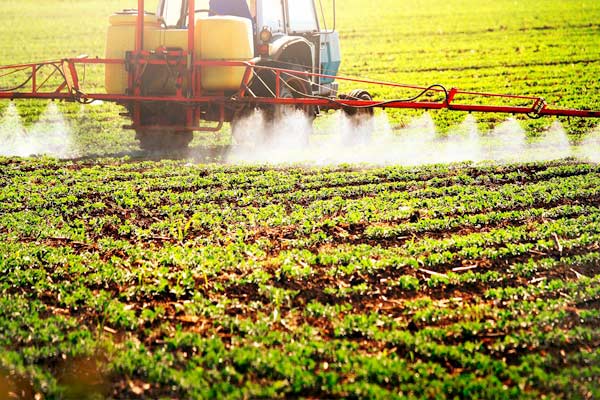
Several studies have demonstrated that the pesticide glyphosate has carcinogenic effects
"For" and "against"
According to diplomatic sources, seven countries, including France – the leading agricultural power in the EU – Germany and Italy, abstained, while 17 voted "for" and three were "against" (including Luxembourg, Austria and Croatia).
The German Federal Minister of Agriculture Cem Özdemir expressed his great disappointment with the decision of the Commission and announced that he intends to focus on possible national measures that would restrict or completely ban, from the beginning of 2024, the use of the hazardous herbicide on the territory of Germany.
The German group Bayer, which acquired Monsanto in 2018, of course welcomed the Commission's announcement. "This new authorisation allows us to continue to provide farmers in the European Union with an important technology for integrated weed management," a spokesperson commented.
On Wednesday, the French Minister of Agriculture Marc Fesneau reiterated that a complete ban on the herbicide is "impossible" at present due to the lack of alternatives for farmers.
For major non-governmental organisations such as Foodwatch, Générations futures, "this position is a betrayal, which is not surprising, of the promise made by the President of France Emmanuel Macron in 2017." They believe that the renewal of the authorisation "once again runs counter to the precautionary principle, while evidence of the danger of glyphosate to humans and the environment continues to accumulate".