

![MultipartFile resource [file_data]](/assets/img/articles/рапица-заглавна-1.jpg)
Agronomic practices
Crop rotation
The best preceding crops are cereal-grain, leguminous and row crops, which free the area early and there is sufficient time for soil preparation for sowing rapeseed. Sunflower is an unsuitable preceding crop, since both crops are hosts of economically significant diseases. It is best for the crop to be sown in the same place every 3-4 years. Rapeseed is a good preceding crop for cereals, as it cleans the soil from pathogens and suppresses the development of certain weeds, such as johnsongrass and couch grass.
Soil tillage
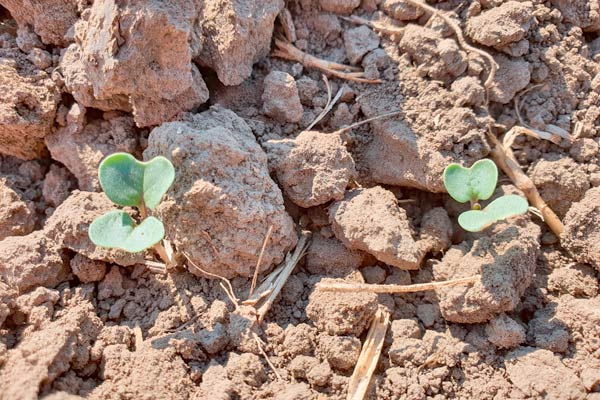
It is necessary to ensure a loose and soft surface layer, without clods and weeds, and without plant residues from the previous crop. Rapeseed seeds are very small and require a firm seedbed. Rolling before and during sowing contributes to uniform emergence and preservation of soil moisture.
Good soil moisture reserve
In case of prolonged drought, it is recommended to wait for rainfall so that sowing can be carried out when the soil has a good moisture reserve – about 70% of field capacity.
Suitable soil type
The most suitable soils for rapeseed are those with medium to heavy mechanical composition, with neutral reaction – pH 6-7, rich in humus and calcium, with good water-holding capacity and which are not prone to forming a soil crust.
Sowing
The optimal period for sowing rapeseed is from the end of August until around 20–25 September. By the onset of winter frosts, the plants should have formed a rosette with 6–8 leaves and a well-developed root system. For uniform emergence, the optimal sowing depth is 2–4 cm.
Fertilization
The soil nutrient status and the fertilizer rates required for the crop are determined most accurately after a soil analysis for each specific field. Phosphorus and potassium fertilizers are applied with the primary soil tillage, and nitrogen fertilizers – as topdressing. For forming a good seed yield, the following fertilizer rates are recommended:
- on poorly supplied soils: Nitrogen 18–20 kg/da; Phosphorus 8–10 kg/da; Potassium 10–12 kg/da.
- on well supplied and highly fertile soils: Nitrogen 14–16 kg/da; Phosphorus 6–8 kg/da; Potassium 9–10 kg/da.
rapeseed leaf sawfly
Pest control
In autumn, rapeseed is attacked by pests which, at a certain population density, can cause significant economic losses. The purpose of autumn treatment of rapeseed with insecticides is to preserve the integrity of the leaf mass of the plants to the maximum extent, for their successful overwintering. Priority should be given to sowing seed treated with insecticides and to regular field inspections to determine pest density.
Rapeseed leaf sawfly
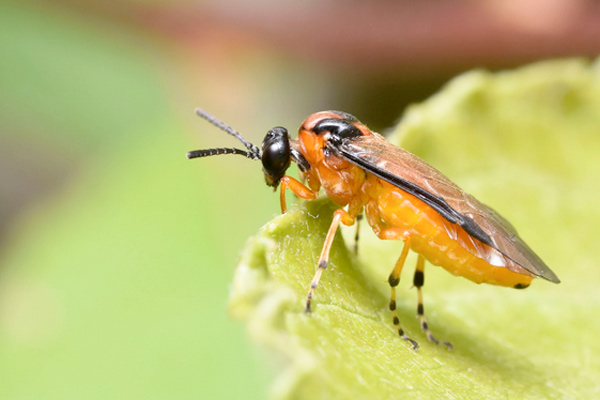
In autumn, the third generation of the pest develops. Adult sawflies fly until the end of October and lay their eggs on the cotyledons and the first true leaves. Young false caterpillars feed on the underside of the leaves, gnawing them in the form of small pits. As they grow, they chew holes in the leaf blades, which gradually enlarge, make peripheral gnawing, and later consume the entire leaf blade, leaving only the main veins. After completing their development, the false caterpillars burrow into the soil and remain there to overwinter.
Control of the rapeseed sawfly is carried out at an economic threshold of 2–3 larvae/m2 or 2–3 damaged plants/m2. Registered insecticides for control: Karate Zeon 5 CS – 15 ml/da; Citrin Max (Ciperkill, Cipert 500 EC) – 5 ml/da; Poli 500 EC – 5 ml/da.
Rapeseed stem flea beetle
It is widespread everywhere and at high population density causes enormous damage. The pest develops one generation per year. It overwinters as egg, larva and adult insect. In September, adults begin to feed intensively and from the end of September until mid-December they lay eggs. The hatched larvae initially burrow into the epidermis of the stems, and later into the petioles and central veins of the leaves. Part of the larvae hatch in spring. A similar species to the rapeseed stem flea beetle is the Small rapeseed stem flea beetle. Other harmful flea beetle species on rapeseed are the black, light-legged, wavy-striped, flax, hemp and other ground flea beetles.
Chemical control is carried out at a damage threshold of: 2 adults/m2 at emergence; 4 adults/m2 after the appearance of the 3rd leaf; 3–5 larvae per plant. Registered insecticides for control: Deka EC – 30 ml/da; Mavrik 2 F – 30 ml/da; Citrin Max – 5 ml/da.
Rapeseed stem weevil
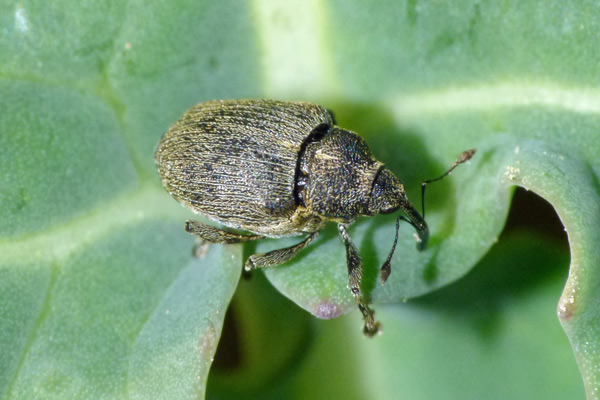
The larvae of the pest are harmful, as they make tunnels in the leaf petioles and then move into the stem.
In weak plants with thin and short leaf petioles, they reach the central part of the stem and burrow into the vegetative apex as early as autumn. Such plants die or do not form central stems, but only lateral ones.
Chemical control should be carried out at a density of 2–4 beetles/m2. Registered insecticides for control: Mavrik 2 F – 30 ml/da; Citrin Max – 5 ml/da.
Disease control
Dry stem rot (Phoma)
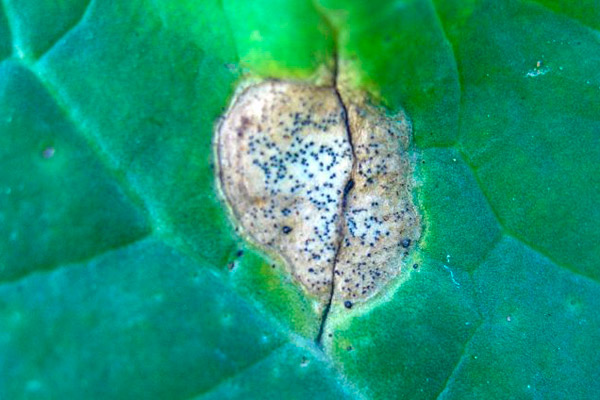
It appears from plant emergence to the “6th leaf” growth stage. On the lowest leaves, irregular rounded, grey-greenish spots are formed with small black dots on them (pycnidia of the causal agent). The spots gradually become necrotic and cover the leaf petioles and the stem. Infection of the stem occurs directly at or above soil level. Phoma also attacks the root collar, with the appearance of dark spots that lead to drying and death of the plants. The disease develops in patches in the crop and, under favorable conditions, very quickly spreads over the entire field. The pathogen survives in plant residues and partly in rapeseed seeds. The development of phoma is favored by rainy and humid weather and an optimal daytime temperature of 22–24°C. Balanced fertilization should be applied and pest control in rapeseed should be carried out, since damage caused by pests is an entry point for infection.
For successful disease control, autumn application of fungicides should be undertaken, which will significantly reduce the frequency and severity of infection, as well as the risk of plant winterkill. Registered fungicides for control: Caramba 60 EC – 120 ml/da; Pictor SC – 50 ml/da with 20–40 l/da spray solution; Folicur 250 EW/Horizont – 50–100 ml/da.