

![MultipartFile resource [file_data]](/assets/img/articles/зърнени-култури-1.jpg)
One of the major problems of domestic agriculture is the small number of crops on which our farmers rely. If statistics were made, it would probably be established that on the predominant part of our fields wheat, sunflower and maize alternate. It is true that these are crops with a secure market and not a high, but a good profit. How does this affect our overall production and, above all, the preservation of soil fertility? Here the answers are quite worrying and not positive. It has been established that we have become a country exporting agricultural produce in an unprocessed state. We export mainly the mentioned crops as grain with a very low profit margin, from which our economy as a whole loses. On the other hand, these are extremely intensive crops, grown with many pesticides contributing to the reduction of soil fertility. Thus, for example, due to the high fertiliser rates, we are increasingly being asked what varieties or crops can be grown on acidic soils, and this in traditional agricultural regions where such a problem did not exist until recently. In this regard we must add global climate warming, which also raises a number of questions for us regarding the crops that we can grow under changing conditions. Overall, more and more of our agricultural producers are considering which new crops to grow. This was also the reason for the appearance in Dobrudzha in recent years of chickpea, sesame, soybean, lavender and others, sometimes successfully, sometimes not quite.
At the Institute of Plant Genetic Resources in Sadovo work is carried out with all field crops. The national seed gene bank is located here, where more than 70,000 accessions of over 600 plant species are maintained, and this requires us to be familiar with numerous less popular crops. What alternative crops can we offer to our farmers?
In cereals, things are perhaps the best known. Wheat, maize, barley, rice – these are crops that have long been present in our fields. We would just like to remind that rye also belongs here, a crop with unpretentious requirements and very high winter hardiness, which can be grown in semi-mountainous and mountainous conditions and on very poor soils in the plains. There is no varietal diversity here and the only variety in the National Variety List is the Sadovo variety Millennium.
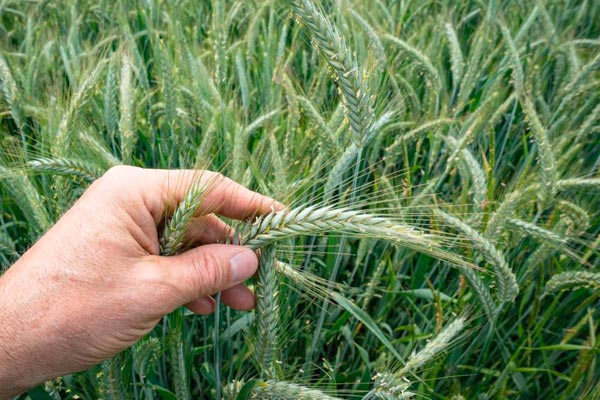
Triticale
Triticale is another cereal crop that is not fully utilised. It is an artificially created hybrid between rye and wheat. It is suitable for soils where wheat gives poor results. It has very good nutritive value as grain for feed, is suitable for winter mixtures with pea for green use and there are varieties with high biomass, suitable for bioethanol production.
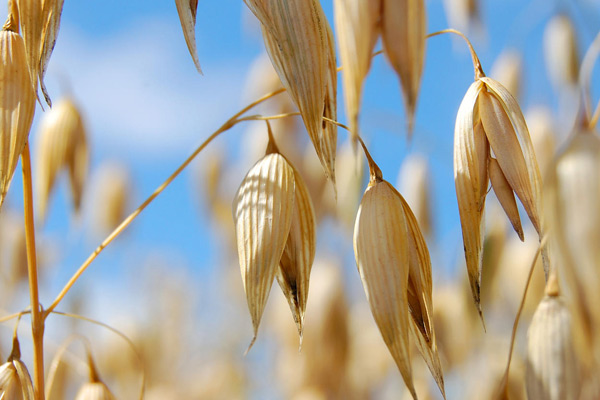
oats
Another somewhat forgotten crop is oats. Here at IPGR Sadovo we offer a wide variety of varieties with different directions of use. The variety Mina is a spring, naked-oat variety. This characteristic presupposes its use with very good results mainly as a dietary food for humans, and in recent years we have realised that the naked grain also gives very good results for pigeon fanciers. The variety Kaloyan is a winter hulled oat variety suitable for use as excellent feed grain, for green forage and is extremely suitable for organic farming. The variety IPGR Marina is the first Bulgarian winter naked-oat variety. It combines the advantages of the already mentioned varieties. It can be sown in autumn, which gives it great advantages in case of spring drought and it has excellent nutritional indicators. We will dwell a little more in detail on two drought-tolerant late spring cereal crops which have potential but are poorly distributed in our country, and on einkorn – an ancient crop that has returned with a new image.
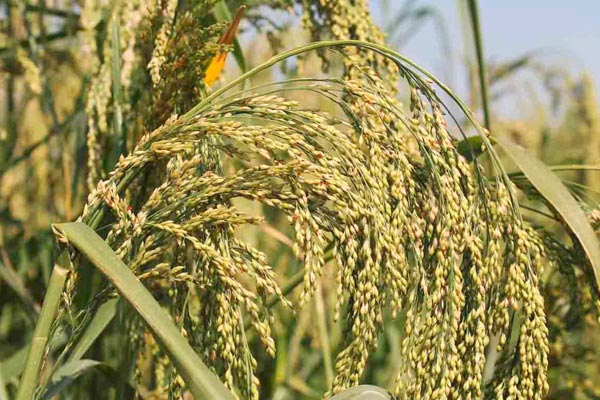
millet
Millet
This is a crop that has been known since ancient times in our lands, but traditionally it has significantly increased its area only in years with unfavourable winter conditions and damage to already sown crops. It is most widely distributed in Asia and Africa. Its main use is as feed for poultry and pig farming. The grain of this crop is also a favourite food for songbirds. There are varieties that are distinguished by height and very good leafiness and are of interest for whole-plant harvesting for green forage. It should be known that in terms of nutritional value, the green mass of millet is equivalent to that of a vetch–oat mixture. Even better are the data for millet hay mown at flowering–milk-wax maturity, which show that it is more valuable than hay from mohar millet. We can also note that millet is harvested when the upper part of the plants is still green, and this is the reason why straw of this crop has the qualities of medium meadow hay. As food for humans it is still used in Russia and Africa, and thanks to its exceptional diversity of nutrients and the lack of gluten in the grain it has become an indispensable part of modern diets.
Millet is a late spring, heat-loving crop which for sowing requires a stable soil warming of about 13-14oC. Another thing that must be taken into account when determining the sowing date is that after emergence there should be no frost, as it will destroy the young plants. For Southern Bulgaria this is at the end of April, and for Northern Bulgaria at the beginning of May. Millet is considered suitable for sowing as a second crop on non-irrigated land. Research in Sadovo shows that for practice it can be recommended, with a relatively justified risk, to sow in the period from 1 to 15 June. Sowing is on a flat surface, preferably with an “alfalfa” drill, at a seed rate of about 3–3.5 kg/da at 3–5 cm depth and subsequent rolling. For the control of broadleaf weeds, herbicides based on 2,4-D are recommended at the tillering stage of millet. No disease control is carried out due to the summer development of the plants. This is a crop with an extremely short vegetation period, often under 2 months. It is harvested with a combine harvester adjusted for small-seeded crops such as oilseed rape. For millet, yields of 200 to 300 kg/da grain are considered good, and those over 400 kg/da and 3–4 t of green mass for green forage are considered excellent. It has the lowest cost price among cereals, possesses exceptional drought tolerance, has a very short vegetation period and can be sown as a second crop.
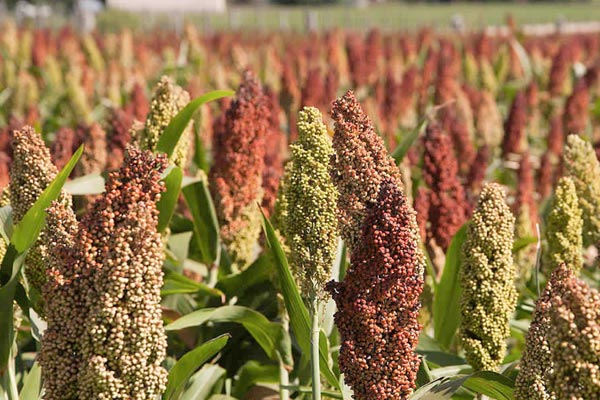
sorghum
Sorghum
For Bulgaria, sorghum is a relatively new crop. Its intraspecific diversity is very great, which is why many authors group its classification by direction of use. Thus, for example, in our country it is divided into grain sorghum, sweet sorghum, broomcorn and Sudan grass. The first to appear in our lands was broomcorn, which even today is grown on small areas and very often as a strip (windbreak) plant in vegetable gardens. Later, sweet sorghum and Sudan grass were included in the green conveyor. The former has the ability to accumulate higher amounts of sugars in its stem, which, along with high yields of green mass, makes it excellent for silage. Sudan grass has a thinner, strongly tillering stem and more tender leaves, which enables the preparation of high-quality hay. Grain sorghum has the widest distribution both worldwide and in our country. In the southern states of the USA, the so-called “sorghum belt” has even been formed, and in Europe there are companies that create high-yielding hybrids to increase production of this crop.
The main advantage of sorghum is its drought tolerance. It is no coincidence that it is known as the “camel of the plant world”. Its root system is extremely powerful. It penetrates to a depth of up to 2.4–2.6 m and radially sideways to 90–120 cm. It should also be known that the root–stem ratio is twice as great as that in maize. It has a very high absorbing capacity and can use water from the soil close to the hygroscopic level. The stem is thinner than that of maize, but is covered with a waxy coating which has the ability to reflect heat. The leaves are also covered with a waxy coating and are alternately and oppositely arranged. Sorghum forms more leaf mass than maize, and the leaves use water much more economically than maize. This is due to the smaller length of the stomata, while at the same time their number per unit area is 50% higher.
It is known that the nutritional value of sorghum grain compared to maize is 90–95% for pigs, 95% for cattle and 98% for sheep and poultry. Among the proteins in one of the most important groups – prolamins – barley contains hordein, maize contains zein and sorghum contains kafirin.
Sorghum is unpretentious towards its predecessor, responds weakly to legumes and, if necessary, can even be sown as a short-term monoculture. For sowing it requires a stable soil warming of 14–15 oC, which most often occurs at the end of April or the beginning of May. It should be borne in mind that it does not tolerate frost after emergence and therefore the sowing time should be consistent with the local characteristics of the region and the medium-term weather forecasts. In sorghum, sowing is carried out with a pneumatic drill at 70 cm row spacing and 3–5 cm depth, providing 20 to 24,000 plants per decare or about 1 kg seed rate. If there is sufficient soil moisture, rolling is not recommended; if moisture is low or absent, it is mandatory.
At present in our country, sorghum hybrids of the company Lidea (formerly Euralis) are distributed, which have an antidote for the use of the herbicide Dual Gold, with which soil sealing of the stands can be carried out. During the growing season, one or two inter-row cultivations are carried out in sorghum, and against broadleaf weeds at the tillering stage, spraying with herbicides based on 2,4-D is possible. Harvesting is done with a combine harvester, preferably equipped with sieves for small-seeded crops. The yields that can be expected are about 400 to 600 kg/da on non-irrigated land and 800 to 1000 kg/da on irrigated land, although of course on such soils we recommend sowing maize. In conclusion, we can say that sorghum will not completely replace maize, but it can be of great help in many of the non-irrigated regions of our country.
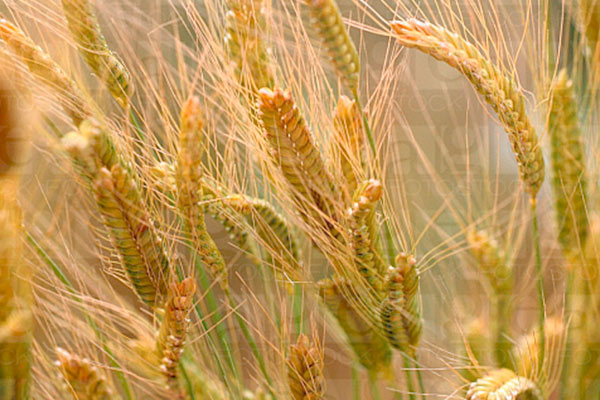
einkorn wheat (Triticum monococcum)
Einkorn
Einkorn is a wild wheat species. It is useful to know that under the name “einkorn” in practice both “one-grained einkorn” (Triticum monococcum) and “two-grained einkorn” (Triticum dicoccum) are distributed. These are two different species, the former containing 14 chromosomes and the latter 28, while common wheat has 42 chromosomes. One-grained einkorn contains small amounts of gluten, and its gliadin protein does not cause an allergic reaction in people suffering from coeliac disease (gluten intolerance). In two-grained einkorn the amount of gluten is much higher. Therefore, one-grained einkorn is suitable for gluten-free diets. This difference is very important for all those who have a problem with gluten. The grain of einkorn is hulled and in order to be used it must be dehulled, similar to the processing of paddy rice.
Otherwise, both einkorn species are unpretentious to conditions and can be grown anywhere, including in mountainous areas. They have a winter–spring type of development, which allows them to be sown both in autumn and in spring. Sowing is as for other winter cereals and even the seed rate is similar to that of wheat, about 25 kg/da. Fertilisation is not recommended because there is a high risk of lodging. It is harvested with a combine harvester. Yields in one-grained einkorn are low – 150 to 200 kg/da, while in two-grained einkorn they can exceed 300 kg/da. It is a modern crop with a market that alternately increases and decreases, which is reflected in its price.
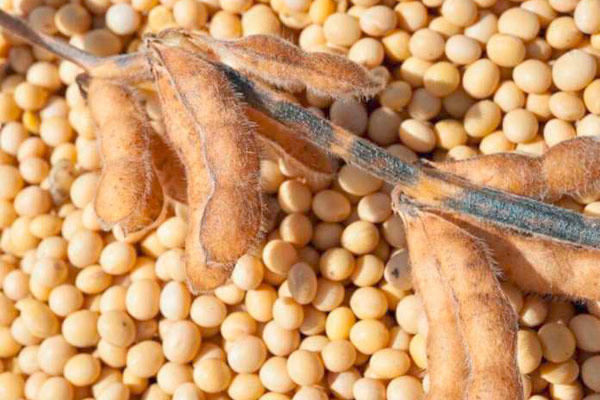
soybean
Leguminous crops are among the most beneficial in agriculture. They are excellent predecessors, improve soil structure and enrich it with nitrogen, and as protein crops they contribute to solving the protein problem on a global scale. Their inclusion in crop rotation schemes as predecessors of other crops significantly reduces nitrogen fertilisation, which is particularly important for organic farming and is very topical at current fertiliser prices. Unfortunately, their areas in our country are decreasing. For the most widespread protein crop in the world – soybean – it turned out that conditions in our country are not among the most suitable. Alfalfa and pea are still more widely grown, common bean is decreasing its area, lentil and field bean have almost disappeared, and vetch is still sought for mixtures. We will discuss peanuts in Sadovo in more detail in another article. Here we will focus on chickpea.
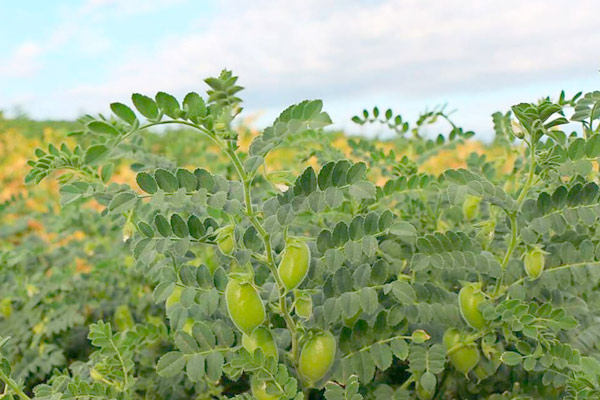
Chickpea
Chickpea
Chickpea (leblebi) is one of the earliest crops cultivated by humans. It is a bushy plant with a height of up to 50–60 cm. Its diversity is great: in Asia mainly varieties with small and wrinkled grain are used, while in Europe the so-called Mediterranean type is grown, which has relatively large, smooth and yellow grains – the “ram’s head” type. This is a crop used mainly for human consumption, but its high protein content also makes it an excellent feed. The main advantage of chickpea compared to other leguminous crops is its drought tolerance. While all other legumes require soil and atmospheric moisture, especially during flowering, chickpea is unpretentious to this factor. This is the reason for its mass spread a few years ago when subsidies for protein crops were granted, but the failed market at that very moment discouraged farmers from this excellent crop.
Chickpea is an early spring crop that is sown at the first opportunity in February. It is recommended to sow in 70 cm rows at a seed rate of about 14 kg/da, or in narrow rows with a slight increase in the seed rate in weed-free stands. After emergence, one or two cultivations are carried out depending on weed infestation. Under no circumstances should infestation with black nightshade be allowed, because during harvesting the chickpea seeds become stained and lose all commercial value. It is advisable to use varieties resistant to Ascochyta blight, because in a wet year the yield may be completely compromised within one week. It is harvested with a combine harvester, with reduced drum speed and increased distance between drum and concave. Expected yields are between 200 and 300 kg/da, and are higher on flat, solid-seeded stands.
Among industrial crops in Bulgaria, sunflower and rapeseed are widely grown, the latter varying significantly by year. Root crops have fallen out of use (except potatoes), as have fibre crops, regardless of attempts to subsidise cotton cultivation. We will dwell a little more in detail on flax.
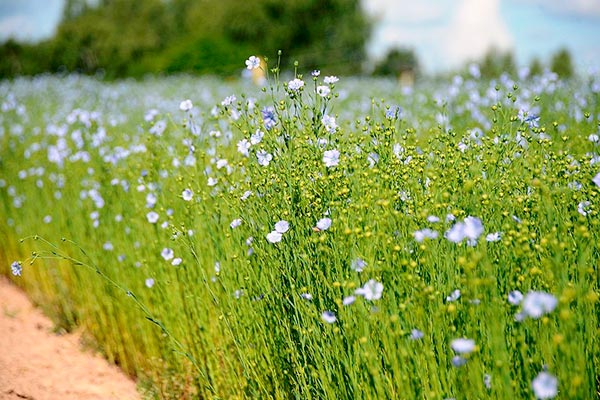
flax
Flax
Flax originates from Central Asia and the Mediterranean. It can be oil flax, fibre flax and intermediate, which can be used both for oil and for fibre. It is useful to know that flax fibre is more than twice as strong as cotton fibre, and linen garments are durable, hygienic, comfortable, electro-neutral and hygroscopic, creating pleasant coolness in summer. On the other hand, linseed oil, uniquely among vegetable oils, contains Omega-3 fatty acids, and if we add potassium, magnesium, lecithin, zinc, proteins and B-group vitamins, we will understand why it is so beneficial and sought after.
Flax is a spring crop that requires suitable predecessors such as cereals. Its low resistance to Fusarium wilt requires that it be returned to the same field in the crop rotation only after 5–6 years, because the so-called “soil fatigue” occurs and yields decrease sharply. It is sown in March, as it germinates at 6–8 oC. Sowing is carried out in narrow rows at a depth of 2–4 cm with a seed rate of 8–12 kg/da. Oil flax is harvested in a single phase with a combine harvester, and fibre flax with a special flax pulling machine that makes the plants into bundles.
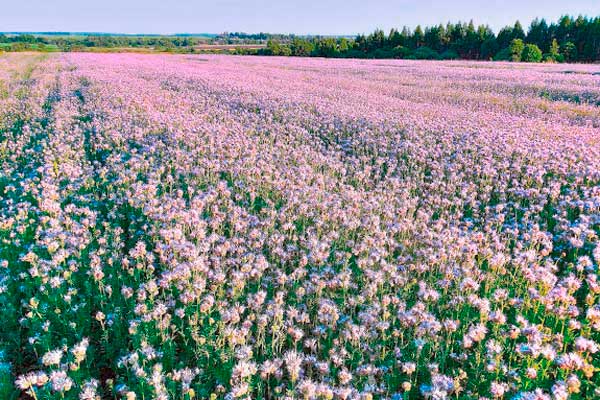
phacelia
We will also draw your attention to a somewhat different crop. It is very beautiful, loved by bees, but it turned out that it can also be used in a somewhat different way. We are talking about phacelia.
Phacelia
Phacelia is a melliferous crop which can also have ornamental functions. It is a herbaceous, annual plant that has the ability to self-seed. It has been established that it has a characteristic aroma that strongly attracts bees, secretes a lot of nectar and up to 35 kg of honey can be obtained from one decare. The flowering period is long, up to 40–45 days, but despite this it is recommended to sow it in stages, which will increase the possibilities for its use. Phacelia is not related to economically important crops and therefore is not a carrier of important diseases and pests, which makes it an excellent component of any crop rotation.
Some authors consider that phacelia is extremely suitable as an intermediate crop for green manuring. It is characterised by a rapid initial growth rate, a high degree of covering and shading of the soil surface, strongly suppressing weed development. Since the plants are completely winter-killed when they are in advanced development, phacelia is very suitable as a cover crop after which even direct sowing can be practised.
As a melliferous crop or for seed, phacelia is sown at the end of March and in April, and as an intermediate crop at the end of July and in August. Sowing is in narrow rows, at a depth of 2–3 cm, and the seed rate is between 800 and 1200 g/da. It ripens unevenly, so it is recommended to start harvesting when the first ripe seeds begin to fall. The yield is not high, about 20 to 60 kg/da, and the seeds are very small.
In this way we could continue with many more non-traditional crops such as saffron, sesame, kohlrabi, grass pea, canary grass and many others with which work is carried out at IPGR Sadovo, but it is best to visit the Institute and obtain information at first hand. We know that these crops are not a priority for large land tenants, but if we have helped even one farmer to orient himself better, even for his private garden, we will be satisfied.
Crops, varieties and seed categories offered in 2023 by IPGR Sadovo
In connection with the forthcoming autumn campaign in 2023, IPGR Sadovo has the pleasure to provide you with a list of the varieties developed by us by crops and seed categories which will be offered for sowing. They are of interest to all those engaged in seed production for trade or for their own needs, as well as to those who are already convinced that sowing with quality seed of suitable varieties is one of the most important prerequisites for achieving high results.
The Institute in Sadovo is not only the patented owner of these varieties, which are widely distributed throughout the country, but also a licensed seed producer registered with IASAS and included in the lists of the State Fund “Agriculture” for the provision of seed under all schemes.
The prices determined at the Institute are as follows:
- for basic seed of wheat, triticale and barley up to 2.5 t – 1100 BGN/t excluding VAT,
- for basic seed of wheat, triticale and barley over 2.5 t – 1000 BGN/t excluding VAT,
- for basic seed of rye and oats – 1100 BGN/t excluding VAT,
- C1 wheat, triticale and barley up to 2.5 t – 900 BGN/t excluding VAT,
- C1 wheat, triticale and barley over 2.5 t – 850 BGN/t excluding VAT,
- C1 rye and oats – 900 BGN/t excluding VAT.
It is advisable in August first to place an order by e-mail or telephone for the preferred varieties, category and required quantities.
If interested, you can also receive advice on the choice of variety suitable for your region.
Everyone who purchases seed from IPGR Sadovo will receive a brief recommended varietal technology for cultivation in 2023/24.
FOR CONTACTS: Tel/Fax: 032/ 62 90 26, GSM: 0889 719 516 ADDRESS: 4122 Sadovo, 2 Druzhba Str., Plovdiv region, E-mail: ipgr_sadovo@ abv.bg