

![MultipartFile resource [file_data]](/assets/img/articles/зимзелен-заглавна-1.jpg)
Periwinkle (Vinca major, fam. Apocynaceae)
Periwinkle is a valuable medicinal plant, widely used in medicine. It is cultivated for its aboveground part, which contains about 30% bitter substances and alkaloids – vincamine, vincamidine, vincine, vincezine, reserpine, etc. Vincamine is the most important alkaloid. The alkaloids, especially vincamine, lower blood pressure. The preparations Vinkapan and Reserpine are obtained from them.
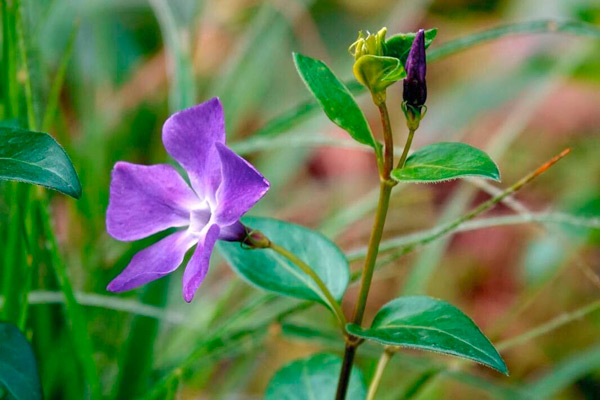
Periwinkle has a haemostatic effect in cases of nasal bleeding, as well as an astringent and anti-inflammatory effect. Its preparations are used in the treatment of hypertension, and for rashes and itching of the skin.
Periwinkle originates from Southern Europe and the Caucasus. In Bulgaria the plant is found almost throughout the country, in shady and moist places. Larger natural populations occur in the regions of Blagoevgrad, Gabrovo, Veliko Tarnovo, Lovech, Sevlievo, Pleven, Ruse and Razgrad. In parks it is grown as an ornamental plant. The raw material obtained from natural populations is insufficient to meet the increasing needs of medicine, which necessitates the cultivation of periwinkle on larger areas.
In the first year the yields of dried aboveground mass are about 150 kg/da, and in the following years reach up to 300 kg/da. Usually 1 kg of dry material is obtained from 5 kg of fresh plants.
Botanical characteristics
The root system is poorly developed, with a spindle-shaped root and numerous adventitious roots, located shallowly in the arable soil layer.
The stems are generative, erect, about 30 cm high, and vegetative – prostrate, branched, up to 60 cm long. Adventitious roots are formed at the nodes of the vegetative stems, through which the plants propagate vegetatively.
The leaves are attached to the stem on short petioles. They are arranged oppositely and are evergreen. The leaf blades are oblong-elliptic in shape, glabrous, leathery with a glossy surface and an entire margin.
The flowers are blue, on long pedicels, arranged singly in the leaf axils. They consist of a 5-lobed calyx, a corolla with triangular lobes and 5 stamens. Flowering occurs in May–June, and sometimes also in autumn.
Fruits are formed rarely and contain about ten seeds. They are represented by a pair of follicles, consisting of two externally formed separate parts, each of them with numerous smooth seeds.
Systematics and varieties
Periwinkle (Vinca minor L.) is a perennial, evergreen, creeping herbaceous plant of the family Dogbane (Apocynaceae). In Bulgaria only one variety, Izgrev, is registered for cultivation.
Biological requirements
Periwinkle is winter-hardy. As a mountain plant it withstands low temperatures down to minus 30°C. It grows and develops best in places shaded by trees with high humidity. Periwinkle is not demanding with respect to soil, but prefers forest soils with good structure, rich in organic matter and with a favourable water regime. Soils that are flooded or retain water are unsuitable for it. The climate and soils in the lowland regions of Bulgaria are not particularly favourable and do not meet the requirements of this crop.
Agricultural practices
Periwinkle is grown in the same place for many years. Therefore, the area designated for it must be very well selected. It should be levelled and suitable for irrigation. In order to allow the soil to settle, it is ploughed early in the summer to a depth of 25–28 cm, with subsoiling down to 40 cm. Beforehand, 2–3 t/da of farmyard manure and 30–40 kg/da of superphosphate should be applied. After the first autumn rains in October, depending on the degree of weed infestation, the fields are cultivated or shallowly ploughed again.
Periwinkle is propagated mainly by cuttings and by rooting of creeping stems. For planting 1 decare, 100–150 kg/da of rooted material are needed. For this purpose, in autumn or early spring, the creeping stems are carefully separated from the clump and laid in a slightly humus-rich soil, buried in a semi-horizontal position up to one-third of their length, arranged almost side by side. After rooting they are used as planting material.
The area prepared in advance for growing the plants is furrowed at a distance of 60 cm. The rooted cuttings are planted in the rows at a distance of 30 cm from each other, at a depth of 8–10 cm.
Planting is carried out in the second half of October or at the end of February – beginning of March. Better results are obtained with autumn planting. For one decare, 5,000 rooted cuttings are required.
After planting, the plants develop rapidly and already in the first year they flower profusely and form several creeping, richly leafy stems.
During the vegetation period the soil is kept loose and free of weeds. For this purpose, 2–3 hoeings are carried out with a cultivator between the rows and by hand hoeing in the row. The cultivations start in spring and are carried out at intervals of 15–20 days.
Against annual and perennial grassy weeds and couch grass, herbicides may be used, if there are products approved for this crop.
After harvesting the first crop, the plants are top-dressed with 10–15 kg/da of ammonium nitrate, irrigated and hoed. This enables them to develop again and by the end of the summer a second crop can be obtained.
In case of summer drought, irrigation is carried out 3–4 times with 30–35 m3/da of water, preferably by sprinkler irrigation.
Depending on fertilization and irrigation, two cuts can be made during the vegetation period (June and September).
In autumn, after the second harvest, phosphorus fertilizers are applied and the inter-row spaces are cultivated.
Care during the second and subsequent years is the same as in the first year.
The aboveground part of periwinkle is harvested at full flowering (from May to June). The entire leafy part of the plant is cut down to the root collar. The first cut is harvested in June and the second – in September.
The cut raw material is dried in well-ventilated premises in the shade or in dryers at a temperature of 40–50oC.
The dried herb is stored separately, as it is poisonous.
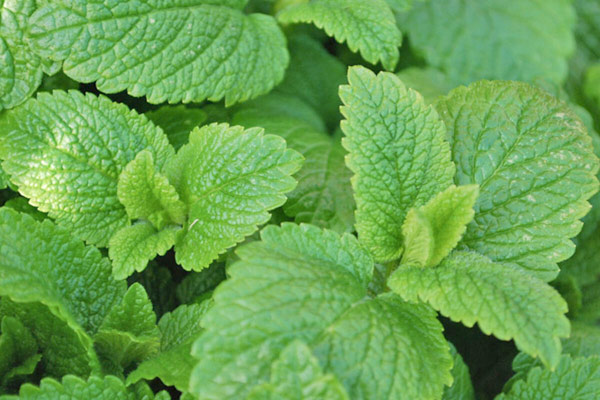
Lemon balm (Melissa officinalis, fam. Lamiaceae)
Lemon balm is a perennial plant. The root is strongly branched, crooked and dark, with many yellowish-brown branches. From it arise numerous horizontal, rhizome-like stems, from which the true stems develop, 30–100 cm high, quadrangular and strongly branched. The leaves are dark green and glabrous above, light green and pubescent below, opposite, thin, ovate, acuminate at the tip, coarsely serrate; the lower leaves are larger with longer petioles, the upper ones smaller with shorter and pubescent petioles. The flowers at first have yellow, then white or reddish corollas, arranged in the leaf axils in the upper part of the stem; the calyx is bell-shaped, curved upwards with 13 veins; the upper lip almost flat, three-toothed, the lower – two-lobed; the corolla tube is slightly longer than the calyx and also curved upwards; the upper lip of the corolla is notched, the lower – three-lobed, with a wider middle lobe; the anthers are spreading. The whole plant emits a strong and pleasant lemon scent. It flowers in summer.
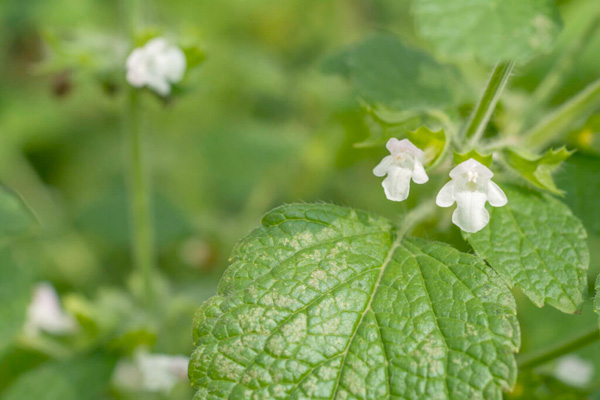
Lemon balm is widely distributed up to 1,200 m above sea level. As a plant of economic importance, lemon balm is cultivated in Central and Southern Europe, the USA and Asia.
Lemon balm is a thermophilic and light-demanding plant. Under the conditions in Bulgaria it overwinters successfully. It tolerates some shading, but this does not adversely affect the essential oil content. Light has a positive effect on the oil content and this should be used as a means of increasing it.
Lemon balm grows well at high soil and air humidity. Throughout the vegetation period its requirements for soil and air moisture are high. Lack of moisture suppresses its growth and development. Moisture deficiency leads to low yields. For commercial purposes it is grown on sufficiently fertile soils with light to medium texture, and neutral or slightly alkaline reaction.
It prefers sunny or semi-sunny sites, sheltered from winds. It is propagated by dividing and transplanting old root shoots or by seed, after which it is transplanted to a permanent place at a distance of 30 cm between plants and 40 cm between rows. The crop must be shallowly hoed and kept free of weeds at all times.
Lemon balm can usually be harvested or mown 2 times a year. The first harvest is immediately before flowering, around mid-June. Dry and sunny weather is chosen for harvesting. The second and possibly the third harvest are carried out by the end of the season.
How is it harvested?
The stems are cut and the leaves stripped off immediately before they wilt. Each day only as many stems are cut as can be stripped of leaves and placed for drying on the same day. The stripped leaves should not be crushed, because they blacken. Leaves should not be harvested after the plant has finished flowering, because they do not have the characteristic aroma of those picked before or during flowering and may even have an unpleasant smell. Drying is done in a shady and well-ventilated place at a temperature not exceeding 35 degrees, spreading the leaves in a thin layer. The leaves must be very well dried, because if they are moist, they may heat up and spoil after packing. Drying should not be carried out in damp weather, because the resulting material may turn black.
Well-dried leaves are green in colour and have a pleasant lemon aromatic smell, which intensifies when rubbed between the fingers. The taste is slightly bitter and somewhat astringent.
In official and traditional medicine it is used as a sedative, in cardiac neuroses, neurasthenia, asthma, etc., in the form of an infusion or in combination with other herbs with similar effects.
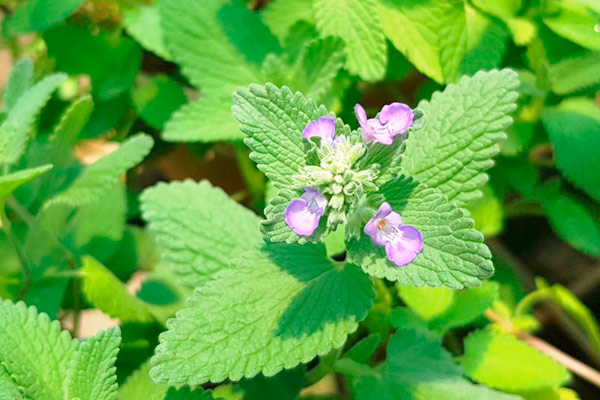
Nepeta cataria
Lemon scent is also characteristic of: Nepeta cataria, which resembles lemon balm, but its leaves are covered with soft hairs even on the upper side, and Calaminta officinalis, which is much smaller and has a purple-red corolla. Artemisia abrotanum, although it has the same smell, can easily be distinguished, since it belongs to the family Asteraceae.
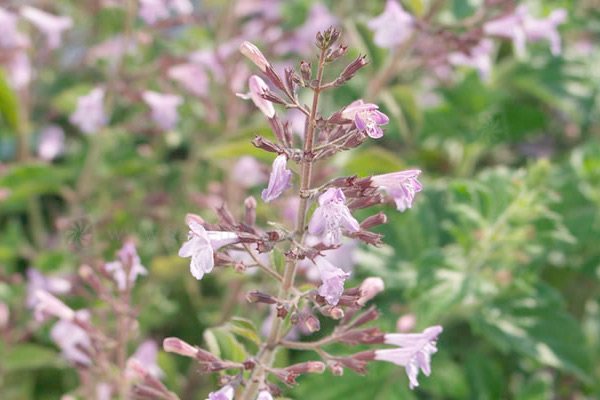
Calaminta officinalis
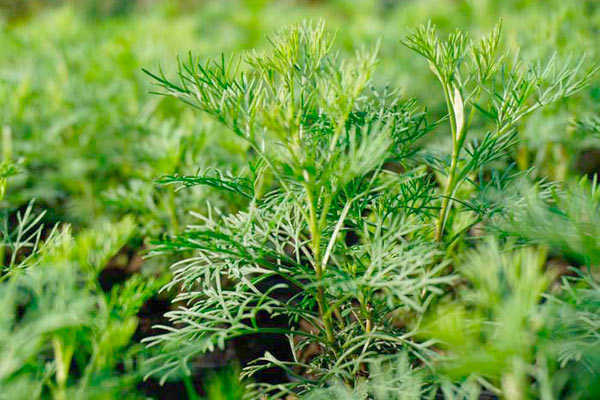
Artemisia abrotanum