

![MultipartFile resource [file_data]](/assets/img/articles/заглавна-зеленчук-юли-1.jpg)
The final harvests of tomatoes and cucumbers in protected cultivation facilities are being carried out. Crops are treated with plant protection products (PPP) only when absolutely necessary, using pesticides with short pre-harvest intervals and observing the quarantine periods at harvest. By the end of the month, the areas are cleared of plant residues and prepared for the next vegetation. In plots where an infestation by root-knot nematodes has been established, the plants are lifted with a fork and the roots are carefully collected in bags in order to reduce their population density and limit their spread.
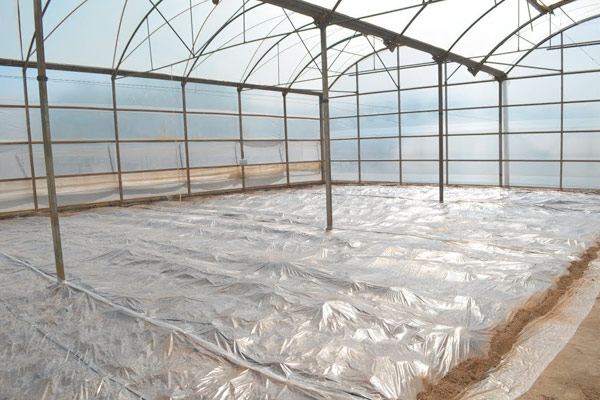
In the compartments where disinfection by solarization will be carried out, they may be cleared 1–2 weeks earlier in order to take advantage of days with higher temperatures. For this purpose, the areas are thoroughly cleaned, ploughed and cultivated to a fine tilth. They are irrigated to reach 70% of field capacity, then tightly covered with dark or transparent plastic film and left for 50–60 days. Before that, the vents and doors are closed in order to achieve a higher temperature. This disinfection is effective against soil-borne pathogens, nematodes, pests and weeds present in the soil.
For disinfection with chemical fumigants (Basamid granulate, Nemasol, etc.) the most suitable days are in September/October. Therefore, such areas may be cleared somewhat later.
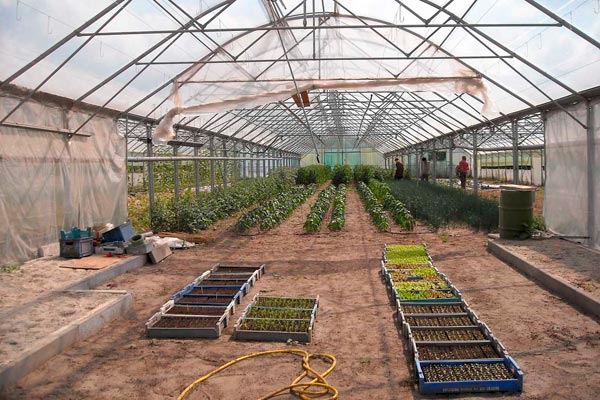
Areas where second crops will be planted are thoroughly cleaned. If necessary, fumigation is carried out with potassium permanganate and sulphur, or with formalin, to destroy pathogen spores adhering to the structures or remaining on the soil surface. Such fumigation may also be carried out before pulling up and removing the plant residues from the old crop. This is followed by soil cultivation and bringing it to a fine tilth, and subsequent bed shaping for planting the new crops.
In the seedling compartments, care for seedlings of preceding crops continues. Outdoors, seedlings of brassica crops for late production are still being grown. Mass harvesting of field-grown vegetable production is beginning. At the same time, attention is paid to the “critical periods” for the occurrence of late blight, leaf spots and bacterial diseases. The period is particularly favourable for the appearance and development of powdery mildews, as well as for mass multiplication and severe harmful activity of spider mites.
Plant protection
In seedlings there is a risk of occurrence of false and true damping-off. The former results from large fluctuations in air and soil temperature between day and night, as well as from improper irrigation regimes. The latter is caused by pathogens. When an attack by damping-off pathogens is established, diseased plants are removed and the patches beneath them are “burned” by watering with a 3% solution of copper sulfate or ammonium nitrate. The remaining plants are treated with registered PPP – Beltanol 400 g/ha.
Under favourable conditions (critical periods) tomatoes may be attacked by late blight or early blight (Alternaria leaf spot). Control of these diseases is carried out by treatment with registered PPP:
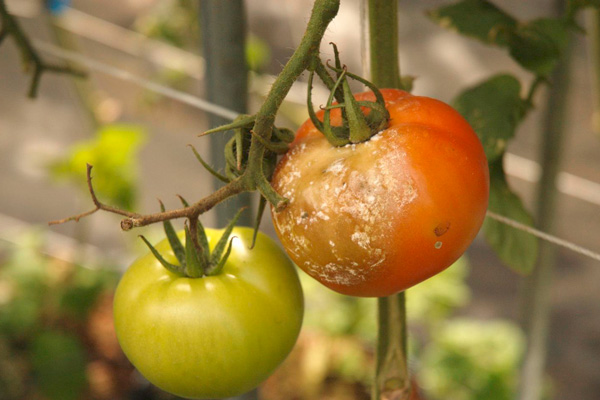
Late blight in tomatoes – Azaka 80 ml/ha; Acticluster 300–400 ml/ha; Enervin SC 120 g/ha; Zoxis 250 SC 70–80 ml/ha; Cuproxat FL 0.3%; Orvego 70 ml/ha; Revus 250 SC 50 ml/ha; Cymbal Flow 50 ml/ha; Taegro 18.5–37.0 g/ha; Tazer 250 SC 80–100 ml/ha; Follow 80 WG 200 g/ha; Funguran OH 50 WP 0.15%.
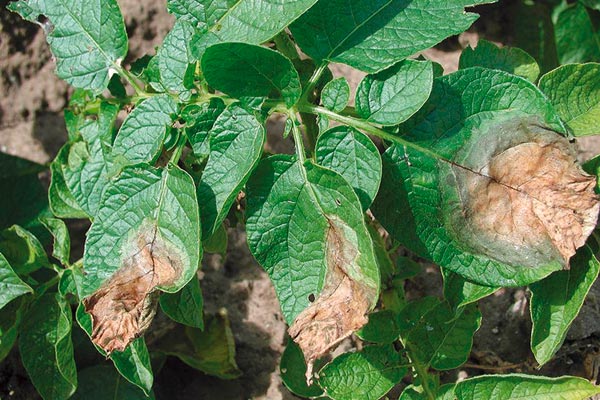
Early blight (Alternaria leaf spot) in tomatoes and pepper – Azaka 80 ml/ha; Dagonis 100 ml/ha; Zoxis 250 SC 70–80 ml/ha; Kopfors Extra 200 g/ha; Ortiva Top SC 100 ml/ha; Prev-Gold 200–600 ml/ha; Sinstar 70–80 ml/ha; Taegro 18.5–37.0 g/ha; Tazer 250 SC 80–100 ml/ha.
In cucumbers during this period, powdery mildew and downy mildew cause problems.
Against powdery mildew treatments are carried out with: Vivando 20 ml/ha (0.02%); Dagonis 60 ml/ha; Domark 10 EC 50 ml/ha; Zoxis 250 EC 70 ml/ha; Collis SC 40–50 ml/ha; Legado 80 ml/ha; Ortiva Top SC 100 ml/ha; Sivar 80 ml/ha; Sonata SC 500–1000 ml/ha; Taegro 18.5–37.0 g/ha; Topaz 100 EC – 35–50 ml/ha; Trunfo 80 ml/ha; Phytosev 200 ml/ha; Fontelis SC 240 ml/ha.
Against downy mildew (in cucurbits) treatments are carried out every 7–10 days with authorised PPP: Golbex WP 250 g/ha; Enervin SC 120 g/ha; Zoxis 250 SC 70–80 ml/ha; Infinito SC 120–160 ml/ha; Corsate 60 WG 20–30 g/ha; Prev-Gold 160–600 ml/ha; Taegro 18.5–37.0 g/ha. Spraying should be directed mainly to the underside of the leaves.
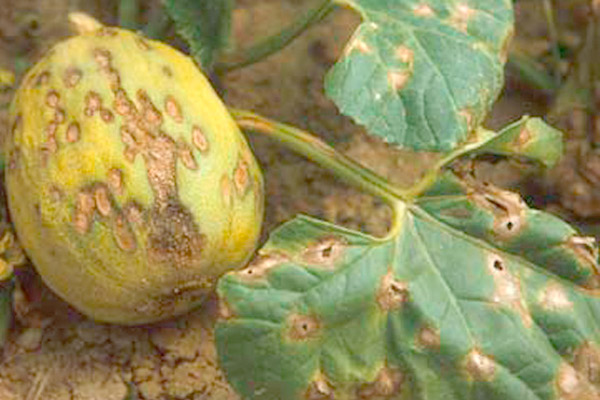
During this period, anthracnose is often observed in watermelons and melons. When it appears, treatments are carried out with: Bordeaux Mix 20 WP 375–500 g/ha; Kocide 2000 WG 100–155 g/ha; Cidely Top 100 ml/ha.
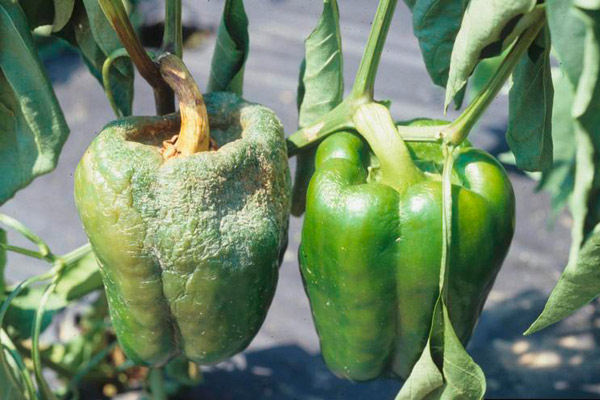
July is the month when the first diseased plants of pepper blight Phytophthora capsici appear. It may be triggered by uneven terrain with low, flooded spots where irrigation water stagnates, or by intense rainfall. Therefore, pepper fields must be well levelled. It is advisable to avoid surface (gravity) irrigation and sprinkler irrigation of crops, and to rely on drip irrigation. When the first patches of diseased plants appear, they are destroyed together with the neighbouring healthy ones by watering with a 3% solution of copper sulfate or ammonium nitrate. They are then collected in bags and destroyed outside the crop. The remaining healthy plants are sprayed thoroughly, including the collar. Registered PPP: Zoxis 250 SC 70–80 ml/ha; Taegro 18.5–37 g/ha; Tazer 250 SC 80–100 ml/ha. Corsate 60 WG 40 g/ha is not registered, but may be successfully used against this disease.
Under prolonged drought or below-normal rainfall, conditions are created for powdery mildew attacks in other vegetable crops as well – pepper, eggplant.
For control of powdery mildew in pepper and eggplant the following are registered: Vivando 30 ml/ha; Dagonis 60 ml/ha; Kozavet DF 500 g/ha; Ortiva Top SC 100 ml/ha; Sonata SC 500–1000 ml/ha; Taegro 18.5–37.0 g/ha; Tazer 250 SC 80–100 ml/ha; Topaz 100 EC – 35–50 ml/ha; Phytosev 200 ml/ha.
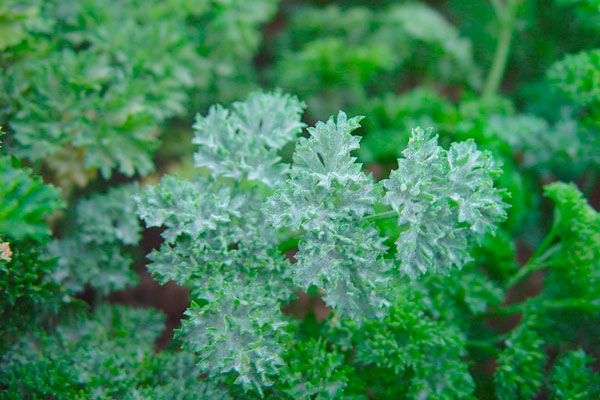
Powdery mildew (Erysiphe umbelliferarum) often attacks carrots. In carrots, leaf blight caused by Cercospora carotae also causes problems. Against powdery mildew the following are registered: Zoxis 250 SC 80–100 ml/ha; Kumulus 600 g/ha; Limocid 240 ml/ha; Ortiva Top SC 100 ml/ha; Signum 60 g/ha;
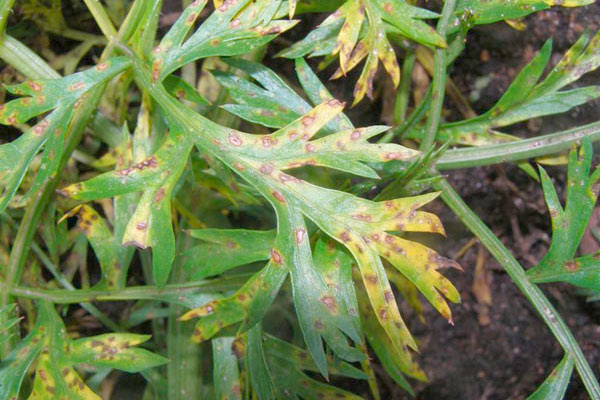
Against leaf blight Bordeaux Mix 20 WP 375–500 g/ha is registered.
In leek, rust appears, and control is carried out by spraying with Zoxis 250 SC 80–100 ml/ha; Ortiva Top SC 100 ml/ha.
Under favourable conditions, downy mildew develops in brassica crops. Seedlings are particularly susceptible. Control is carried out with Bordeaux Mix 20 WP 375–500 g/ha or with Infinito SC 160 ml/ha.
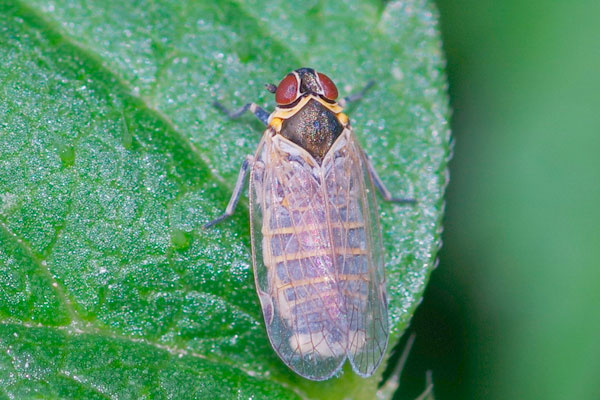
The flight of the leafhopper Hyalestes obsoletus, which is a vector of the phytoplasma causing stolbur in some vegetable crops, is still continuing. This is a prerequisite for new infections and an increase in the number of diseased plants of pepper, eggplant, tomatoes, celery, etc. For control of the vector, treatments are carried out with: Mospilan 20 SP 25 g/ha; Meteor 60–70 ml/ha.
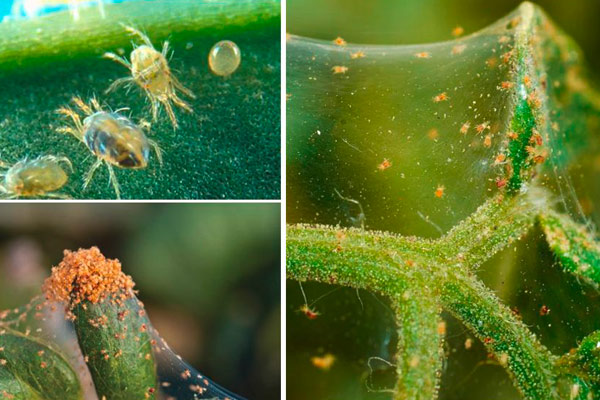
Among other pests, the harmful activity of spider mites is stronger; they damage tomatoes, pepper, eggplant, tomatoes, cucurbits, leek, okra, celery, parsley and others. Control is carried out by treatment with the following PPP: Apollo 50 SC 30–40 ml/ha; Bermectin 50–100 ml/ha; Butik 30–100 ml/ha; Valmec 15–100 ml/ha; Vertimec 018 EC 60 ml/ha; Voliam Targo 063 SC 80 ml/ha; Zoom 11 SC 12.55–50 ml/ha; Requiem Prime 500–1000 ml/ha; Laota 15–100 ml/ha; Naturalis 100–200 ml/ha; NeemAzal T/S 0.3%; Nissorun 10 WP 75 g/ha; Flipper 1–2 l/ha; Shirudo 15 g/ha.
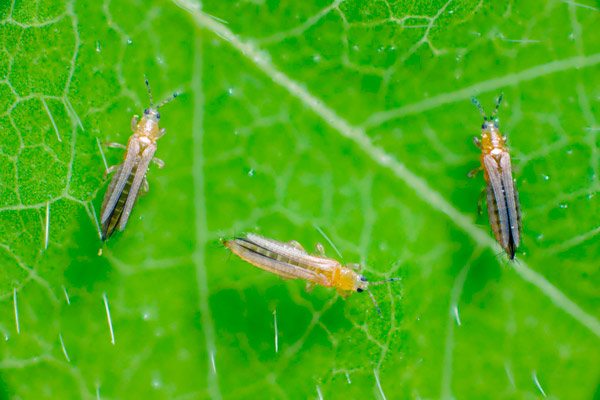
The harmful activity of thrips, which are vectors of tomato spotted wilt virus (bronzing) in tomatoes, pepper and others, continues. When infestation is established, treatments may be carried out with: Azatin EC 100–150 ml/ha; Dicarzol 10 SP 556 g/ha; Exalt 200–240 ml/ha; Limocid 400–800 ml/ha; Niimik Ten 390 ml/ha; Oikos 100–150 ml/ha; Requiem Prime 500–1000 ml/ha; Sineis 480 SC – 10–37.5 ml/ha; Naturalis 100–150 ml/ha.
Damage from the tomato leaf miner in the field is expected. Treatments may be carried out with some of the following plant protection products: Alverde 240 SC 100 ml/ha; Altacor 35 WG 8–12 g/ha; Ampligo 150 ZC 40 ml/ha; Affirm 095 SG 150 g/ha; Voliam Targo 063 SC 80 ml/ha; Verimark™ 200 CK – 37.5–50 ml/ha; Delmur – 50 ml/ha; Exalt 200–240 ml/ha; Coragen 20 SC 14–20 ml/ha; NeemAzal T/S 0.3%; Niimik Ten 390 ml/ha; Oikos 150 ml/ha; Rapax SBS 100–200 ml/ha; Sineis 480 SC 10–25 ml/ha.
Cotton bollworm is a typical polyphagous pest. It damages numerous vegetable crops: tomatoes, pepper, beans, peas, watermelons, melons, eggplant, okra, cucumbers, etc. During this period, damage from the second generation may be observed. Against the caterpillars treatments may be carried out with some of the following plant protection products: Ampligo 15 ZC 0.04 l/ha; Altacor 35 WG 8–12 g/ha; Affirm 095 SG 150 g/ha; Exalt 200–240 ml/ha; Voliam Targo 063 SC 80 ml/ha; Verimark™ 200 CK – 37.5–50 ml/ha; Delmur – 50 ml/ha; Skato 30 – 50 ml/ha; Coragen 20 SC/Voliam 14–20 ml/ha; Helicovex 20 ml/ha; Dipel DF 100 g/ha; Rapax 100–200 ml/ha; Oikos 150 ml/ha; Niimik Ten 390 ml/ha.
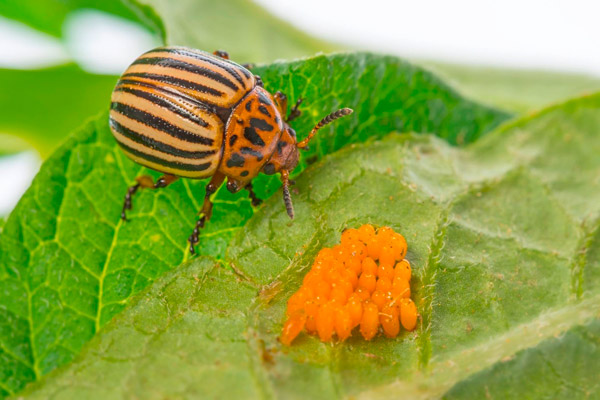
Tomato, eggplant and potato crops are regularly inspected for the occurrence of the Colorado potato beetle. Control measures include treatments with: Azatin EC 100–150 ml/ha; Ampligo 150 ZC 0.03 l/ha; Afikar 100 EC 20 ml/ha; Adalam 40–80 g/ha; Ascot 40–80 g/ha; Delmur 50 ml/ha; Efcimetrin 10 EC 20 ml/ha; Coragen 20 SC/Voliam 5–6 ml/ha; Masan 25 ml/ha; Meteor 60–70 g/ha; Niimik Ten 390 ml/ha; Oikos 100–150 ml/ha; Patrol 40–80 g/ha; Sineis 480 SC 5 ml/ha; Cyclon 10 EC 20 ml/ha; Cyperfor 100 EC 20 ml/ha; Citrin Max/Cyperkill 500 EC/Cypert 500 EC/Poly 500 EC 5 ml/ha; Sherpa 100 EC 100 20 ml/ha; Sherpa 100 EW 20 ml/ha.
In potatoes, damage from the potato tuber moth may be observed in certain regions. For control of this pest, some of the following insecticides may be used: Coragen 20 SC/Voliam 5–6 ml/ha; Ampligo 15 ZC 0.03 l/ha. Often, treatments aimed at the Colorado potato beetle also limit potato tuber moth infestation.
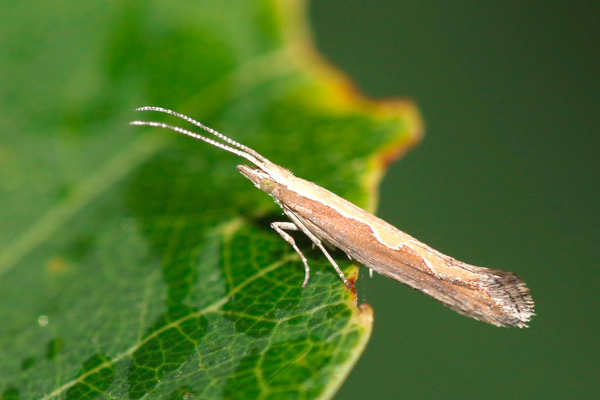
Diamondback moth
In brassica seedlings and already transplanted cabbage, monitoring is carried out for attacks by the large white butterfly, diamondback moth and flea beetles. For control of the large white butterfly the following are registered: Altacor 35 WG 8–10 g/ha; Exalt 200 ml/ha; Meteor 60–70 ml/ha; Citrin Max/Cyperkill 500 EC/Cypert 500 EC/Poly 500 EC 5 ml/ha; Dipel 2X 100 g/ha. Against the diamondback moth treatments are carried out with: Altacor 35 WG 8–10 g/ha; Exalt 200 ml/ha, and against flea beetles with: Meteor 60–70 ml/ha.
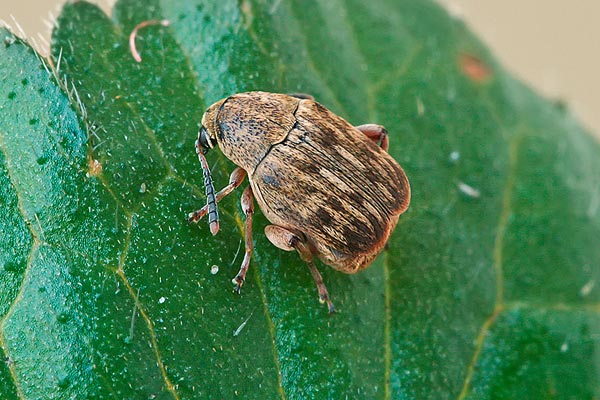
When pods start to yellow, the bean weevil begins laying eggs on the beans. Field control is effective when directed against the adults, which requires spraying at the correct time according to pod maturity. Three sprayings may be carried out at 7-day intervals with some contact pyrethroid products. For field control of this pest, no insecticides are registered.
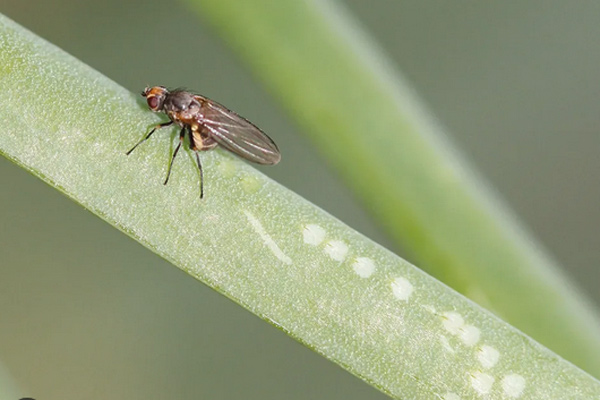
Leaf-mining fly in leek – control is effective when directed against adults. Two to three sprayings are carried out at 7–10 day intervals. Since no insecticides are registered, pyrethroid products may be applied.
When treating onion and brassica crops, an adjuvant should be added to the pesticide spray solutions.
All requirements for application (registered PPP, quality of spraying, dosages, pre-harvest intervals), transport and storage of chemical plant protection products must be observed. Hygiene and safety standards for working with toxic substances must be complied with. A treatment log must be kept in accordance with the requirements of the Bulgarian Food Safety Agency (BFSA).