

![MultipartFile resource [file_data]](/assets/img/articles/неприятели-овощна-1.jpg)
In July, plant protection measures are carried out to preserve fruit production. Fallen fruits are collected and removed from the orchard.
Aphids on fruit crops (fam. Aphididae)
Aphids continue their harmful activity. In case of heavy infestation, damaged leaves dry up and fall, shoots become distorted and lag in their development, and fruits remain small and deformed. Aphids cause not only direct damage to fruit species, but also transmit dangerous viral diseases.
Control: Spraying is carried out at ET:
Apples, pears: colonies of Aphis spp. - 10-15 pcs./100 shoots; colonies of Dysaphis spp. - 5 pcs./100 shoots.
Authorised plant protection products: a.i. tebufenpyrad - Shirudo 25 g/da; a.i. flonicamid - Tepekki 14 g/da, Afinto 14 g/da, Hinode 14 g/da; a.i. pyrethrins - Abanto 75 ml/da, Krisant EC 75 ml/da, Natur Breaker 75 ml/da, Pyregard 75 ml/da for apricots, peaches, plums and cherries; a.i. flupyradifurone - Sivanto Prime 90 ml/da for apples and pears, a.i. spirotetramat - Movento 100 SC 0.075-0.12% for apples and pears and 0.075-0.1% for apricots, peaches, plums and cherries; a.i. sulfoxaflor - Closer 120 SC 20-40 ml/da for apples, pears, quinces, peaches and cherries; a.i. azadirachtin - Oikos 100-150 ml/da, Neemik Ten 260-390 ml/da for apples.
Pome fruit species
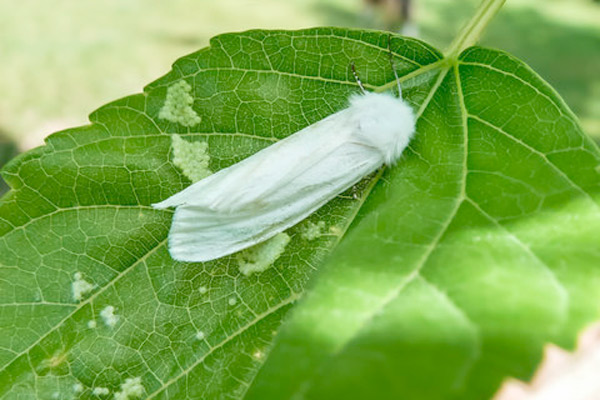
Fall webworm
In July, the moths of the second generation are on the wing. The females lay their eggs on the underside of the leaves. The caterpillars feed by skeletonising the leaves, spinning webs and destroying the foliage. In the absence of food, they can also superficially gnaw the fruits.
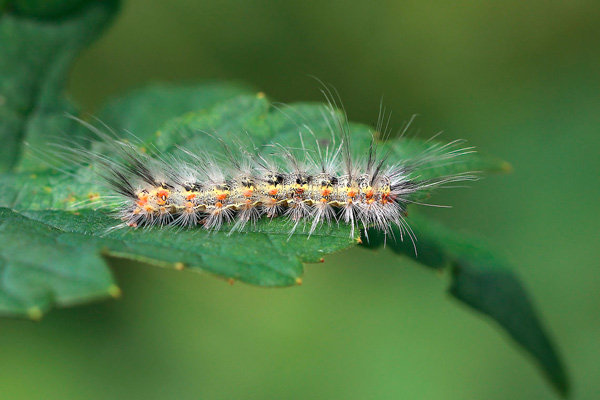
Control: At low population density, cutting out and burning of caterpillar nests is applied. Chemical control is carried out against newly hatched caterpillars.
Authorised plant protection products: All approved insecticides for the control of codling moth and spotted tentiform leafminer can be used, as well as bioproducts based on Bacillus thuringiensis.

Codling moth
In July, the moths of the second generation are on the wing, and they lay their eggs mainly on the fruits. After hatching, the caterpillars bore into the fruits and feed on the seeds in the seed chamber. As a result of the damage, the fruits drop prematurely. Damage caused by the caterpillars of this generation is the most severe.
Control: Chemical treatments are carried out at the beginning of egg laying with insect growth regulators and against caterpillars before they bore into the fruits.
Economic threshold (ET) - for the second generation: 1.5-2% fresh entries into the fruits.
Authorised plant protection products: a.i. spinetoram - Delegate 250 WG 30 g/da; a.i. chlorantraniliprole - Coragen 20 SC 16-30 g/da, Voliam 16-30 ml/da; a.i. cypermethrin - Cyperfor 100 EC 30 ml/da, Sherpa 100 EC 30 ml/da, Aficar 100 EC 30 ml/da, Efcymetrin 10 EC 30 ml/da; a.i. emamectin benzoate - Affirm Opti 200 g/da; a.i. spinosad - Syneis 480 SC 20-30 ml/100 l water; a.i. Granulovirus – CpGV-V22 3 x 10¹³ granules/litre - Madex Twin 10 ml/da;
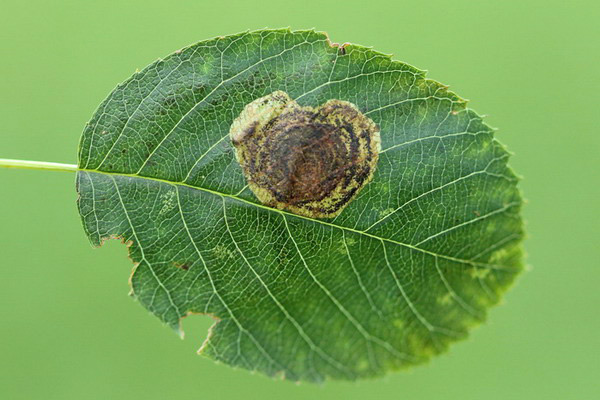
Spotted tentiform leafminer
In July, the flight of the moths of the third generation begins. The caterpillars feed on the parenchyma between the two epidermal layers of the leaves and form mines that become filled with excreta. As a result of the damage, the tissue turns brown. In the case of heavier infestation, two or more mines can be found on one leaf, which often merge into common patches.
Control: Chemical control is carried out at ET: 2-3 eggs and mines per leaf.
Authorised plant protection products: a.i. chlorantraniliprole - Coragen 20 SC 16-30 g/da, Voliam 16-30 ml/da; a.i. emamectin benzoate - Affirm Opti 200 g/da; a.i. cypermethrin - Cyperfor 100 EC 30 ml/da, Sherpa 100 EC 30 ml/da, Aficar 100 EC 30 ml/da, Efcymetrin 10 EC 30 ml/da, a.i. chlorantraniliprole 45 g/l + abamectin 18 g/l - Voliam Targo 063SC 75 ml/da and others.
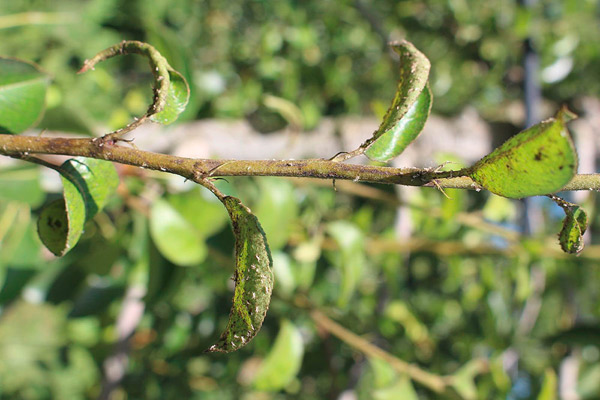
Pear psylla
During the month, mixed populations of adults, larvae and nymphs of the pest. are observed. They form dense colonies and suck sap from leaves, shoots and fruits, excreting “honeydew” on which sooty mould fungi develop. Affected leaves and shoots turn black, and fruits lose their market value. Pear psylla causes not only direct damage, but also transmits a dangerous mycoplasma disease that leads to drying out and death of pear trees.
Control : From July to September, chemical control is carried out at ET : 20-25% infested shoots or one larva per twig.
Authorised plant protection products: a.i. tebufenpyrad - Shirudo 25 g/da; a.i. spirotetramat - Movento 100 SC 0.12-0.15%; a.i. spinosad – Syneis 480 SC 30-35 ml/100 l water and others;
San José scale
In July, the second generation of the pest develops. On the fruits, red, round spots appear, with the scale shield visible in their centre, while anthocyanin spots are observed on branches and trunks.
Control: Placement of pheromone traps to detect the appearance of adults. Control is directed against the larvae at ET: 10 pcs./100 cm twig or 2-3 infested fruits.
Authorised plant protection products: a.i. sulfoxaflor - Closer 120 SC 40 ml/da.
European red mite
In dry and warm weather, the population density of the European red mite increases. Damage is caused by larvae, nymphs and adults. They suck sap from the leaves, which reduces the chlorophyll content and adversely affects photosynthesis. In case of heavy infestation, leaves dry up prematurely and fall.
Control: Chemical control of infested fruit trees is carried out when the following ET:
- Apple: 3-4 mobile forms per leaf.
- Pear: 3-4 mobile forms per leaf - at the beginning of fruit growth; 5-7 mobile forms per leaf - after the beginning of fruit growth.
Authorised plant protection products: a.i. abamectin 18 g/l - Vertimec 018 EC 100 ml/da in apple, a.i. chlorantraniliprole 45 g/l + abamectin 18 g/l - Voliam Targo 063SC 75 ml/da, a.i. hexythiazox 31.2 g/l + fenpyroximate 62.4 g/l - Nissorun Plus 120 ml/da.
Stone fruit species

Plum fruit moth
In July, the moths of the second generation of the pest are on the wing. The females lay their eggs on the fruits. The caterpillars hatch one week after oviposition, bore into and feed on the flesh of the fruit, making tunnels directed towards the stalk. Damaged fruits stop growing, acquire a violet tint and fall together with the caterpillars.
Control: Chemical treatments are carried out at the beginning of egg laying with insect growth regulators and against caterpillars before they bore into the fruits.
ET for the second generation: 1.5-2% fresh entries into the fruits;
Authorised plant protection products: a.i. spinetoram - Delegate 250 WG 30 g/da; a.i. chlorantraniliprole - Coragen 20 SC 16-30 g/da, Voliam 16-30 ml/da; a.i. emamectin benzoate - Affirm Opti 250 g/da.
Oriental fruit moth
In July, the moths of the third generation of the pest are also on the wing and lay eggs. The caterpillars bore into the fruits. In stone fruit species, they feed on the flesh, which subsequently collapses and softens. In pome fruit species, unlike codling moth, the caterpillars feed on the flesh without affecting the seeds.
Control: Chemical treatments are carried out at the beginning of egg laying with insect growth regulators and against caterpillars before they bore into the fruits.
ET:
-during the vegetation period – 10-15 moths/trap/week;
-young orchards – 2-3% shoots damaged by the caterpillar;
-bearing orchards – 5% damaged shoots or 2-4% fruits attacked by the caterpillar.
Authorised plant protection products: a.i. spinetoram - Delegate 250 WG 30 g/da; chlorantraniliprole - Coragen 20 SC 16-30 g/da, Voliam 16-30 ml/da; a.i. chlorantraniliprole 45 g/l + abamectin 18 g/l - Voliam Targo 063SC 75 ml/da; a.i. emamectin benzoate - Affirm Opti 200-225 g/da; Granulovirus – CpGV-V22 3 x 10¹³ granules/litre - Madex Twin 10 ml/da.
Peach twig borer
During the month, the caterpillars of the second generation of the pest are harmful. The caterpillars of this generation damage both shoots and fruits. Damage to the shoots consists in tunnelling the terminal part, as a result of which they dry up. On the fruits, they destroy the interior of the young fruits, and in larger ones they gnaw a short tunnel in the flesh. One caterpillar damages 1-2 shoots and/or one fruit.
Control: When reaching ET: 3% damaged shoots and fruits by the caterpillar.
Authorised plant protection products: a.i. chlorantraniliprole - Coragen 20 SC 16-30 g/da, Voliam 16-30 ml/da; a.i. chlorantraniliprole 45 g/l + abamectin 18 g/l - Voliam Targo 063SC 75 ml/da; a.i. spinosad - Syneis 480 SC 20 ml/da.
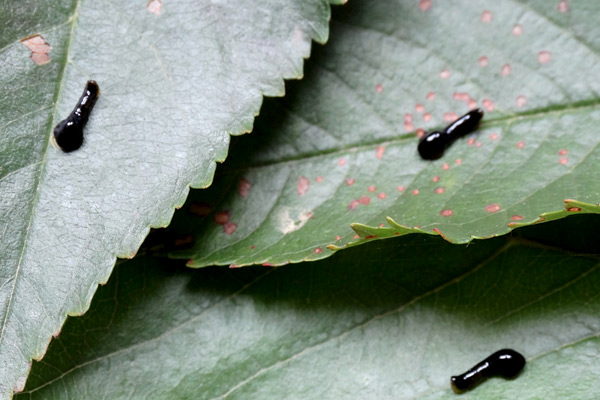
Cherry leaf sawfly
In July, the development of the second generation of the pest takes place. After hatching, the false caterpillars move to the upper side of the leaves and skeletonise them by gnawing the upper epidermis and parenchyma without affecting the lower epidermis. Damaged leaves turn yellow, then brown, and fall.
Control: At high population density, treatments are carried out against adults before egg laying and against false caterpillars immediately after hatching.
Authorised plant protection products: There are no officially registered products; all insecticides for the control of plum fruit moth and peach twig borer can be used.