

![MultipartFile resource [file_data]](/assets/img/articles/лозе-юли-1.jpg)
* During this period, the vines are in the phenological stage from „end of flowering” to „beginning of berry ripening” for the early varieties.
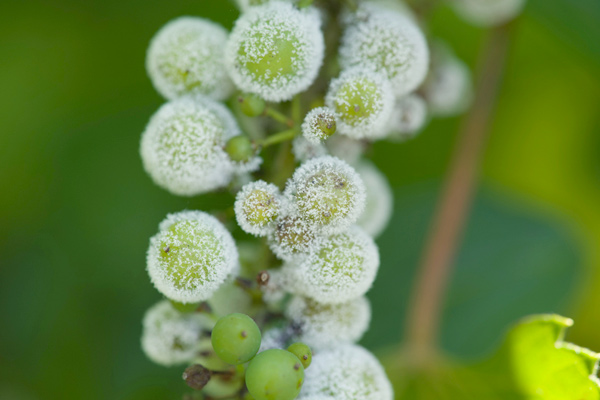
Downy mildew
Infection of the still tender berries occurs directly through the epidermis, the so-called form “grey rot”. In wet weather the berries are covered with a sporulating growth and rot rapidly. As the berries increase in size, the disease spreads from the pedicels, the so-called form “brown rot”. In this form, the skin around the berry stalks becomes pale brown, the berries turn brown, wither, mummify and fall off, but no white growth appears.
During the month, preventive treatments against grapevine downy mildew (before sporulation of the pathogen and before rainfall) must be continued. The timing of the sprays is determined on the basis of incubation periods. Calculation of each subsequent incubation period begins when rain or dew is present for at least two hours. This is the time required for the conidiospores responsible for mass vegetative infections to germinate. Contact fungicides are used for protective spraying (with spray intervals of 3-7 days). Under conditions favouring disease development, locally systemic fungicides (with spray intervals of 7-10 days) and systemic fungicides (with spray intervals of 10-14 days) are applied.
When contact fungicides are used, the intervals between sprays are from 3 to 7 days, for locally systemic fungicides from 7 to 10 days, and for systemic fungicides from 10 to 14 days. In case of frequent showers and presence of infection, the intervals are shortened.
Authorised contact fungicides: Bordo Mix - 500-600 g/ha, Vitra 50 WP, Cuproxide 50 WP - 0.15% (150 g/ha), Kocide 2000 WG - 0.12%, Coprantol Duo - 200 g/ha, Cuproxat FL - 0.3%, Cuprocin 35 WP - 200-300 g/ha, Pergado F 45 WG - 200 g/ha, Funguran OH 50 WP - 0.15%, Champion WP - 0.15 %.
When climatic conditions are favourable for the development of downy mildew – frequent showers and cooler weather – it is necessary to perform the first spray with systemically acting fungicides.
Authorised products with locally systemic and systemic action: Alial 80 WG - 75-330 g/ha, Folpan 80 WDG - 0.15%, Delan Gold - 70 ml/1000 m2, Quadris 25 SC - 0.075%, Melody Compact 49 WG - 150-175 g/ha, Mikal Flash - 0.3%, Orondis Ultra - 67 ml/ha, Ridomil Gold R WG - 500 g/ha, Ridomil Gold Combi 45 WG - 200 g/ha, Folpan 80 WDG - 0.15%, Profiler 71.1 WG - 200-225 g/ha, Solofol - 188 g/ha, Zorvec Vinabel - 50 ml/ha, Leymay - 37.5 ml/ha, Vitene Tripolo R - 400-450 g/ha.
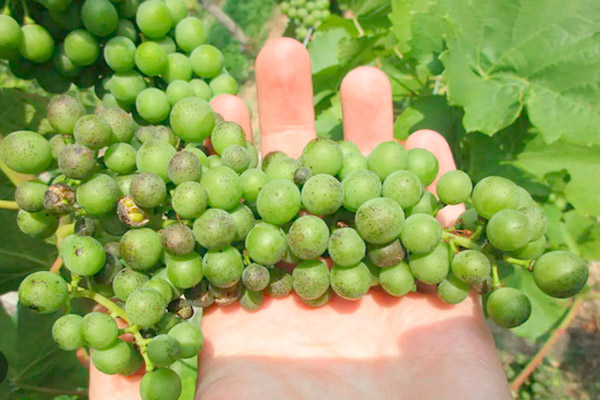
Powdery mildew
The affected young berries are covered with a grey-white coating, under which the skin is blackened. On enlarged berries, dark brown spots also appear, which are clearly visible after wiping off the coating. Since oidium develops superficially, the interior of the berry remains healthy and continues to grow. Therefore, the affected berries that have not completed their growth become deformed, crack deeply and the seeds become exposed.
Treatments against powdery mildew can be combined with those against downy mildew. To avoid the development of resistance, plant protection products with different active substances and different modes of action are alternated.
Treatments should be carried out every 8-10 days, depending on climatic conditions, varietal susceptibility, degree of infestation and the mode of action of the fungicide used.
Authorised plant protection products: Eminent 125 ME - 24 ml/ha; Carbicure 500 g/ha; Collis SC - 30-40 ml/ha; Quadris 25 SC - 0.075%; Kumulus - 200/300 g/ha; Kusabi - 30 ml/ha; Microthiol - 1210 ml/ha, Talendo 20 EC - 20-25 ml/ha; Thiovit Jet 80 WG - 0.3% (before flowering) and 0.2% (after flowering); Topas 100 EC - 30 ml/100 l spray solution; Flint Max 75 WG - 0.016%; Sulgran - 1250 g/ha; Taegro - 18.5-37.0 g/ha; Dynali 090 DC - 50-65 ml/ha; Domark 10 EC - 25-30 ml/ha, Password 25 WG - 30-40 g/ha, Reviona - 130 ml/1300 m2; Riza 25 EW - 40 ml/ha; Sercadis - 15 ml/ha; Spirox - 60 ml/ha; Domark 120 EC - 25-30 ml/ha.
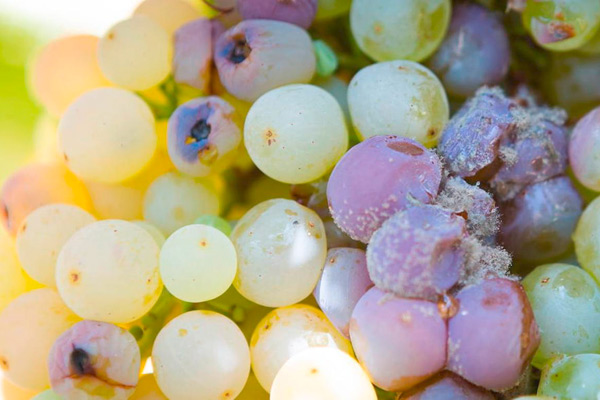
Grey mould
The pathogen does not attack green berries due to the high acidity of their juice. Fruit rot develops from veraison to consumption. Initially, light brown spots appear on the skin of infected berries, which peels off easily when touched. In wet weather the affected berries are covered with abundant grey growth, and in dry weather the berries shrivel and dry out.
To protect vineyards from grey mould, it is necessary to: create well-aerated conditions in the plantation – removal of leaves in the bunch zone during the period of bunch loosening and veraison; protect the grapes from mechanical injuries and damage caused by other pests (downy mildew, oidium and moths); carry out chemical treatment at the phenological stage „veraison of the grapes”. Chemical treatments are completed two to three weeks before harvest.
Authorised plant protection products: Avalon - 250 ml/ha, Banjo - 100-150 ml/ha, Botrybel - 0.4-1.5 l/ha, Cantus - 100 g/ha, Orius 200 EW - 50 ml/ha, Folpan - 0.15%, Geox WG - 50 g/ha, Mevalon - 160-400 ml/ha, Prolectus 50 WG - 120 g/ha, Switch 62.5 WG - 100 g/ha, Follow 80 WG - 187.5 g/ha.
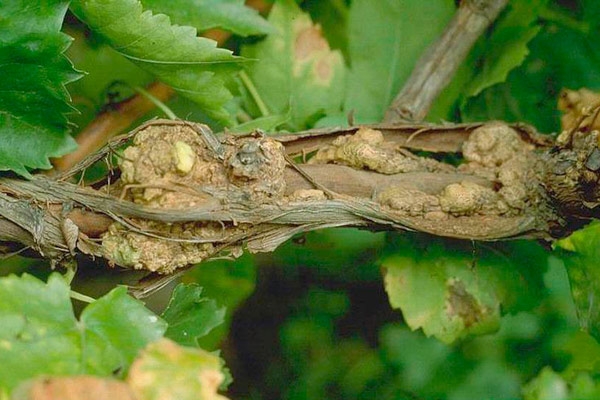
Bacterial canker
In infected plants on the lignified parts, close to the soil surface or just below the soil surface, swellings (tumours) are observed. Diseased plants exhibit depressed growth, chlorotic leaves and are easily winter-killed during cold winters.
Vines showing symptoms of the disease must be marked without fail.
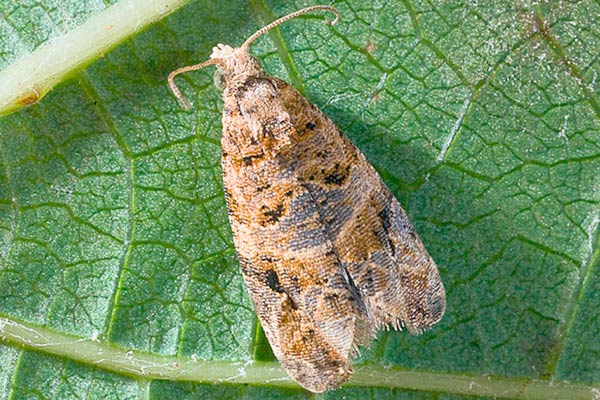
European grapevine moth
The flight of the butterflies of the second generation begins in the second half of June and ends around the third ten days of July. Eggs are laid from the third ten days of June until the end of July on the grape berries, and larvae are present from the end of June until the second half of August. During the flight of the butterflies, air temperature often rises above 32-34°C and humidity drops to 50-40%. These conditions are unfavourable for the butterflies, which live for a short time.
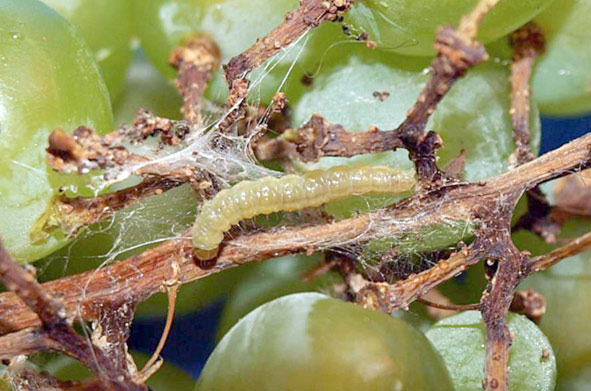
The larvae of this generation damage ripening and already ripe grape berries by webbing them together with silken threads. Favourable conditions are thus created for the development of fungal diseases and the extent of the damage increases.
Treatment should be carried out at the ETL: for table grape varieties 7-8 larvae per 100 bunches, and for wine grape varieties 10-12 larvae per 100 bunches.
Authorised plant protection products: Aficar - 40 ml/ha, Beltirul - 50-100 g/ha, Delmur - 50 ml/ha, Lamdex extra - 80 g/ha, Coragen 20 SC - 15-21.6 ml/ha, Meteor - 70-90 ml/ha, Decis 100 EC - 12.5-17.5 ml/ha.
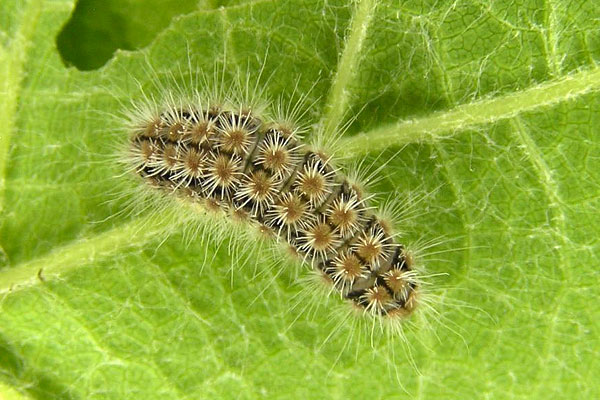
Vine leafroller
The harmful activity of the larvae continues; they gnaw holes or skeletonise the leaves, leaving only the thicker veins undamaged.
Strategy for pest control: To destroy the larvae pupating in the soil, mechanical tillage is carried out.
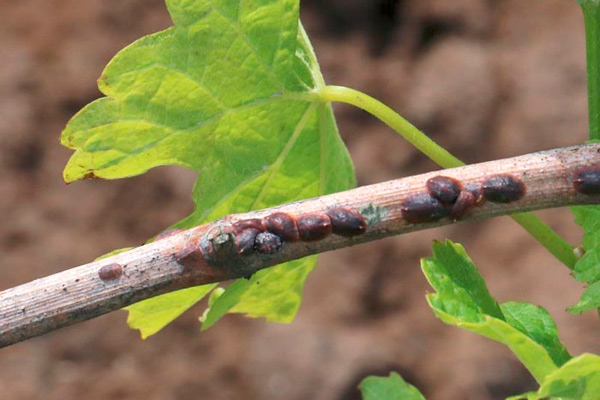
Grape scale insect
Hatching of the larvae continues during the first half of July. They cause damage by sucking sap from the leaves, shoots and grape stalks. They moult once, feed for a certain period, then leave the feeding sites and move to their overwintering sites. As a result of the damage, the vines become weakened.
Chemical control is carried out against the young larvae.
Authorised plant protection product: Ovipron Top EC - May-August – 1000-2000 ml/ha, Linecoil - 1.5 l/ha
Yellow grapevine mite
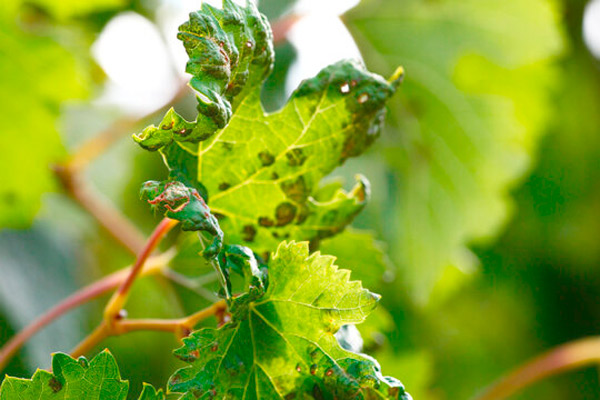
During the summer months, the populations of the different generations of the yellow grapevine mite overlap. As a result of the damage (larvae, protonymphs, deutonymphs and adult mites suck sap from the underside of the leaves), physiological and biochemical disturbances occur in the leaves, which affect vine development and grape quality.
Treatment is carried out against adults and larvae when the ETL is reached - 9-10 individuals/leaf - until the end of July. Authorised plant protection products: Danitron 5 SC - 100 ml/ha, Shirudo - 25 g/ha, Nissorun - 0.05%.
* Article updated on 15.07.2025.