

![MultipartFile resource [file_data]](/assets/img/articles/lavender-1.jpg)
Extreme temperatures – including heat, are at the root of the most serious problems for the species
In recent years, lavender has occupied significant areas both in the traditional regions for its cultivation in Southern Bulgaria and in new territories throughout the country. Bulgaria ranks second after France in terms of essential oil yields and, despite its southern origin, lavender is threatened by climate change. Climate change leads to negative consequences for the cultivation of lavender plantations in Bulgaria, with the two main stress factors being temperature and the lack of moisture reserves in the soils. The undertaking of urgent measures related to the development of irrigation systems, the selection and practical introduction of new drought-tolerant lavender varieties, as well as the agroclimatic zoning of the country, are appropriate elements of a strategy that will adapt domestic lavender producers to these changes and preserve the country’s leading position as a major producer of lavender and lavender oil in the world.
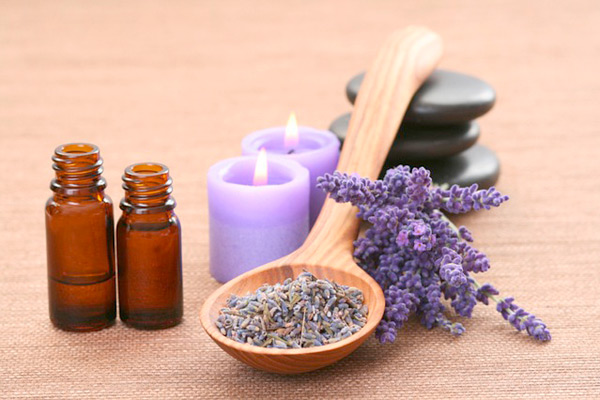
Lavender (Lavandula angustifolia Mill) is a perennial evergreen shrub and a valuable essential oil crop. Its essential oil is used in the perfumery and cosmetics industry for the production of perfumes, eau de toilette, shampoos, deodorants, creams and soaps. The oil exhibits a wide range of pharmacological effects, including spasmolytic, sedative, antiseptic and anti-inflammatory action, which determines its value in herbal medicine. The flowers are also used as a spice in cooking. Lavender is also an excellent ornamental plant, a good nectar-bearing plant, and its honey has not only an excellent aroma but also medicinal properties.
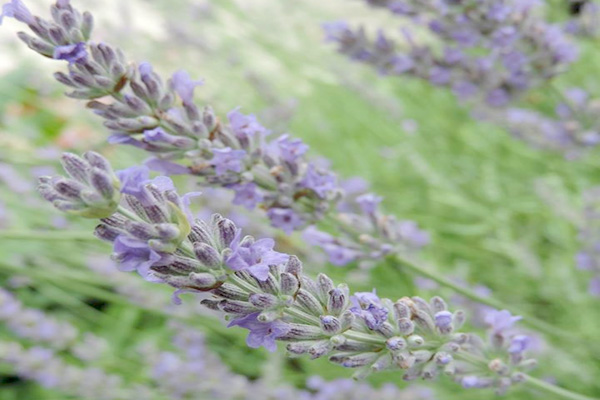
The genus Lavender (Lavandula L.) includes about 30 species, of which 2 species have been introduced into cultivation: narrow-leaved and broad-leaved (L. latifolia Medic.). The essential oil from the second species differs in its component composition, has a sharp odor and is used mainly for perfuming soaps.
The natural range of narrow-leaved lavender is located in the northern part of the Mediterranean region and includes Southern France, Portugal, Italy, Spain, Greece, Corsica, Sardinia, Sicily, reaching as far north as Tyrol, and in the Maritime Alps it rises up to 1700 m above sea level.
Lavender was introduced into Bulgaria in 1907 and began to be cultivated at the Rose Experimental Field in Kazanlak. Until the end of the 1980s this crop was grown mainly in the regions of Plovdiv, Stara Zagora, Pazardzhik and Blagoevgrad, but lately it has become much more widespread throughout the country. From 1 decare of a 4–5-year-old plantation, 300–400 kg of flowers are produced, from which 3–10 kg of oil are obtained.
Some characteristics of lavender
Lavender blooms in June–July for 25–30 days, and the seeds ripen in August–September. The life span of a plant is more than 20–30 years. It is propagated by seeds and vegetatively. The lavender crop is harvested around the end of June – beginning of July.
For the production of essential oil, the inflorescences are harvested and immediately sent for processing by hydrodistillation. The yield of inflorescences is 2.5–3.5 t/ha; in advanced farms it reaches up to 6 t/ha. The essential oil content in the inflorescences of the best varieties reaches 1.8% fresh weight.
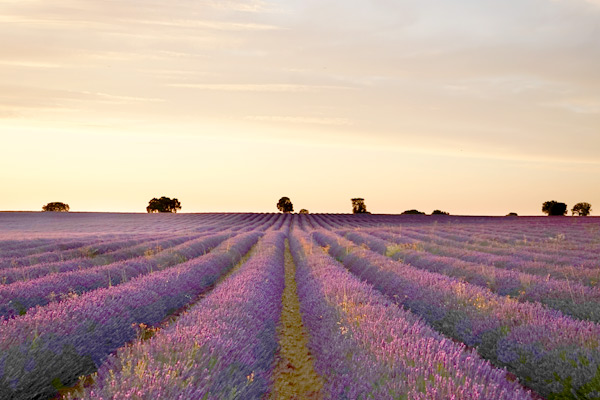
What are the meteorological characteristics of lavender?
Lavender withstands temperatures down to -25 °C. The plant is light-loving. It is not demanding in terms of soil conditions and grows on schist and carbonate soils. Heavy, clayey soils with high groundwater levels are unsuitable.
After planting, lavender should be irrigated during the hot months, with young plants needing more frequent watering than mature ones, about once a week. Irrigation should not be excessive. To prevent plant rot, good drainage is necessary even before planting. Overall, however, the plant is considerably less demanding compared to other essential oil crops. Today in Bulgaria the crop occupies significant areas both in Southern Bulgaria and in Northern Bulgaria in the regions of Varna, Dobrich and Shumen.
Lavender prefers a Mediterranean semi-arid climate. It is most suitable for moderately warm regions with warm and cool winters. The optimal temperature for normal lavender growth is 15–30 °C. However, there are varieties that grow in colder regions and can withstand temperatures from -23 to -20 °C.
In Bulgaria, lavender began to be cultivated at the beginning of the 20th century, but further north – in the Crimea region, for example – lavender has been grown considerably earlier. For years, lavender has been successfully cultivated in Moldova and Ukraine, with ever-increasing areas, so that if prolonged droughts become an indisputable fact in our country, areas to the north of us will continue to expand.
In Moldova, the first plantations date from the 1950s, and in the last 10 years their area has been steadily increasing, without this being directly linked to climate change. By way of comparison – the conditions there are the same as in Northeastern Bulgaria, the quality of the oil is excellent and the product price is competitive, with the main interest coming from France.
What are the impacts of climate change on lavender plants?
Climate change poses a number of challenges on both a global and local scale. Climate change is expected to increase heat stress (the physiological response of the plant to high atmospheric temperatures), the frequency of water shortages and increased soil salinity.
The concept of “stress”, initially applied to animals, is fully applicable to plants as well. Stress in plants is a complex defensive response that includes both nonspecific (common to different types of stress factors) and specific components. It has been established that plants can propagate the state of stress from the zone of impact of the stress factor far beyond its boundaries by means of long-distance electrical signals.
The plant response to stress is usually complex and includes:
- increased permeability of cell membranes,
- increased release of calcium and potassium,
- slowing down of cell growth and division,
- increased respiration and slower photosynthesis.
Heat stress is one of the most important stress factors for lavender
Abiotic stress factors are the parameters of the non-living environment that affect living organisms. Heat stress is one of the most important abiotic stress factors for most plants, including lavender. It causes a significant reduction in growth and yields. In addition, it damages the substance transport chain within the plant itself. Under heat stress conditions, this can lead to damage to the photosynthetic system and disrupt normal metabolism by damaging proteins, lipids and nucleic acids.
An additional stress factor would be water shortage, which affects plant productivity, leading to reduced photosynthesis and consequently reduced growth. Prolonged periods without precipitation create conditions for poor moisture accumulation during the cold period and very rapid depletion of soil moisture during the warm months of the year. In recent years, droughts in Bulgaria in July and August have lasted from 30 to 60 days, and in some years reach 80 and 90 days, turning from summer into autumn drought. Drought can have a significant impact on the entire metabolism of the plant, including by affecting the production of essential oils, which are secondary metabolites.
Lavender is particularly susceptible to changes in climatic conditions and this can lead to reduced yields and sown areas.
A common misconception in the essential oil plant industry is that frost damage is the main reason for the decline in lavender production. In reality, extreme temperatures – including extreme heat – are at the root of the most serious problems. The cultivation area of the plant is experiencing the hottest and driest weather on record. If climatic conditions are too hot, plants cannot retain enough moisture to survive the winter.
Bulgaria would be in a good position to continue supplying high-quality lavender yields. However, the impact of climate change has led to a decrease in winter precipitation, which affects the quality of lavender yields. Rainwater is an important part of the irrigation process for aromatic plants – and particularly for lavender. While aromatic plants can grow in hot conditions with little rainfall, reduced irrigation levels can lower overall yields.
There is another important point – since the global market for lavender oil is oversaturated, a reduction in areas through grubbing up part of the plantations in a given region would balance the market and the price of the oil. Thus, some difficulties related to climate change, specifically for this crop, may turn out to be an advantage for some of its producers in another region of Europe. In any case, for lavender, as for rose, we are talking about a niche sector that is not a driver of Bulgarian agriculture.
What are the potential solutions?
Europe is the fastest-warming continent, therefore it is necessary to find new sources of variation that can cope with heat stress and be used for the cultivation, propagation and development of new genotypes and lavender varieties.
It is necessary to develop effective and efficient screening methods in order to identify and analyze the physiological bases of tolerance to abiotic factors.
An important measure to mitigate the consequences of climate change could be the agroclimatic zoning of the country, that is, specific varieties and crops should be grown in regions where they will be affected to the least extent by agrometeorological conditions, as opposed to the current chaotic practice of attempting to grow all crops everywhere.
Another measure would be the establishment of a network of demonstration fields, such as exists in most European countries. Through such fields, under practical farming conditions, the response of different varieties and genotypes to extreme agroclimatic conditions can be tested, with the aim of selecting the most suitable for the respective region. This can be done both through the relevant producer branch organizations and through partnerships with research institutes and the Ministry of Agriculture.
And last but not least, the restoration and expansion of irrigation systems and facilities, which would ensure the necessary water reserves in the soils to overcome the negative effects of stress on plants caused by higher temperatures and water shortages.
Climate change is increasingly being recognized as one of the greatest challenges facing humanity and all other life on Earth. Like all living inhabitants of the biosphere, medicinal and aromatic plants, including lavender, are not immune to the effects of these changes. Extreme weather events are already affecting their supply on the global market, and forecasts of their future increase will most likely have an even greater impact on their yields. In order for Bulgaria to preserve its leading position on the global essential oil market, Bulgarian farmers, the state and the scientific community must join efforts in urgent measures for adaptation to the new challenges.
Roman Rachkov is part of the Climateka editorial team; he is an agronomist, a specialist in tropical and subtropical agriculture, and a long-standing expert in integrated and organic plant protection. He is Chairman of the Bulgarian Association for Biological Plant Protection and has interests in the field of invasive insect species in Europe.