

![MultipartFile resource [file_data]](/assets/img/articles/заглавна-лозе-2023.jpg)
During this period the vines are in the phenological stages from “bud swelling” to the appearance of the “first inflorescences”.
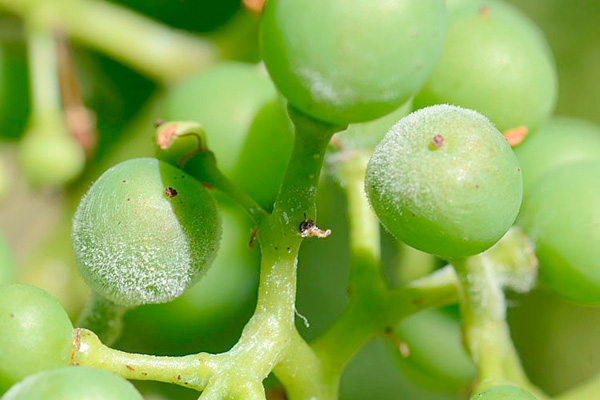
Powdery mildew (oidium)
The disease attacks all green organs of the vine – leaves, shoots and grape clusters. The first symptoms appear at the beginning of the vegetation period. On the leaves, mainly on the upper side, grayish-white powdery spots with sporulating mycelium are observed. In cases of severe infestation, the leaves become deformed and scorched. On the shoots the spots are watery-gray with a whitish coating. Damaged shoots do not ripen well and are prone to winter injury. When the inflorescences are attacked early, they shed; with later infection the berries are covered with a grayish-white coating under which the tissues scorch. The berries crack, exposing the seeds. With still later manifestation the berries do not crack, but are covered with a cobweb-like coating. Secondary pathogens of gray, soft and wet rot penetrate the damaged tissues. After the berries start ripening (veraison), the disease attacks only the cluster stems (rachis).
Oidium develops strongly at moderate temperatures and humid weather. The period before and during flowering of the vine is the most critical for infection. Vine training systems of the pergola type are particularly susceptible to the disease.
Control strategy: Preventive treatments against oidium are an important part of crop protection. The first spraying is decisive. In vineyards without infection from the previous year, the first independent treatment may be carried out when the shoots reach a length of about 10–15 cm. In the presence of severe infection from the previous year, the shoot length should be between 2 and 6 cm.
Treatments are applied at 7–14 day intervals depending on the type of fungicide used.
Registered fungicides for control: Eminent 125 ME – 24 ml/ha; Carbicure – 500 g/ha; Collis SC – 0.04%; Quadris 25 SC – 0.075%; Kumulus DF – 200–300 g/ha; Kusabi – 30 ml/ha; Luna Experience – 12–40 ml/ha; Microthiol – 1210 ml/ha; Talendo 20 EC – 20–25 ml/ha; Talendo Extra – 7.5–25 ml/ha; Thiovit Jet 80 WG – 0.3% (before flowering) and 0.2% (after flowering); Topas 100 EC – 30 ml/ha; Flint Max 75 WG – 0.016% (16 g/ha); Sonata SC – 500 ml/ha; Sulgran – 1250 g/ha; Taegro – 18.6–37 g/ha; Dynali – 50–65 ml/ha; Domark 10 EC – 25–30 ml/ha; Password 25 WG – 30–40 g/ha; Reviona SC – 100 ml/ha; Vivando – 20 ml/ha; Sercadis – 15 ml/ha; Spirox – 60 ml/ha.
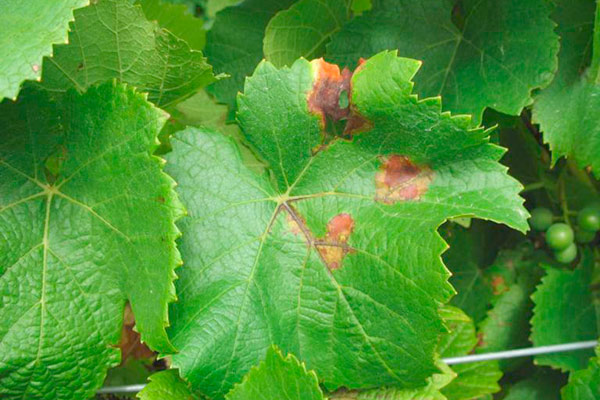
Downy mildew
All green parts of the vine, as well as the inflorescences, are susceptible to attack. Under favourable meteorological conditions – cool weather (18–20 degrees), frequent and prolonged rainfall, fog, presence of dew – the disease develops to dangerous levels and can compromise the grape yield.
Symptoms are observed on the young growing leaves as large, rounded, yellow-green oily spots. Gradually the spots become light green and under humid conditions a whitish mouldy growth develops on their lower surface. This form of manifestation is called the “chlorotic form”. On fully developed leaves, small, angular spots limited by the veins are formed, with a white coating on the underside. This manifestation is called the “mosaic form”. When shoots, petioles, tendrils and young inflorescences are attacked, they acquire a brownish colour, become deformed and later dry up.
Infection during flowering and berry enlargement up to the size of a pea is the most dangerous. The infected tissues are covered with abundant gray mould and rapidly rot – “gray rot form”. The attacked enlarged berries wilt, turn brown, sink in and become mummified. Symptoms are observed both on individual berries and on the cluster stems and the entire bunch – “gray rot form”.
In the control of downy mildew, contact fungicides are used when treatments are preventive, before infection of the vineyards.
Registered contact fungicides for control: Bordeaux mix – 500–600 g/ha; Vitra 50 WP – 0.15%; Kocide 2000 WG – 0.12%; Cuproxat FL – 0.3%; Cuprocin 35 WP – 200–300 g/ha; Pergado F 45 WG – 140–200 ml/ha; Polyram DF – 0.2%; Funguran OH 50 WP – 0.15%; Champion WP – 0.15%.
When climatic conditions are favourable for the development of downy mildew – frequent showers and cooler weather – it is necessary to carry out the first spraying with systemically acting fungicides.
Registered fungicides for control with local-systemic and systemic action: Alial 80 WG – 75–330 g/ha; Amalin Flo – 280 ml/ha; Ampexio – 50 g/ha; Orondis Ultra – 67 ml/ha; Banjo, Dirango – 100–150 ml/ha; Folpan 80 WDG – 0.15%; Delan GOLD – 70 ml/1000 m2 , Cabrio Top – 0.15%; Quadris 35 SC – 0.075%; Melody Compact 49 WG – 150–175 g/ha; Mikal Flash – 0.3%; Ridomil Gold R WG – 500 g/ha; Ridomil Gold Combo 45 WG – 200 g/ha; Folpan 80 WDG – 0.15%; Profiler 71.1 WG – 200–225 g/ha; Solofol – 188 g/ha.
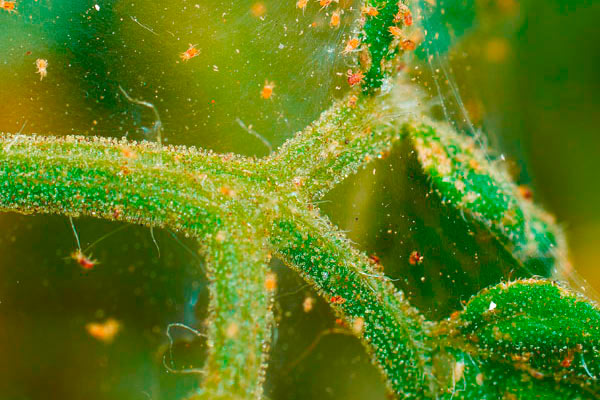
Yellow grapevine mite
The larvae, nymphs and adult mites are harmful as they suck sap from the underside of the leaves, concentrated mainly around the veins. As a result of the damage, the colour of the leaf blade changes, depending on the variety, to yellow, yellow-green, brown, rusty-brown, violet or violet-red. In cases of heavy infestation, the vines gradually weaken, become stunted and die.
Spraying against the pest should be carried out when the economic threshold of harmfulness exceeds 2–3 motile forms/leaf, up to mid-May.
Registered acaricides for control: Apollo 50 SC – 30–40 ml/ha; Danitron 5 SC – 100 ml/ha; Shirudo – 25 g/ha;
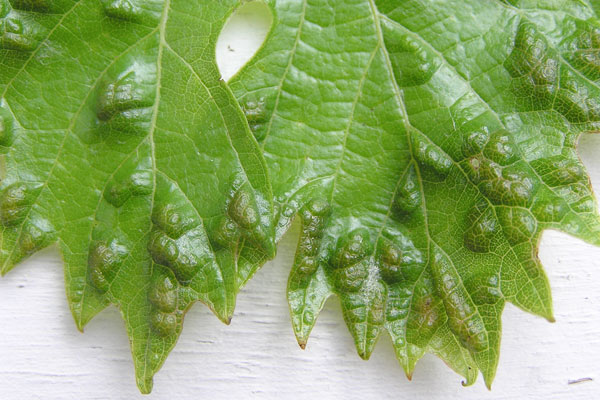
Eriophyid mites
Damage caused by the pest on vine leaves is known as “grapevine blister mite”. The mites suck sap from the underside of the leaves, causing the tissues to proliferate and form galls that are raised on the upper side of the blade and sunken on the lower side. Initially, the sunken side is whitish due to the strong proliferation of epidermal cells in the form of thin, white, cotton-like hairs.
Control: Treatment begins at the appearance of the first galls on the leaves – Aphitec EC – 60–120 ml/ha (0.12%–0.15% solution); Ovipron Top EC – 2500–3500 ml/ha; Microthiol – 1930 ml/ha.
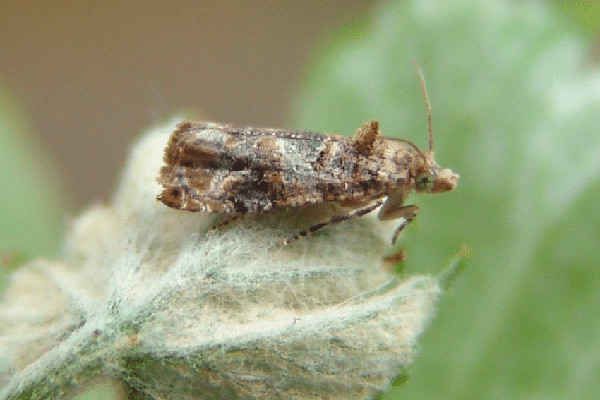
European grapevine moth
Damage is caused by the caterpillars. Those of the first generation damage the inflorescences of the vine and bind them with white silk threads, by which they are easily detected. Damage from the second and third generations of the pest occurs first on the young berries and subsequently on the ripening and ripe berries.
Spraying should be carried out only when the economic threshold of harmfulness has been established:
For wine grape varieties – 6–8 caterpillars/100 inflorescences;
For table grape varieties – 4–6 caterpillars/100 inflorescences.
Registered insecticides for control: Aficar 100 EC – 40 ml/ha; Lamdex Extra – 80 g/ha; Karate Zeon 5 CS – 0.02%; Coragen 20 SC/Voliam – 15–27 ml/ha; Meteor – 70–90 ml/ha; Decis 100 EC (1st generation) – 12.5 ml/ha; European grapevine moth (2nd and 3rd generation) – 12.5–17.5 ml/ha; Efcymetrin 10 EC, Cyper 10 EC – 40 ml/ha; Sineis 480 SC – 4–18 ml/ha (10–15 ml product/100 l water); Sumi Alpha 5 EC – 0.025%;
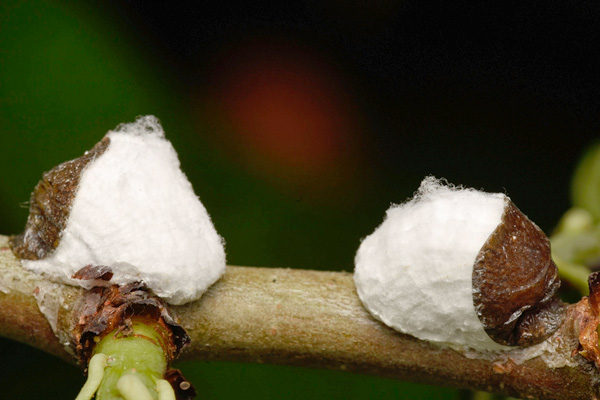
Grapevine scale
The main source of infestation is abandoned and old grapevine plantations. The larvae and adults are harmful, sucking sap from the leaves and shoots, as a result of which the vines become weakened. During feeding the larvae excrete abundant honeydew. In cases of mass infestation by the pest, the vines reduce their yield and the sugar content of the grapes.
Registered insecticide for control during the growing season: Ovipron Top EC – 2500–3500 ml/ha; Movento 100 SC – 0.075–0.095%; Flipper – 0.5 l/ha.