

![MultipartFile resource [file_data]](/assets/img/articles/заглавна-зеленчук-април.jpg)
In April, the weather stabilizes and becomes warmer. The improved external conditions make it possible to maintain a good regime in the cultivation of vegetable crops, both in greenhouses and in the open field. The measures necessary for their protection from diseases and pests continue. Field inspection and monitoring of the crops are an important prerequisite for the timely implementation of plant protection practices.
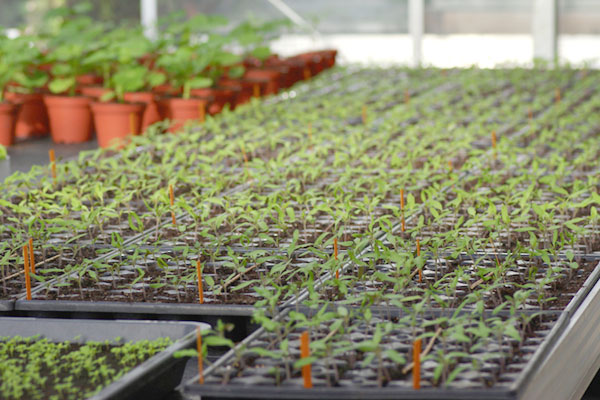
In the seedling compartment care continues for the seedlings intended for field production of tomato, pepper, eggplant and cucumber, which are to be transplanted at the end of April and the beginning of May. In the case of prolonged and sustained warming, the structures in which they are grown must be shaded. The premises should be ventilated regularly to prevent an increase in air humidity, which is a prerequisite for attacks by fungal diseases, aphids, etc. It should be recalled again that the difference between day and night temperature in the seedling compartment must not exceed 6oC – 8oC, so that condensation does not form on the plants and conditions are not created for “damping-off-like” symptoms. If there are temperature depressions during the period, “true damping-off” may occur. The first diseased plants should be collected in a bag and destroyed outside the premises. The places under them are disinfected by watering with a 3% solution of copper sulphate or ammonium nitrate (3-4 l/m2). The remaining plants are treated with registered fungicides – Beltanol 400 g/ha, Proplant 722 SL 0.1% at 25-50 ml/plant, depending on their size. It is necessary to strictly monitor the seedlings for the appearance of thrips and aphids, as well as for tomato leafminer moth in tomato. In case of pest appearance and before transplanting, it is advisable to carry out treatment with a broader-spectrum insecticide: Sineis 480 SC – 10-37.5 ml/ha; Exalt 200-240 ml/ha; Krisant EC 75 ml/ha; Natur Breaker 75 ml/ha; Neem Azal T/S 0.3%; Limocid 800 ml/ha, etc.
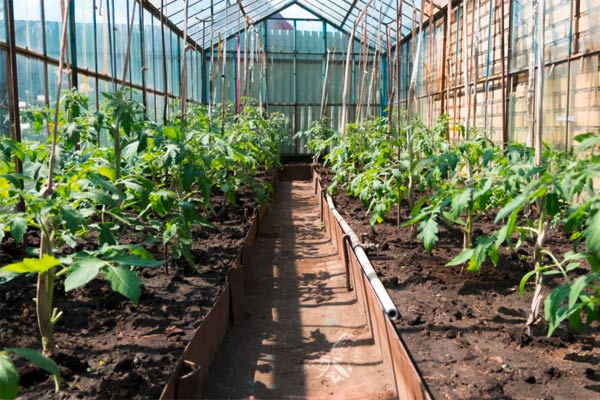
In the greenhouse the early production of tomato and cucumber has already been planted. The planting of pepper will take place at a later stage. The diseases and pests observed on the already transplanted plants are the same as those that attack the seedlings. Regular monitoring should be carried out for early detection of diseases and pests. Preventive plant protection must be ensured, in accordance with the economic injury levels (EIL). For this purpose, yellow, light-blue and black sticky traps are hung to detect and capture flying forms of small insects (greenhouse whitefly, aphids, tomato leafminer moth). Pheromone traps can also be used to detect the beginning of the flight of the tomato leafminer moth, as well as to reduce its population density. Attacked leaves, petioles with disease spots, aphid colonies, egg clusters, larvae, mines, etc., are collected and removed from the greenhouse for destruction.
DISEASES
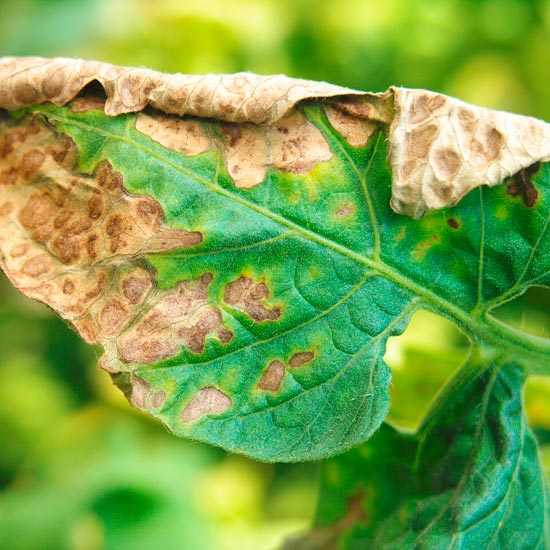
Early blight (leaf spot) (Alternaria spp.)
Dark brown to black spots with a concentric structure appear on the leaves. The spots on the other above-ground parts are similar. When the flower pedicels are attacked, the flowers drop off. The spots on the fruits are most often located in the stem-end cavity and also have a concentric structure. At high air humidity, the diseased parts are covered with a dark mould of the fungus sporulation. The causal agent prefers old leaves that have completed their growth.
To limit the occurrence and spread of the disease, it is necessary to maintain an optimal temperature-humidity regime in the cultivation facilities; to ventilate regularly; to treat with plant protection products (PPP) at the onset of the disease or when favourable conditions occur.
Registered PPP: Azaka 80 ml/ha; Dagonis 100 ml/ha; Zoxis 250 SC 70-80 ml/ha; Kopfor Extra 200 g/ha; Ortiva Top SC 100 ml/ha; Prev-Gold 200-600 ml/ha; Sinstar 70-80 ml/ha; Taegro 18.5-37.0 g/ha; Tazer 250 SC 80-200 ml/ha.
Grey mould of tomato (Botrytis cinerea)
It develops under conditions of high air humidity. It attacks all above-ground parts of the plants. Initially, the spots are water-soaked, later they become necrotic and are covered with grey-brown mycelium and sporulation of the fungus. The conidia of the pathogen are spread by air currents and cause new infections. It can also exist as a saprophyte in the soil.
Maintaining optimal air humidity and regular ventilation of the seedling compartment limit its occurrence and spread. Attacked plant parts are removed and destroyed outside the crop. At the appearance of the first spots, treatment with PPP is carried out.
Registered PPP: Geox WG 50 g/ha; Pretill 200 ml/ha; Prolectus 50 WG 80-120 g/ha; Signum 100-150 g/ha; Switch 62.5 WG 100 g/ha; Folpetis 50 SC 250 ml/ha; Fontelis SC 240 ml/ha.
Leaf mould (Fulvia fulva)
Relatively large, light, irregularly shaped and poorly delimited spots appear on the upper side of the leaves. Later they turn yellow. At high air humidity, their lower surface is covered with a light mould of the fungus sporulation, which later darkens and becomes velvety-brown. When the number of spots on a single leaf is significant, they merge and the leaf burns out. Under favourable conditions, the plants may become completely defoliated. The disease develops at high air humidity.
To limit the disease, resistant varieties should be grown (most of the varieties offered on the market are resistant). Maintaining optimal air humidity and regular ventilation of the seedling compartment are part of the control measures. Balanced fertilization and destruction of plant residues and weeds should be carried out, as the pathogen survives in them. When necessary – treatment with PPP.
Registered PPP: Eminent 125 ME 40-60 ml/ha; Zoxis 250 SC 70-80 ml/ha; Ortiva Top SC 100 ml/ha; Signum 100-150 g/ha; Sinstar 70-80 ml/ha; Folpetis 50 SC 250 ml/ha.
Cucumber downy mildew (Pseudoperonospora cubensis)
The disease is important during the cultivation of cucumbers throughout the entire vegetation period. Yellowish, irregularly shaped spots, delimited by the veins, appear on the upper side of the leaves. In wet weather they are water-soaked, and their lower surface is covered with a loose grey-violet mould of the fungus sporulation. Later the spots enlarge, merge and the whole leaf burns out. Under conditions of high air humidity in the seedling compartment, the disease can affect the entire plant in a short time and strongly reduce the yield.
It is necessary to maintain an optimal air and moisture regime and to ventilate the seedling compartment regularly. Heating in the early hours of the day prevents dew formation and downy mildew infection. The first diseased leaves are removed and destroyed outside the greenhouse. When necessary, treatment with PPP is carried out.
Registered PPP: Enervin SC 120 g/ha; Zoxis 250 SC 70-80 ml/ha; Infinito SC 120-160 ml/ha; Korseit 60 WG 20-30 g/ha; Prev-Gold 160-600 ml/ha; Taegro 18.5-37.0 g/ha.
Cucumber powdery mildew (Podosphaera xanthii, Erysiphe cichoracearum)
Small, irregularly shaped spots covered with a white powdery mould of the fungus sporulation appear on the leaves. Later the spots merge. The leaves burn out. Spots are observed on both the upper and lower leaf surfaces, as well as on petioles and stems. The fungus overwinters as conidia on plant residues, as mycelium and spores on greenhouse crops. The conidia are dispersed by air currents and cause new infections. Favourable conditions for its development are: disturbed temperature-humidity regime; unbalanced nitrogen fertilization; reduced light intensity.
The following measures are recommended for control of this pathogen: cultivation of resistant varieties; removal of plant residues from the previous vegetation; balanced nitrogen fertilization; maintaining an optimal temperature-humidity regime; treatment with PPP at the appearance of the first spots.
Registered PPP: Vivando 20 ml/ha (0.02%); Dagonis 60 ml/ha; Domark 10 EC 50 ml/ha; Zoxis 250 EC 70 ml/ha; Collis SC 40-50 ml/ha; Legado 80 ml/ha; Ortiva Top SC 100 ml/ha; Sivar 80 ml/ha; Sonata SC 500-1000 ml/ha; Taegro 18.5-37.0 g/ha; Topaz 100 EC – 35-50 ml/ha; Trunfo 80 ml/ha; Phytosev 200 ml/ha; Fontelis SC 240 ml/ha.
PESTS
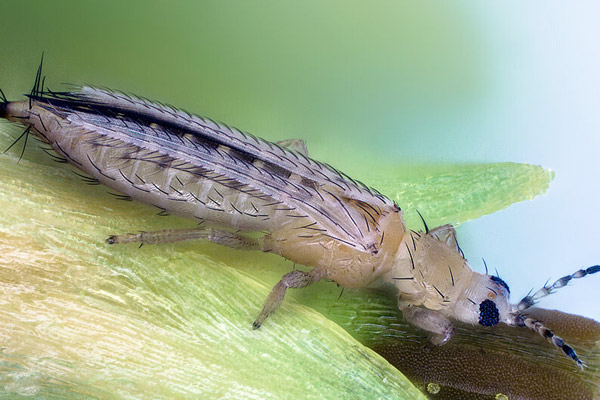
Thrips (Thrips tabaci; Frankliniella occidentalis)
Thrips are recognized by their small size and elongated, spindle-shaped body. They are often likened to small “splinters”. They are very mobile and migrate quickly. They develop from 6 to 10 generations per year and overwinter as adults under plant residues. In heated greenhouses they develop throughout the year. Females lay their eggs in plant tissues. The larvae that hatch from the eggs feed on the surrounding tissues. One of the characteristic features of these insects is that the transition from larva to adult, the nymphal stage, takes place in the soil. Damage is caused by both adults and larvae. On the attacked organs (leaves, flowers and fruits) small silvery spots with dark dots – the pest’s excrements – are formed. At higher population densities, the spots merge, the leaves become mottled and may sometimes dry out. The generative organs of plants attacked in their early developmental stages become deformed, dry out and fall off. The onion thrips is found mainly on leaves, more rarely on flowers. Favourable conditions for its development are high temperatures and low air humidity. Western flower thrips attacks mainly flowers. Thrips are vectors of tomato spotted wilt virus.
For pest monitoring, blue sticky traps are used which, when used in greater numbers, reduce pest density; maintaining optimal air humidity in the facilities;
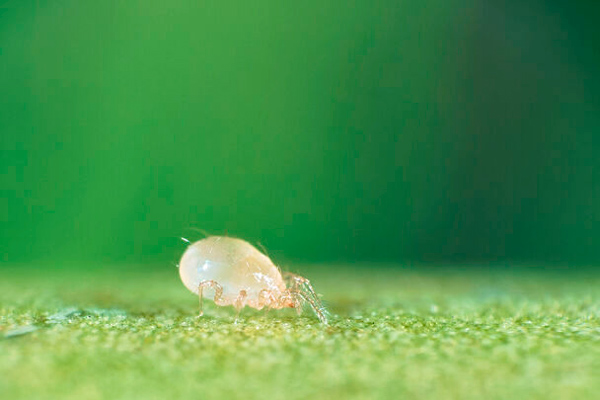
predatory mite Amblyseius swirskii
In greenhouses, bioagents such as the predatory mite Amblyseius swirskii can be used. When thrips appear, treatment with PPP is carried out at EIL: for tomato – 1 adult/1 flower, 3 adults and larvae/1 leaf; for cucumber – 1 adult and larvae/flower, 3-5 adults and larvae/leaf.
Registered PPP: Azatin EC 100-150 ml/ha; Dicarzol 10 SP 556 g/ha; Exalt 200-240 ml/ha; Limocid 800 ml/ha; Minecto Alpha 100-125 ml/ha; Neemik Ten 390 ml/ha; Oikos 100-150 ml/ha; Requiem Prime 500-1000 ml/ha; Sineis 480 SC – 10-37.5 ml/ha, Naturalis 100-150 ml/ha.
Greenhouse whitefly (Trialeurodes vaporariorum)
It has 10-12 generations per year. All stages – larvae, nymphs and adults – cause damage. They usually develop on the lower leaf surface. During feeding, whiteflies excrete “honeydew”, as a result of which the leaves become sticky and sooty moulds develop on them, which hinder photosynthesis. In addition to the direct damage, they also transmit some viral diseases.
Yellow sticky traps are used to monitor the occurrence and density of greenhouse whitefly; for monitoring and control, yellow sticky tapes can also be used;
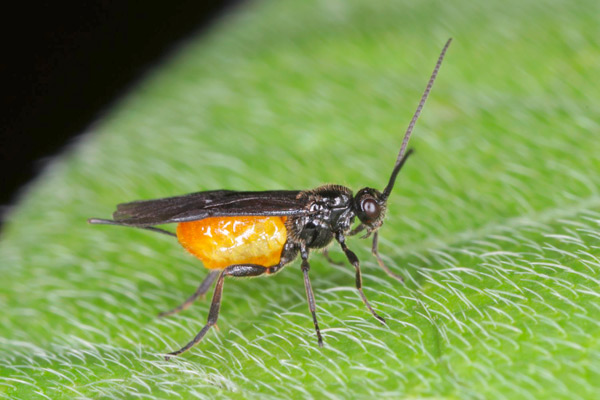
biological agent Encarsia formosa
At low population density in greenhouses, the biological agent Encarsia formosa can be released. Treatment with PPP is carried out at EIL: for tomato – 10 adults/1 plant; for cucumber – 5 adults/plant.
Registered PPP: Abanto 75 ml/ha; Azatin EC 100-150 ml/ha; Brav 50-112.5 ml/ha; Limocid 400 ml/ha; Closer 120 SC 20-40 ml/ha; Krisant EC 75 ml/ha; Minecto Alpha 100-125 ml/ha; Natur Breaker 75 ml/ha; Neemik Ten 390 ml/ha; Oikos 100-150 ml/ha; Orocid Plus 80-800 ml/ha; Pyregard 75 ml/ha; Prev-Gold 160-600 ml/ha; Requiem Prime 500-1000 ml/ha; Sivanto Prime 56 ml/ha; Naturalis 75-100 ml/ha.
Aphids (fam. Aphididae)
Aphids are characterized by a seasonal development in which one sexual generation alternates with many parthenogenetic (asexual) generations. Under favourable conditions, aphids develop very rapidly and form dense colonies. They have a high reproductive capacity. Both adults and larvae cause damage. They attack the apical, young parts of the plants. They cause chlorotic spots on leaves and deformations. They contaminate the leaf surface with “honeydew” and cast skins. Sooty moulds that develop on the honeydew soil the leaves and hinder photosynthesis. The plants lag behind in their development. Aphids are vectors of viral diseases.
Upon detection of the first specimens on seedlings and on already transplanted plants, treatment with PPP should be carried out; the last treatment of seedlings is carried out immediately before planting at the permanent site; destruction of weed vegetation in and around the greenhouses, which serves as a reservoir for aphid survival and a source of virus infection.
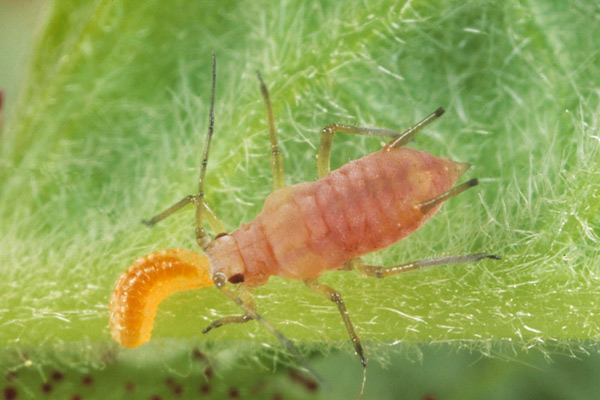
predatory gall midge Aphidoletes aphidimyza
Bioagents that can control aphid population density are the predatory gall midge Aphidoletes aphidimyza and the parasitoid Aphidius colemani.
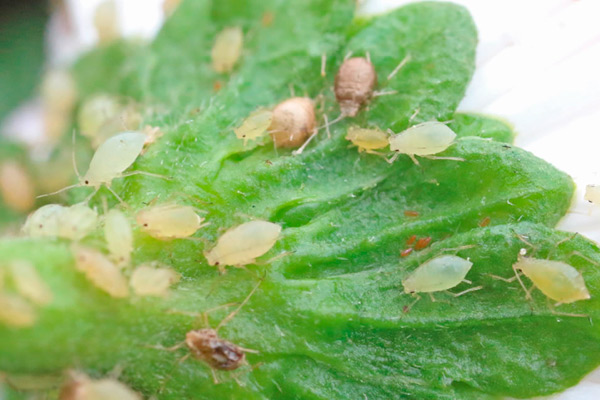
parasitoid Aphidius colemani
Registered PPP: Azatin EC 100-150 ml/ha; Ampligo 150 ZC 40 ml/ha; Delmur 50 ml/ha; Deltagri 30-50 ml/ha; Closer 120 SC 20 ml/ha; Mavrik 2 F 20 ml/ha; Neemik Ten 390 ml/ha; Oikos 100-150 ml/ha; Sivanto Prime 45 ml/ha; Teppeki/Afinto 10 g/ha; Flipper 1-2 l/ha; Shirudo 15 g/ha.
Tomato leafminer moth (Tuta absoluta)
The tomato leafminer moth is an extremely dangerous pest of tomato, which also attacks eggplant, bean, potato, pepper, ornamental species from the family Solanaceae, black nightshade, jimsonweed and others. The caterpillars mine the leaves, damage the stems and bore into the fruits of the plants, causing significant losses of tomato yield in greenhouses and in the open field, with damage reaching up to 100%. The tomato leafminer moth is a multivoltine species with high reproductive potential and, depending on environmental conditions, can develop 10-12 generations per year. It overwinters as egg, pupa or adult in the soil, in plant residues or in other shelters. The presence of a wide range of hosts in our country and the hidden way of life of the larvae additionally complicate pest control and can cause enormous damage in tomato production. The tomato leafminer moth develops rapidly. The moths are active at night and hide among the leaves during the day. The damage is caused by the caterpillars. They prefer leaves but also attack fruits. The moth makes short and wide mines on the leaves, in which caterpillars and excrements located at one end can be seen. The damage to the fruits provides an opportunity for the development of diseases that cause their rotting. The damaged fruits have no commercial appearance.
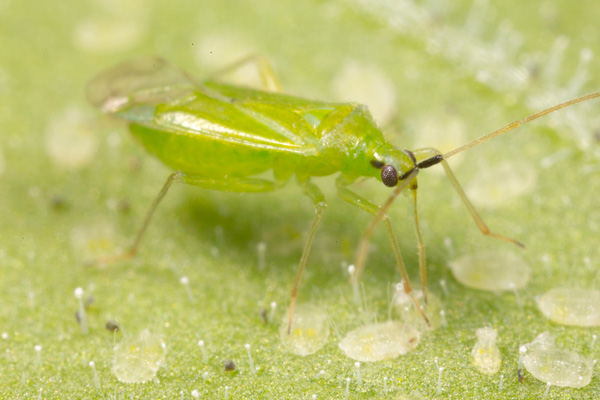
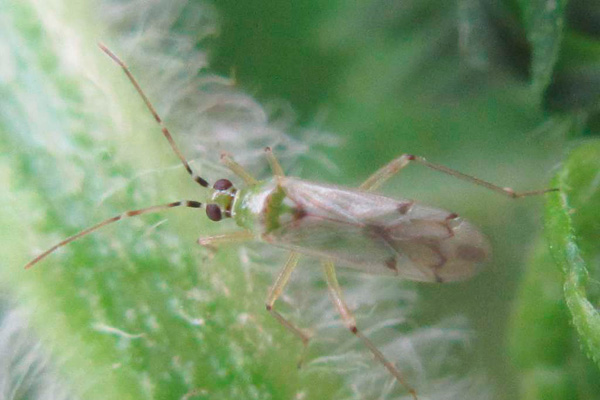
To control the pest, pheromone traps and black sticky panels should be used for its timely detection, for reducing population density and for taking adequate control measures. At low density, one of the biological agents Macrolophus pygmaeus or Nesidiocoris tenuis can be released. Treatment with PPP is carried out at EIL – 10% of leaves with mines.
Registered PPP: Alverde 240 SC 100 ml/ha; Altacor 35 WG 8-12 g/ha; Ampligo 150 ZC 40 ml/ha; Affirm 095 SG 150 g/ha; Voliam Targo 063 SC 80 ml/ha; Delmur 50 ml/ha; Exalt 200-240 ml/ha; Coragen 20 SC 14-20 ml/ha; Minecto Alpha 100-125 ml/ha; Neem Azal T/S 0.3%; Neemik Ten 390 ml/ha; Oikos 150 ml/ha; Rapax SBS 100-200 ml/ha; Sineis 480 SC 10-25 ml/ha.
Two-spotted spider mite (Tetranychus urticae)
With the warming of the weather, especially in cultivation facilities, attention should be paid to the appearance of T. urticae. Under heavy infestation, the leaves are covered with webbing. The pest sucks plant sap and at the feeding sites small pale-green spots are formed. Later the spots merge, the leaf becomes marbled and dries out. The mites prefer older leaves with reduced water content, as well as senescent, drought-stressed plants. In greenhouses, they can develop up to 20 generations per year. They overwinter on plant residues and in the soil.
Control is carried out by maintaining optimal soil and air humidity (drought stress must not be allowed); regular field inspection; weed removal;
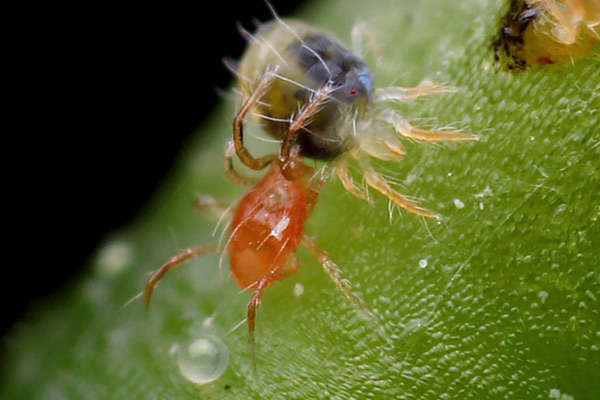
In greenhouses, the predatory mite Phytoseiulus persimilis can be used. When the pest appears and the economic thresholds are reached (cucumber – 5% infested plants; tomato – 10%), treatment with PPP is carried out.
Registered PPP: Apollo 50 SC 30-40 ml/ha; Bermectin 50-100 ml/ha; Butik 30-100 ml/ha; Valmec 15-100 ml/ha; Vertimec 018 EC 60 ml/ha; Voliam Targo 063 SC 80 ml/ha; Zoom 11 SC 12.55-50 ml/ha; Requiem Prime 500-1000 ml/ha; Laota 15-100 ml/ha; Naturalis 100-200 ml/ha; Neem Azal T/S 0.3%; Nissorun 10 WP 75 g/ha; Flipper 1-2 l/ha; Shirudo 15 g/ha.

In the field
During the period, sowing of medium-early potatoes, parsley, celery, etc. begins. Only healthy and treated seed and planting material should be used for sowing.
Possible diseases and pests:
Rhizoctonia disease of potato (Rhizoctonia solani)
Dark to black sclerotia of the fungus are observed on infected tubers. Black-brown spots appear on the sprouts of infected tubers, causing their death. The disease is spread by infected tubers. It develops under monoculture cultivation and on heavy soils. It survives as sclerotia on the tubers and in the soil. It develops at temperatures between 6-330C and humidity of 30-90%.
Control: introduction of a 6-8-year crop rotation; use of healthy planting material; treatment with PPP;
Registered PPP: Proradix 2 g/100 kg tubers (for treatment of tubers before or during planting).
Wireworms (fam. Elateridae)
The larvae bore into potato tubers. As a result, the tubers rot because pathogenic microorganisms penetrate through the tunnels. The larvae are most harmful at temperatures of 14-17oC and 65% field capacity (FC).
When 4-6 larvae/m2 are established, furrow application of insecticides is carried out simultaneously with planting.
Registered PPP: Vydate 10G 2 kg/ha; Ercole GR 1000-1500 g/ha; Trika Expert 1000-1500 g/ha; Belem 0.8 MG/Colombo 0.8 MG 2.4 kg/ha; Colombo Pro 2.4 kg/ha; Naturalis 200-300 ml/ha; Microseed Geo 1.2-1.5 kg/ha.
Onion fly (Delia antiqua)
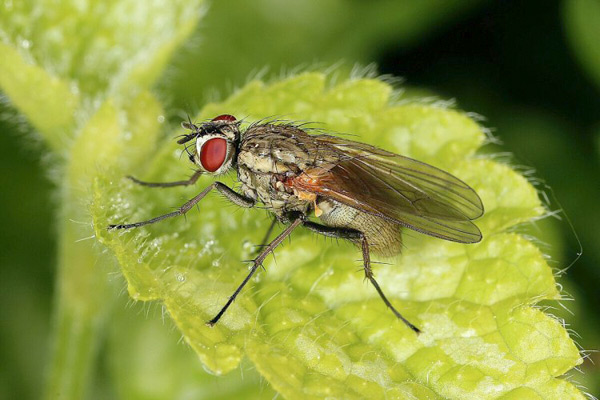
It attacks mainly onion, but also weakly attacks garlic. It develops two full and partially a third generation. It overwinters as pupa in the soil at a depth of 10-20 cm. The flight of the first-generation flies begins at the end of April, during cherry blossom. Eggs are laid on the leaves, on the bulbs and on the soil surface near the plants. Damage is caused by the larvae of the first generation. They bore into the plants at the base of the leaves. They make longitudinal tunnels in the stems and move towards the bulb. The damaged plants lag behind in development, turn pale, lodge and finally dry out. As a result of the damage, tissues ferment and emit an unpleasant smell of rotten onion. Several larvae can develop in one plant, and if they cannot feed sufficiently, they attack the stems of neighbouring plants.
Control: early planting of onion, as late sowings are attacked more severely. Stands must be well stocked. Plants showing signs of damage are removed in good time to prevent larvae from moving to healthy plants. No bulbs should be left unharvested, and volunteer onions must be destroyed, as the fly continues its development in them. Chemical control is directed against adults before egg laying at 5 flies/10 sweeps with an entomological net. Some broad-spectrum plant protection products from the pyrethroid group may be used, strictly observing the pre-harvest intervals.
Registered PPP: Belem 0.8 MG/Colombo 0.8 MG 1.2 kg/ha; Colombo Pro 1.2 kg/ha; Force 1.5 G 1000 g/ha applied at sowing/transplanting.
At the end of the period, attention should be paid to the occurrence and damage caused by cutworms on vegetable crops grown both in the field and in greenhouses. During this period, damage by mole cricket can also be observed on transplanted vegetable crops. In case of attack by this pest, one of the following products can be applied: Belem 0.8 MG/Colombo 0.8 MG 1.2 kg/ha; Colombo Pro 1.2 kg/ha.
ATTENTION!
Only PPPs at the registered dose, included in the LIST OF PLANT PROTECTION PRODUCTS AUTHORISED FOR PLACING ON THE MARKET AND USE, published on the website of the Bulgarian Food Safety Agency (BFSA), shall be applied.
PPPs shall be purchased only from traders holding an authorisation for the activity and included in the LIST OF COMPANIES AUTHORISED TO CARRY OUT THE ACTIVITIES WHOLESALE TRADE IN PLANT PROTECTION PRODUCTS, RETAIL TRADE IN PLANT PROTECTION PRODUCTS IN AGRICULTURAL PHARMACIES, REPACKAGING OF PLANT PROTECTION PRODUCTS AND FUMIGATION AND DISINFECTION OF AREAS, PREMISES AND PLANT PRODUCTION AGAINST PESTS, published on the website of the BFSA.