![MultipartFile resource [file_data]](/assets/img/articles/auberginen-1.jpg)
Origin and distribution
The eggplant (Solanum melongena L.), as a vegetable crop, has been known since ancient times. In his studies as early as 1935, Vavilov I., when defining the centers of origin of cultivated plants, indicated India, including Burma and Assam, as such for eggplant, where it can still be found in the wild. The small-fruited cultivars originate from Central and Southern China.
Eggplant is grown mostly in Asian countries. It has been cultivated in South and East Asia since prehistoric times. It is mentioned that the Messenger of Allah (pbuh) said: “Eggplant helps because it is eaten.” It arrived in Western Europe only around the year 1500. Its many Arabic and North African names, as well as the lack of an Ancient Greek or Latin name, show that it was introduced into the Mediterranean region by the Arabs in the early Middle Ages.
The scientific name „melongena“ comes from the Arabic name from the 16th century for a type of eggplant. Due to its belonging to the family Solanaceae, in the past it was considered poisonous. Eastern peoples have always treated eggplant with reverence and even called it the "king of vegetables," while Europeans were afraid to eat these fruits. The ancient Greeks were the first to introduce this prejudice, believing that eggplant clouded the mind. Beautiful in its glossy dark purple coloration, but also mystical, eggplant is known by many names and cultivars, some of which are quite unflattering. For centuries it had a terrible reputation and was grown more as an ornamental plant than as a source of food. The wild forms of eggplant were much more bitter than the cultivated cultivars. When Europeans first encountered it, they labeled it a "mad apple" – in Italian the name of eggplant has been preserved as Melanzane (from the Latin Mela insana, or "apple of madness").
It was introduced into Europe in the 16th century – first in Spain, Portugal and Italy. It is widespread in the southern regions of the Iberian, Apennine and Balkan Peninsulas. The largest producers are China, India, Egypt, Japan, Indonesia, Iran and Turkey. In Europe it is most widely grown in Spain and France. In Bulgaria eggplant probably came from Anatolia. The names preserved to this day in the national cuisine suggest that it was introduced by the Turks. Currently, larger areas with eggplant are found along the valleys of the Maritsa, Tundzha, Danube rivers and the Black Sea coast.
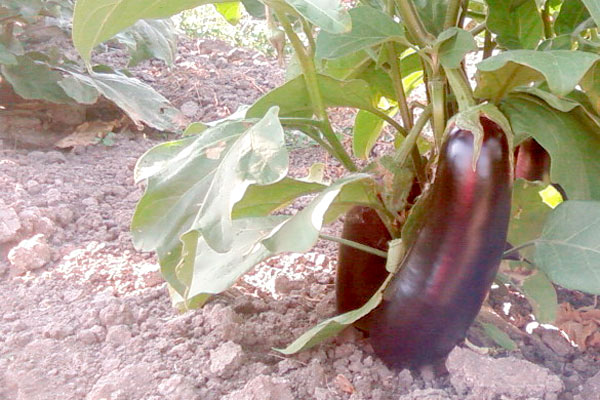
photo: Prof. Dr. Khriska Boteva
Eggplant is a traditional vegetable crop for our country. In recent years, the areas occupied by eggplant in Bulgaria amount to about 20,000 decares. About 65-70% of the production is used by the canning industry.
When assessing the agro-ecological potential in our country in order to optimize the structure of agricultural production, 44.6% of the areas under vegetable crops are located mainly in the territory of the South Central Region. Suitable conditions for growing eggplant in this region are found in the Transitional-continental climatic area, with the climatic subregion of Eastern Central Bulgaria being the most extensive. It encompasses most of the lowlands of the Maritsa and Tundzha rivers. The Continental Mediterranean climatic area with the South Bulgarian climatic subregion and the climatic region of the Eastern Rhodope river valleys also has suitable soil and climatic conditions for eggplant production.
Chemical composition, nutritional and caloric value of the fruits
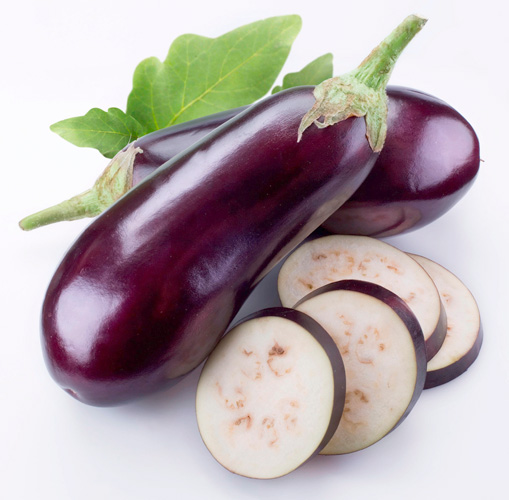
In our cuisine, a wide variety of dishes are prepared from eggplants, either as stand-alone dishes or in combination with other food products. The nutritional importance of eggplant is determined by the chemical composition and the form of the individual substances in its fruits. They contain 7.6-10.8% dry matter, 2.7-3.4% sugars, 0.6-1.2% crude protein, 1.1-1.7% cellulose and mineral salts of phosphorus, potassium, magnesium, iron, manganese and others. The content of vitamins (C, PP, vitamins of group B, provitamin A) is not high. The bitter taste of eggplants is due to the glycoalkaloid solanine M, the amount of which increases during fruit ripening.
In addition to being a source of sugars, mineral salts and vitamins, eggplants possess a proven medicinal effect. They exhibit phytoncidal action against some spores, stop inflammatory processes, stimulate digestion, and help reduce the amount of fats and cholesterol in the blood. They are recommended for the prevention and treatment of atherosclerosis. The potassium content determines the dietary properties of eggplant, as it promotes the elimination of fluids from the body and enhances heart function. Therefore, eggplants are a suitable food for people with cardiovascular diseases. They are also recommended in cases of gout, as they stimulate the excretion of uric acid salts. They are not recommended for people with kidney disease.
Varietal structure
In agricultural practice different types of eggplant are grown – American, Italian, Sicilian, Oriental and white.
American eggplant – elongated in shape, dark purple in colour, the most popular; Oriental eggplant – slightly elongated, with thin skin and significantly fewer seeds; Italian eggplant – relatively smaller, looks like a miniature version of the other types, with tender skin and flesh, as well as significantly better taste qualities; Sicilian eggplant – large, round and irregular in shape, with extremely thin skin and a slightly sweet taste; White eggplant – with thick skin and firm flesh.
The most widely grown cultivars in Europe and North America are elongated-ovoid, 12-25 cm long and 6-9 cm wide, with dark purple skin. A much greater diversity of shapes, sizes and colours is grown in India and elsewhere in Asia, where cultivars with oval shape are widely distributed. Some cultivars have a colour gradient from white near the stem to light pink or deep purple or even black. There are also green or purple types with white stripes. Chinese eggplants are usually thinner and more elongated, resembling a slightly swollen „cucumber“.
The cultivars used must meet high criteria: they should be vigorous, adaptable, tolerant to temperature fluctuations, with high resistance to diseases and pests. Cultivars with normal seed content or seedless, which darken more slowly after cutting, are preferred. Particularly relevant is the introduction of cultivars resistant to Verticillium wilt. Recently, breeding centres have been offering cultivars with resistance to TMV & CMV1 and resistant forms to unfavourable conditions – low and high temperatures.
Under market economy conditions, the requirements for product quality for the different directions of use are continuously increasing:
- Cultivars intended for fresh consumption must have high-quality fruits – large, uniformly coloured with strong gloss, tender texture and no bitter taste.
- The canning industry sets specific requirements for eggplant cultivars – such as colour and texture of the flesh, rate of darkening after cutting, etc. The interior of the fruit must be white, without bitterness, and darken very slowly during the technological process. Cultivars with pear-shaped or round fruits are suitable for stuffing, and those with elongated or cylindrical fruits – for fried preserves.
The varietal diversity in our country is limited, and mostly foreign cultivars are grown. When choosing a cultivar, the specific production conditions and the intended use of the product must be taken into account. Cultivars are selected whose fruits meet the requirements of the international and domestic markets. They are classified according to their intended use: for caviar (eggplant spread), for processing by frying and for direct consumption by the population.
Bulgarian breeding
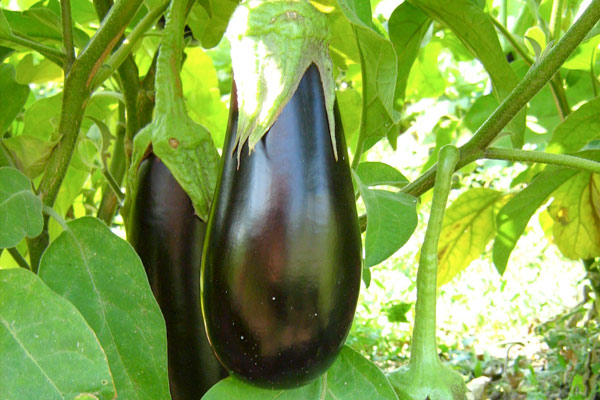
Bulgarian 12 - Medium-early Bulgarian cultivar. It is characterized by uniform fruits and good yield potential. The fruits are large, elongated-pear-shaped, with dark violet skin with strong gloss, with white and tender flesh. Their surface is smooth. The vegetation period to first harvest is 120-125 days. The average yield is 4-5 t/da. The cultivar is suitable for field production for the needs of canning enterprises and for preparation of dishes.
Lach – An early and high-yielding Bulgarian cultivar. The fruits are cylindrical-pear-shaped to cylindrical, dark violet with gloss and an average weight of 200-300 grams. The flesh is whitish in colour, with fewer seeds than Bulgarian 12, without bitterness and with a darkening time of one hour. The cultivar has a low solanine content. The vegetation period from emergence to first harvest is 100-114 days. The average yield is 5.5-5.8 t/da. The cultivar is suitable for slicing into rounds and for roasting in a pepper roaster. It is intended for home preparation and for canning enterprises. It can also be grown under greenhouse conditions. It is resistant to Verticillium wilt. Developed at the Institute of Vegetable Crops – Sadovo.
Antim – An early Bulgarian cultivar (earlier than Bulgarian 12). The fruits are elongated-pear-shaped, weighing 280-300 grams, dark violet at commercial maturity and light yellow at botanical maturity. The flesh is creamy white, without bitterness, with low solanine content. The vegetation period from emergence to first harvest is 105-114 days. Resistant to Verticillium wilt. Developed at the Institute of Vegetable Crops – Sadovo.
Foreign breeding
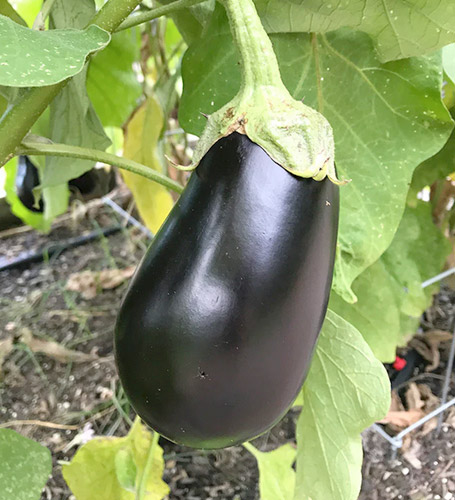
Black beauty F1 – Medium-early open-pollinated cultivar, very productive. The plant is medium-high, well-leafed, with medium-long internodes. Large fruits, with dark violet colour and round shape, uniform. Sowing rate: up to 2,500 plants per decare. Producer: Ivesto, Italy
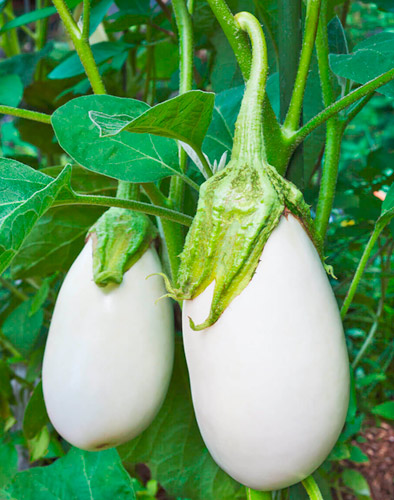
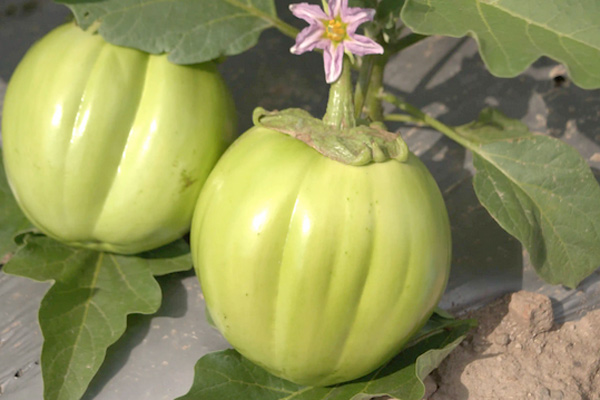
White eggplant F1 – Open-pollinated cultivar with a vegetation period of 70 days. The fruits are round, 10-11 cm long, weighing 500-800 g and pink-white in colour. A plant density of 1,800-2,000 plants/da is recommended. Importer: Ivesto, Italy
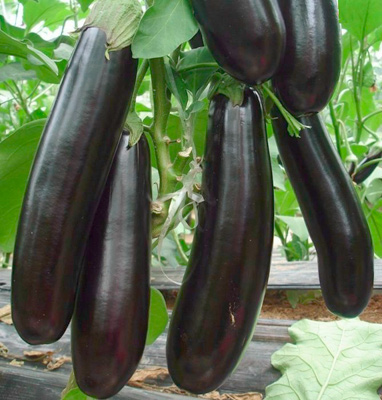
Lagada F1 – Medium-early cultivar with a vegetation period of 90 days. The fruits are long, cylindrical, dark violet in colour, with gloss. A plant density of 1,800 – 2,000 plants per decare is recommended. Importer: Ivesto, Italy
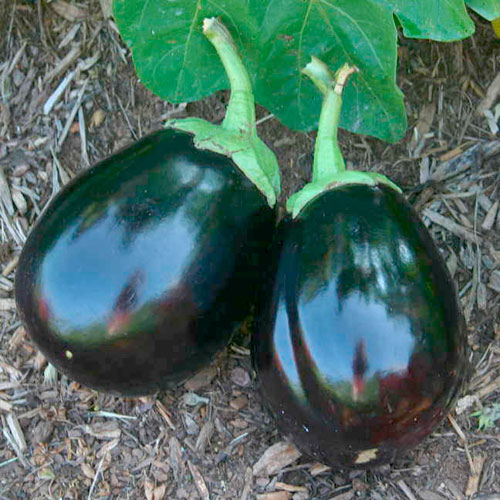
Amadeo F1 – suitable for cultivation in unheated greenhouses and in the open field. The fruits are oval-globular in shape. A distinctive feature is the short internodes and earliness. These allow very high yields to be obtained in the shortest possible time. Producer – Enza Zaden, the Netherlands.
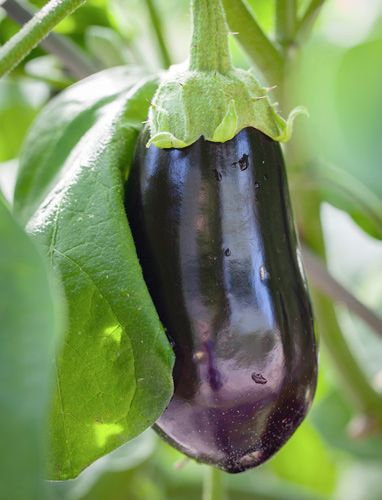
Bonica F1 - This hybrid is suitable both for home gardens and for large-scale production. It is tolerant to 2 viruses. The fruits are drop-shaped, dark violet to black in colour with strong gloss. Very suitable for roasting, seedless. Producer – Enza Zaden, the Netherlands.
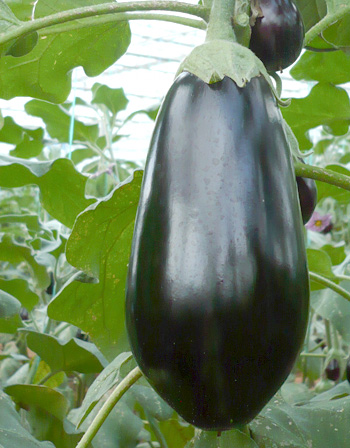
Traviata F1 – Hybrid cultivar, equally suitable for cultivation in the open field and under greenhouse conditions. The fruits are with the typical eggplant shape – oval-elongated, measuring 18-20 x 9 cm, dark violet with strong gloss. It was developed as a successor to Bonica F1; the plant is significantly more vigorous and supports more and larger fruits. Extremely uniform production. Producer – Enza Zaden, the Netherlands.
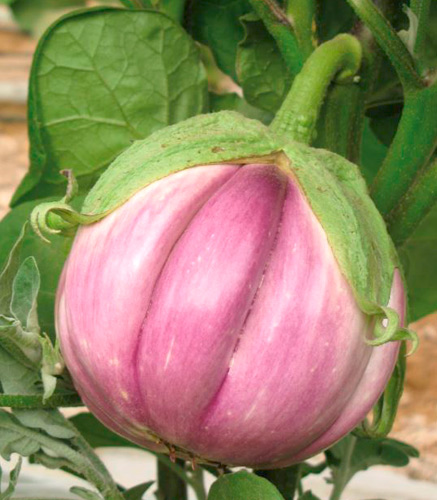
Rotonda bianca F1 – Medium-early Italian cultivar, with a vegetation period of 120 days. Sowing – February – March, transplanting – April – May. Harvesting – June – September. The fruits are large, round, white with pale violet shades. The flesh is white, firm, with very few seeds and without bitterness.
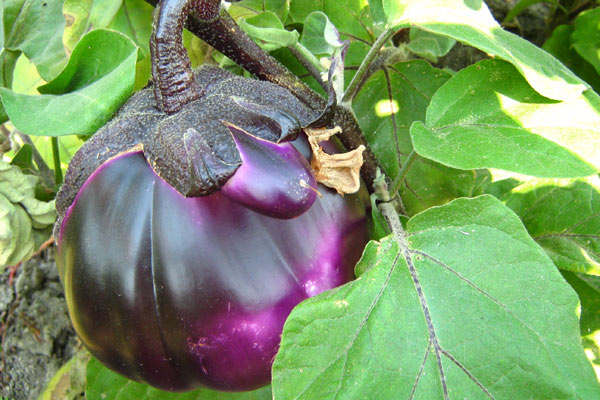
Prosperosa – photo: Prof. Dr. Khriska Boteva
Prosperosa F1 - Medium-early Italian cultivar, with a vegetation period of 80 days. High-yielding. The fruits are oval in shape, violet-coloured with blue-white shades. Suitable for industrial and culinary processing.
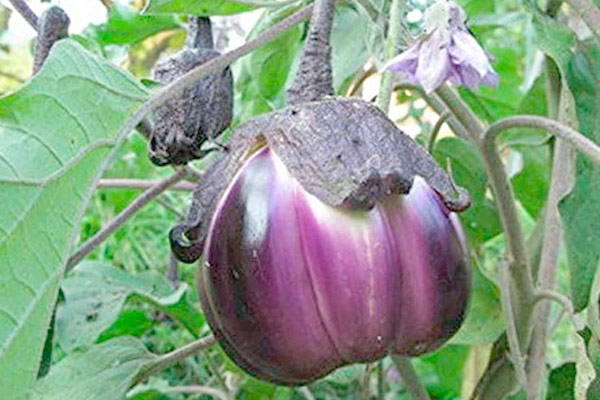
Violetta di Firenze F1 - Medium-early cultivar with light violet skin colour and attractive ribbing. Seeds are sown from the beginning of January to the beginning of April. Transplanting in the field starts from March until the end of May. Harvesting takes place about 80 days after transplanting. Suitable for culinary processing and canning.
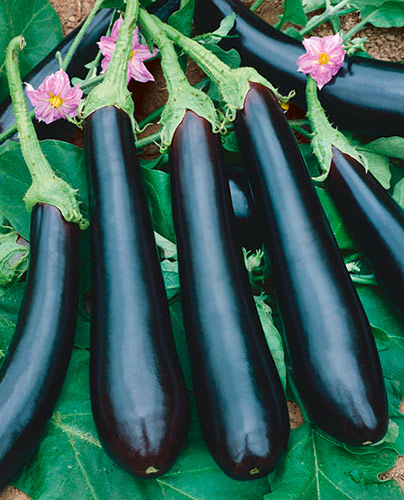
Long purple F1 - Medium-early cultivar with a vegetation period of 75 days. The fruits are dark violet, 20-25 cm long. The production is suitable for the fresh market and processing.
Medium-early cultivar with a vegetation period of 75 days. Dark violet in colour, 20-25 cm long. The production is suitable for the fresh market and processing.
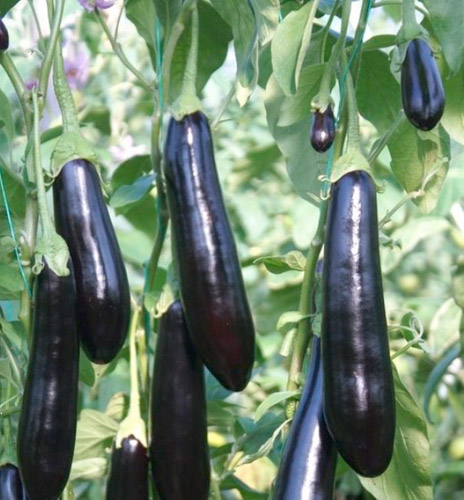
Aydin F1 – Early cultivar, suitable for roasting. The plants reach a height of 110 - 125 cm. The fruits are cylindrical with elongated shape, with dark purple, thin skin. Their flesh is whitish, tender, smooth, without bitterness, with few seeds and a weight of 200 - 350 g. Importer – Agris Bulgaria Ltd.
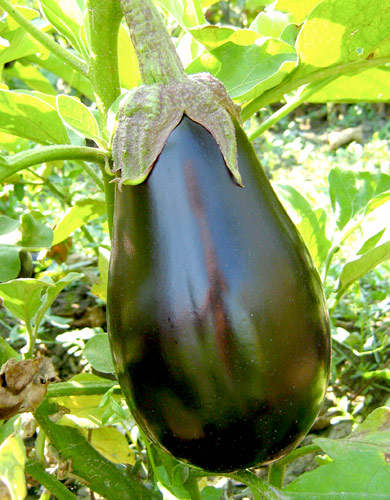
Galine – photo: Prof. Dr. Khriska Boteva
Galine F1 - Very early and high-yielding hybrid, suitable for cultivation in the open field and in protected structures. The fruits are rounded-oval, 15–18 cm long and 8–10 cm wide. They retain good marketable appearance long after harvest and possess excellent transportability. The interior of the fruit is light white, without bitterness, with very few seeds. High-yielding cultivar, producing up to 15 fruits per plant. Importer – Agris Bulgaria Ltd, Producer - Clause
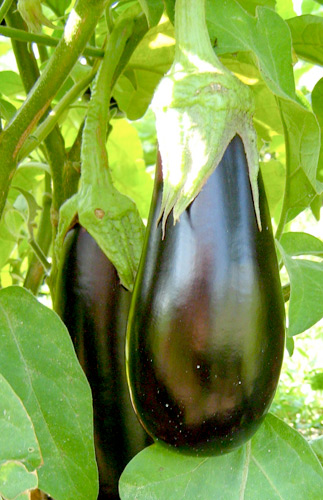
Marfa – photo: Prof. Dr. Khriska Boteva
Marfa F1 - Early cultivar, suitable both for greenhouse and field production. The plants are tall and vigorous. The fruits are dark purple, almost black, with gloss, 20-25 cm long, cylindrical. Suitable planting scheme 100 x 40 x 35 cm. Producer- Clause
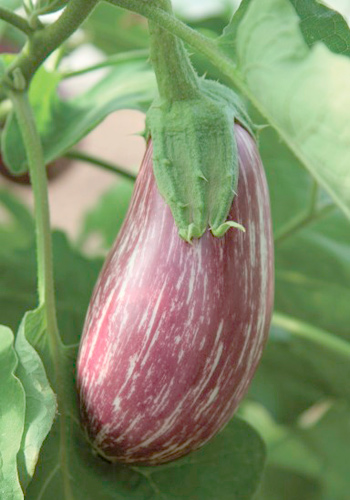
Rania F1 - High-yielding hybrid cultivar, suitable for cultivation in polyethylene greenhouses and in the open field. The fruits are elongated-oval, variegated – light purple with creamy stripes, 20 cm long and with an average weight of 520-550 g.
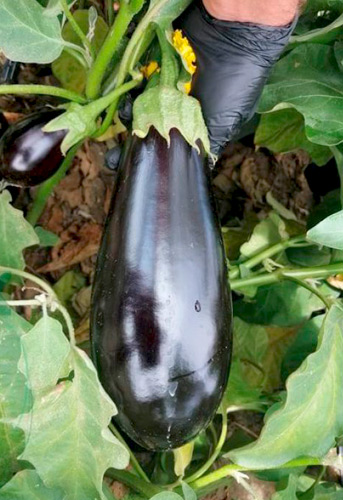
Aragon F1- Recommended for open-field cultivation. A large-fruited hybrid with a vegetation period of 67–75 days. Dark purple to black fruit colour, elongated- oval shape, average weight – 0.700 to 1.100 kg. Fruit length up to 20 cm. The seeds are few and concentrated in the lower part of the fruit; the flesh is creamy white and not bitter. The hybrid develops excellently at high temperatures. Tolerant to Fusarium. The production is suitable for processing and fresh consumption. Sowing rate – 1,800–2,200 plants per decare. Importer: Ivesto, Italy
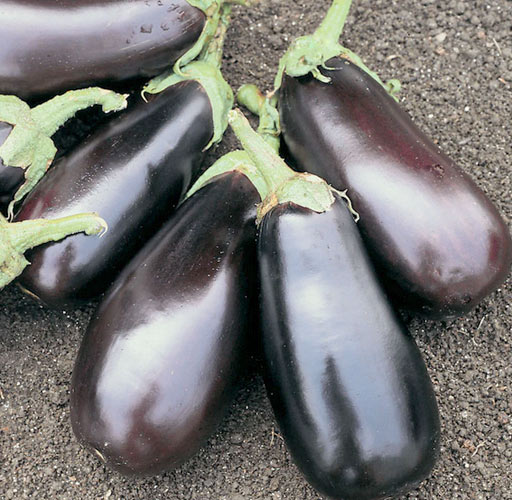
Classic F1 – An early and highly adaptable hybrid, suitable both for field production and for cultivation in protected structures. It forms round-oval fruits with strong gloss and intense dark violet colour, 18–22 cm long. Importer – Agris Bulgaria Ltd
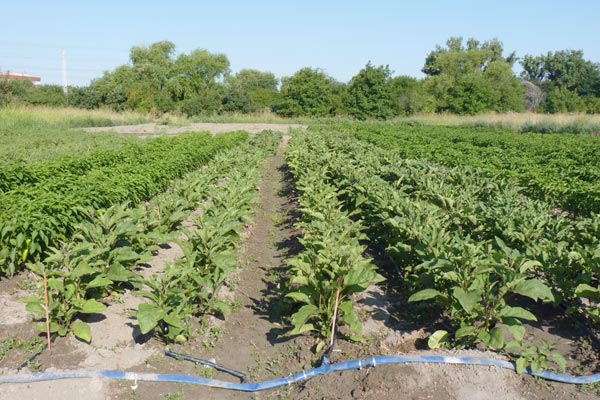
photo: Prof. Dr. Khriska Boteva
Production directions
In Bulgaria, eggplant production develops in several directions:
- Production in protected structures;
- Production in open fields.
In order to ensure a longer supply of fresh produce to the market and of raw material for processing to the canning enterprises, in field production in our country two production directions have been established – early and medium-early. Eggplant production in both directions is organized through preliminary seedling growing. Early field production is carried out using pricked-out seedlings, and medium-early production – using non-pricked seedlings.
Early field production: the main objective is to provide fresh vegetables from April to July for the domestic market and a significant part for export. The most suitable areas for this direction are the valleys of the Struma and Strumeshnitsa rivers in the Petrich–Sandanski region, where natural conditions are most favourable. Early production is also widely represented on large areas in the lowland regions along the valleys of the Maritsa, Tundzha and some of their tributaries. In Northern Bulgaria there are few suitable micro-regions.
Medium-early field production: The production from this direction is marketed in the period July–November. The main part of this production is used for processing into various types of preserves and for fresh consumption. Suitable regions for medium-early field production exist throughout the country, excluding the semi-mountainous and mountainous areas. The medium-early production direction has greater economic importance for our country.
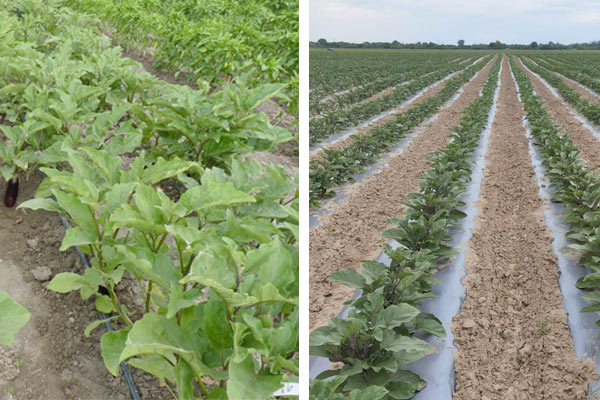
photo: Prof. Dr. Khriska Boteva