

![MultipartFile resource [file_data]](/assets/img/articles/заглавна-birne-knospe.jpg)
During the period when the fruit trees are in the phenological stages of development “bud swelling”, „bud burst” and „mouse ear” for pome fruit species there is a risk of development of a number of diseases and an increase in the population of many pests.
Pome fruit species
Pear
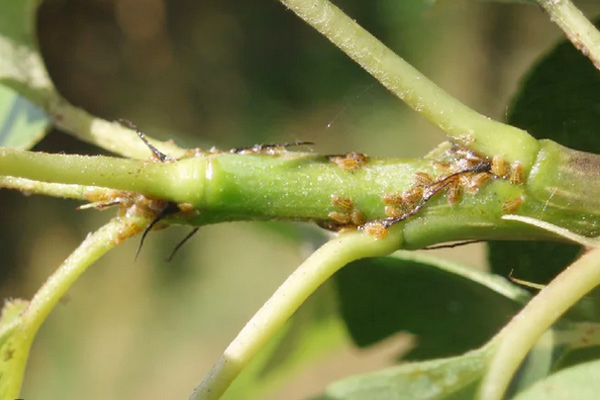
Common pear psylla
In spring, when the average daily air temperature rises above 2.5-3°C, the psyllids move to the short, weak and bag-shaped twigs and begin to feed. The females lay their eggs at 8-10°C at the base of the short twigs, on the cracked bark and on the buds. The larvae hatch towards the end of March. The adults and larvae cause damage by sucking sap from the buds and shoots of the pear. In addition to the direct damage, the pear psylla transmits a mycoplasma disease that causes drying out and death of pear orchards.
Strategy for pest control
Timely application of early sprays from the phenological stage “bud burst” to the phenological stage “white bud” is of decisive importance for limiting the population density of the pest during the active vegetation period. Chemical control should be carried out when temperatures remain above 5ºC and when the economic injury level (EIL) is exceeded: for adults and larvae 2-3 individuals per 100 buds.
Authorised plant protection products:
Decis 100 EC - 12.25 ml/da; Meteor - 90 ml/100 l water; Naturalis - 100-200 ml/da; Oviteks - 2000 ml/da or 2 x 1000 ml/da; Sineis 480 SC - 30 – 43.7 ml/da; Delegate 250 WG - 30 g/da; Sumi Alpha 5 EC / Sumicidin 5 EC / Oasis 5 EC - 0.03%.
Apple
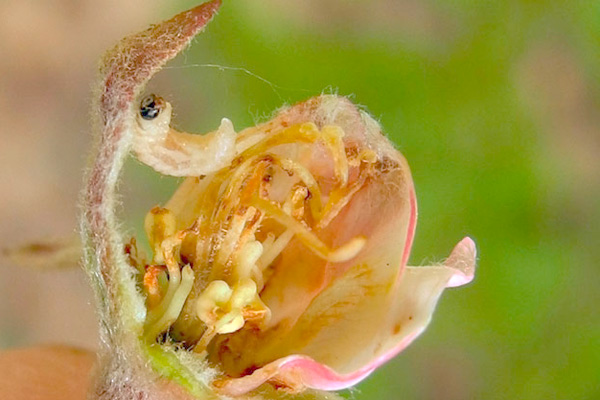
Apple blossom weevil
The adults leave their overwintering sites before bud swelling and bud burst at temperatures above 8-10ºC. The beetles feed mainly on the fruit buds and less often on the leaf buds. The females lay their eggs in the formed flower buds immediately before flowering, piercing them with their rostrum and laying one egg at the base of the stamens. The larvae feed inside and, as a result of the damage caused, the flower buds do not open, turn brown and remain on the trees.
Strategy for pest control
Control is aimed at the adults before egg-laying, when population density above the economic injury level (EIL) is established: 4-6 beetles per tree or 15% damaged buds.
Authorised plant protection product: Deka EC / Desha EC / Dena EC / Poleci /
Decis 30 – 50 ml/da.
Stone fruit species
Plums
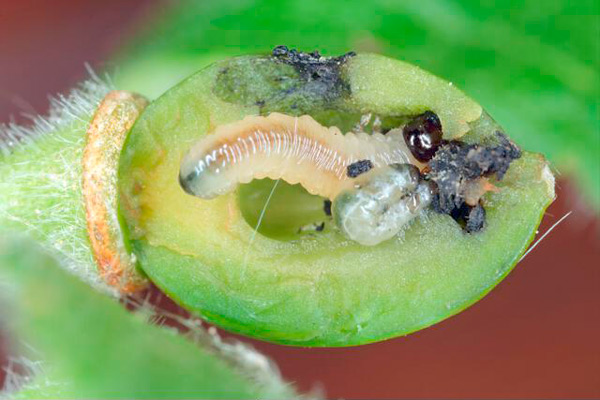
Black plum fruit sawfly
The flight of the sawflies begins at the end of March – beginning of April, and their mass flight coincides with the phenological stage „bud formation” of the plums. The females lay eggs in the tissue of the sepals and less often in the calyx of the still unopened flowers. Damage is caused by the false caterpillar, which feeds on the inside of the young fruits; their interior is filled with black sooty matter and emits an unpleasant bedbug-like smell.
Strategy for pest control
Control is carried out in two stages: the first treatment is against the adults before egg-laying and is performed before flowering. The second treatment is against the false caterpillars after flowering. The EIL is determined by shaking off: 2-3 sawflies/tree in the phenological stage „white bud” of the plums.
Authorised plant protection products: Sumi Alpha 5 EC / Sumicidin 5 EC / Oasis 5 EC - 0.02%.
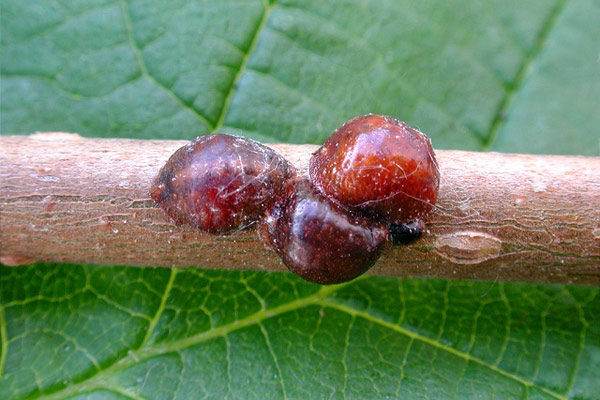
Common plum scale insect
In spring, the larvae become active at an average daily air temperature above 8°C and crawl along the thin branches. They feed by sucking sap, their legs atrophy and the larvae remain immobile. On their back they accumulate a wax-like substance from which the scale is formed. During feeding they excrete honeydew, on which saprophytic sooty fungi develop, hampering the normal course of physiological processes.
Strategy for pest control: In spring, treatment should be carried out against the larvae as they become active.
Authorised plant protection product: Oviteks - 2000 ml/da; Pirinex 48 EC - 0.15%;
Cherries
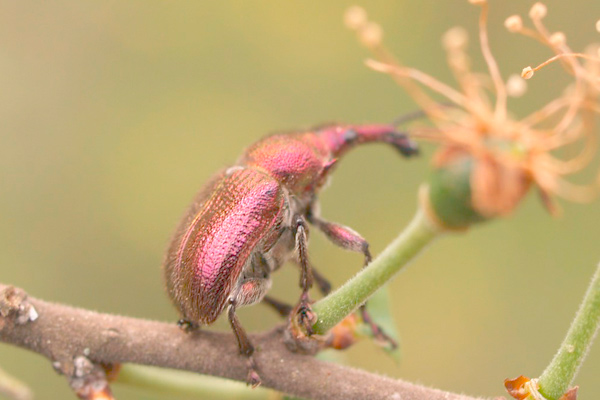
Sour cherry (sweet cherry) weevil
The adults appear in spring at a soil temperature of 8-10°C. The mass appearance of the weevil coincides with the end of the phenological stage „flowering” of the cherry. Damage is caused by the adults, which gnaw the swollen buds, flowers and leaves of sweet and sour cherries. This pest causes damage during feeding and egg-laying. When the species multiplies massively, the fruits do not grow evenly, remain small and become deformed.
Strategy for pest control: Control is aimed at the adults when population density above the economic injury level (EIL) is established: 3 weevils /10 twigs /tree in the phenological stage of the crops of mass „bud swelling” or after the phenological stage „flowering”.
Authorised plant protection product: Meteor - 60-90 ml/100 l water.
Peaches
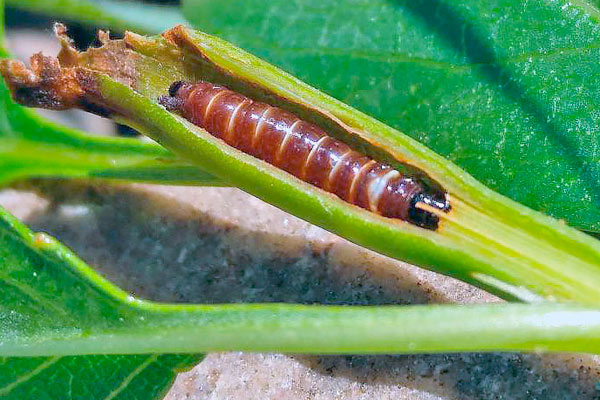
Peach twig borer
In March, at an average daily temperature of 14.5°C, the caterpillars leave their winter shelters and begin to feed on the buds, on the bark in the axils of the branches, etc. One caterpillar damages 2-3 buds, preferring the leaf buds. It then moves to the shoots, boring through the tip of the bud into their pith. One caterpillar consecutively damages 3-5 shoots. The damaged shoots wilt, the apical part droops down, dries out and gummosis occurs at the site of damage.
Strategy for pest control: Control is aimed at the caterpillars when population density above the economic injury level (EIL) is established: 3% damaged shoots.
Authorised plant protection products: Deka EC / Desha EC / Dena EC / Poleci / – 50-70 ml/da; Coragen 20 SC - 16–30 ml/da; Meteor - 90 ml/100 l water; Rapax SBS Europe - 100-200 ml/da; Sineis 480 SC – 20 ml/da; Sumi Alpha 5 EC / Sumicidin 5 EC / Oasis 5 EC - 0.02%.