

![MultipartFile resource [file_data]](/assets/img/articles/seedling-1.jpg)
The success of vegetable production in greenhouses and in the open field depends on all stages it passes through. It is determined by the preparation of the seedling section, the greenhouses and the open areas. It depends on the production of seedlings, on the care during vegetation until harvesting, and on the cleaning of the areas from plant residues and weeds. The choice of variety, the cultivation technology and plant protection are of great importance.
Every production starts with seedling production. Healthy vegetable seedlings with high quality indicators are required to ensure a good start for vegetable production. Planting such seedlings saves at least one plant protection treatment after transplanting to the permanent place. Therefore, the production of healthy, pest-free and hardened seedlings is of primary importance. Seedling production must not be carried out in greenhouses together with the preceding crop. The requirements of plants for environmental conditions differ. The risk of transfer of pathogens and pests from the old plants to the seedlings is very high. Therefore, seedling production must be carried out in a specialized, isolated seedling section, in which conditions are created that correspond to the biological requirements of the young plants – light, temperature, moisture and compliance with phytosanitary requirements.
The production of quality seedlings is a necessary condition for improving earliness, yield and product quality. The composition, structure and maintenance of the nutritional regime of the seedling mixture is a basic requirement to prevent prerequisites for the occurrence of environmental problems.
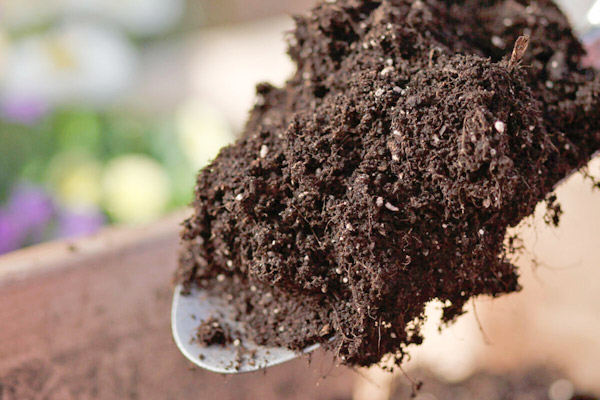
Substrates and mixtures for seedling production must meet the following requirements:
- They must not contain weed seeds and phytopathogens.
- They must have good physical properties: a balanced water-air regime (air:water ratio of 1:1); low bulk density; stable structure and good heat absorption capacity.
- They must have good chemical properties – high sorption capacity; neutral pH; low salt concentration; they must not contain substances toxic to plants. The most commonly used substrates are peat and perlite.
For the production of healthy quality seedlings, certain technological requirements must also be observed. These include:
- Choice of variety. It must be consistent with the period and technology of crop cultivation, and with the varietal characteristics – earliness, productivity, resistance to biotic and abiotic environmental factors.
- Seeds must be authentic, certified, disinfected, calibrated and with high sowing qualities – germination above 96%; varietal purity above 98%; moisture content 6 – 8%.
- The growth medium must be well prepared, disinfected and free from weed seeds. It must ensure a water-air and nutritional regime favourable for the plants. Peat-perlite mixtures are suitable for this purpose, as they are well aerated and free from pathogens and pests. The implementation of these practices also leads to a reduction in plant protection treatments.
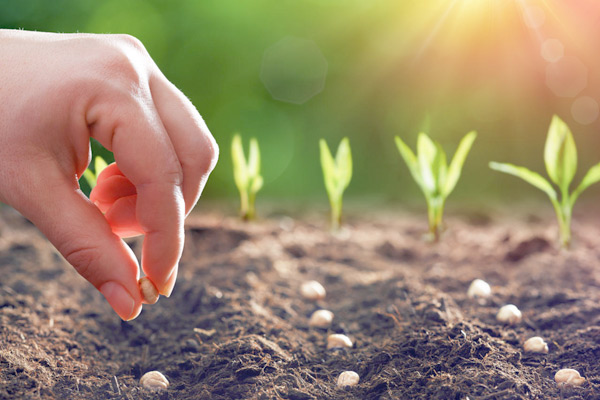
The cultivation of dense and pricked-out seedlings includes compliance with agrotechnical requirements related to sowing, pricking-out and care during the growing period, in order to produce healthy and quality seedlings. The more important among them are:
- Sowing is carried out in a substrate moistened with water to 70 – 75% of field capacity and compacted, in order to prevent the seeds from sinking;
- Shallow covering of the seeds and drying of the mixture are not allowed, as this leads to abnormal sprout growth and the production of weak and deformed seedlings predisposed to pest attacks.
- The difference between day and night temperature must not exceed 6 – 8oC, so as not to provoke “false damping-off” of the seedlings.
- Continuous control of light in the facilities and of substrate moisture.
- Control of the microclimate in the seedling section – moisture 50-60% of field capacity; substrate temperature 20-25oC.
- Control of the nutritional regime – pH = 6.2 – 6.8; total salt concentration of the substrate – EC = 1.2 – 1.8 mS/cm depending on the seedlings and the crop.
- Regular monitoring for early detection of the occurrence of diseases and pests.
After organizing seedling production, preparation of the areas for planting in greenhouses and in the open field begins.
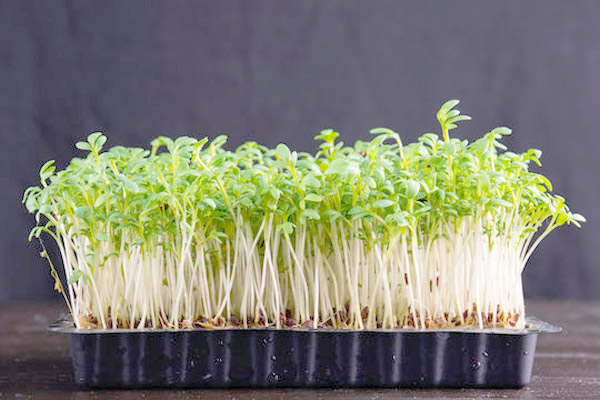
The preparation of greenhouses begins with cleaning the preceding crop and weeds. If chemical fumigation was carried out in the autumn, it is advisable to perform a “cress test” again to determine the degree of degassing. A composite sample from the 0-30 cm layer is taken in small, sealable containers (jars). It is placed in the jar, moistened, covered with filter paper or cotton wool. Cress or lettuce seeds are placed on the cotton wool. The jar is tightly closed. It is evaluated after 3-4 days. If the sprouts are fresh, degassing is successful; if they darken, residues of the fumigant are still present in the soil. It is necessary to plough the area again to a depth of 30-32 cm.
Basic fertilization is carried out on the basis of an agrochemical soil analysis. During it, organic and mineral fertilizers (nitrogen, phosphorus, potassium and magnesium) are applied in accordance with the recommendations made from the soil analysis. It is not advisable to apply farmyard manure in spring, because it may introduce seeds of weed species, soil pathogens and nematodes. This requires that it be applied before soil disinfection in the greenhouses, if such is carried out. The use of organic fertilizers obtained from red Californian worms, bacterial fertilizers, mycorrhizal inoculants, humate fertilizers, etc. has a beneficial effect.
After basic fertilization, the soil is ploughed, cultivated or rototilled and levelled if necessary. Beds are formed and the furrows in which planting will take place are marked.
In recent years, the share of hydroponic technologies in cultivation facilities has also been increasing, with container cultivation in peat-perlite substrate being the most commonly used. The nutritional regime is maintained by supplying nutrient solutions.
Disinfection of equipment
Wooden crates, hoes, shovels and other tools can be disinfected by soaking in a 2% copper sulphate solution for 24 hours.
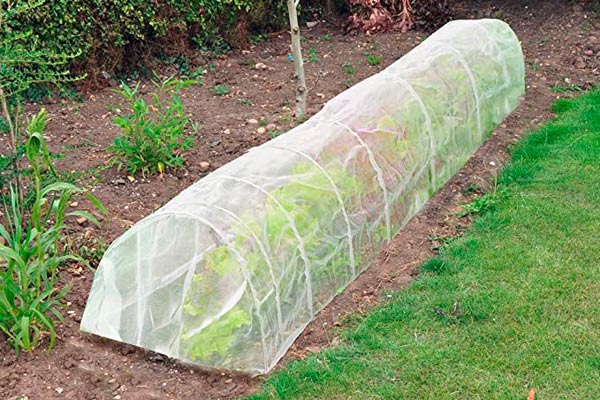
At present, seedlings are being grown in the seedling rooms for unheated glass and polyethylene greenhouses and for low tunnels. Sowing of seeds for early field crops – tomato, pepper, eggplant, cabbage, and later for medium-early crops, is beginning. To detect and capture flying forms of small insects (greenhouse whitefly, aphids), it is appropriate to hang yellow sticky traps; for thrips – light blue ones, and for leaf-mining flies – orange-yellow ones. Pheromone traps can also be used to determine the beginning of the flight of the tomato leafminer moth, as well as to reduce its population. Leaves, petioles with disease spots, aphid colonies, egg clusters, larvae, mines, etc. should be collected, taken out of the greenhouse and destroyed.