

![MultipartFile resource [file_data]](/assets/img/articles/старт-шведски-мухи.jpg)
The larvae of the different species of cereal flies are specialized to feed on the tender and weakly differentiated tissues in the growth cone and the forming ear, on the stamens, pistil and the grain contents in the grain-filling and milk ripeness growth stages. The most dangerous damage to wheat occurs in the early phases of its development. Of economic importance, the most common and widespread during the autumn vegetation period are the black wheat fly, the Hessian fly, the oat and barley frit flies, while in spring these are the wheat bulb fly, the black spring wheat fly, the black wheat fly and the Hessian fly.
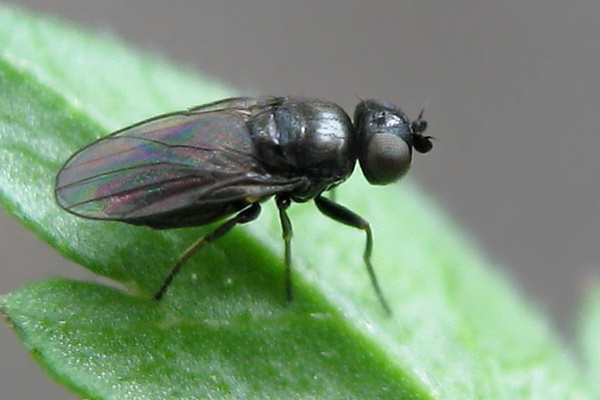
frit fly
The adults of the autumn generations of the black wheat fly, Hessian fly and frit flies migrate into wheat fields as soon as they emerge, in the growth stage first and beginning of second leaf. Their population dynamics varies in the different regions depending on climatic conditions, sowing date and wheat emergence, but they reach the highest density and have the longest flight period in early-sown fields.
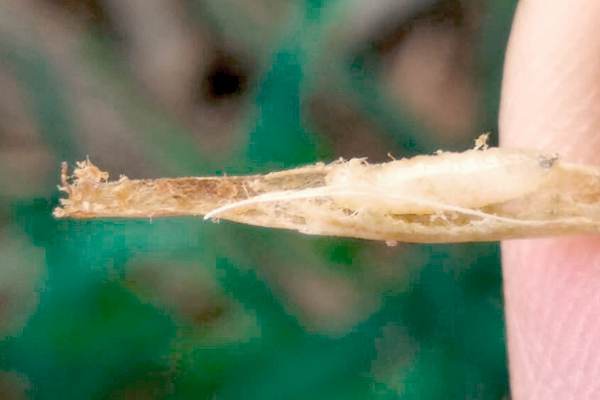
frit fly larva
Conditions for normal emergence and development of autumn-sown crops and for a higher number of stems damaged by the larvae are created in years with a warm, prolonged and relatively humid autumn, characterized by mean daily temperatures for the period September – November around or above the long-term average. More abundant rainfall and lower temperatures in October and November have a negative effect on the flight activity of the flies during their migration, on the number of eggs laid and on the extent of damage.
The black wheat fly is the earliest to migrate into the fields in autumn. It has a short flight period and infests early-sown fields that have emerged during the first and second ten-day periods of October. After this period the flies cease flying.
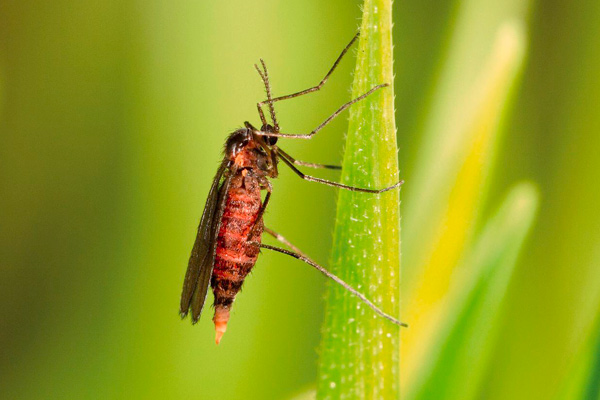
Hessian fly
The Hessian fly and the frit flies infest fields that have emerged by the end of October – the first days of November. Their flight ends in the first or second ten-day period of November, depending on climatic conditions and the sowing date of the wheat. Earlier-sown fields are attacked more severely. These biological characteristics explain why fields that emerge in the last ten days of October are not attacked by the autumn generation of the black wheat fly, and those that emerge in the first ten days of November are not attacked by the autumn generations of the Hessian fly and frit flies.
The adult insects migrate sexually mature and, after copulation, lay their eggs on the young plants. The larvae of the black wheat fly hatch first in the autumn vegetation season – as early as the end of the first ten-day period of October. Their development covers the growth stages second leaf – first tiller of wheat and is completed during the second ten-day period of November. The beginning of larval hatching of the barley and oat frit flies is later – in the third ten-day period of October, and their harmful activity takes place during the growth stages second–third leaf – first–third tiller of the cereal plants. Pupae and fully fed larvae overwinter.
The proportion of stems damaged by the autumn generations of the flies varies widely depending on climatic conditions, region, sowing date and emergence, and is highest in earlier-sown (second half of September) and normally emerged fields. During the autumn vegetation period the wheat bulb fly is also present in the stands. The species is widespread and is the most numerous in wheat fields during the autumn vegetation period. Adults begin to migrate in the first and second ten-day periods of October, when the plants are in the growth stage first–second leaf, and are found there until the end of November – the first ten-day period of December, depending on climatic conditions. The longest flight period – from 35 to 60 or more days – is observed in fields sown at the end of September. In fields sown in the first and second ten-day periods of October this period lasts from 30 to 45 days, while in those sown at the end of October it is from 15 to 25 days. Fields sown in the first and at the beginning of the second ten-day period of November are not attacked by the wheat bulb fly. The flies migrate sexually mature and, after copulation, the females lay their eggs in the soil near the base of the plants, where they overwinter and hatch early the following spring in the early-sown fields.
Control
Agronomic measures are of primary importance for limiting the damage caused by the fly larvae, and first of all the sowing date. In regions with high population density of the main harmful species mentioned, favourable sowing periods are the second and third ten-day periods of October. The second half of October is a favourable sowing period in years with mean daily temperatures above the long-term average for the period September – beginning of October. Good plant protection practice includes stubble cultivation and deep autumn ploughing to reduce the density of overwintering pupae of the black spring wheat fly, as well as moderate nitrogen fertilization of the crops in spring, which increases the natural resistance of the plants.
Chemical control: Spraying of the crops against the adult insects with Mospilan 20 SP – 15 g/da; Decis 100 EC – 6.3 ml/da at the following economic injury levels:
- wheat bulb fly – 3 individuals/m2 in growth stage third leaf – tillering;
- black wheat fly in autumn – 3 individuals/m2 in growth stage emergence – beginning of tillering;
- Hessian fly – 3 individuals/m2 in growth stage emergence – beginning of tillering in autumn.