

![MultipartFile resource [file_data]](/assets/img/articles/spinat-anbauen-ernten-4.jpg)
Spinach (Spinacia) is a genus of herbaceous plants from the goosefoot family – Chenopodiaceae. As a leafy vegetable, Spinacia oleracea is cultivated. Spinach originates from Ancient Persia. Its cultivation spread to Nepal and from there to China, where it is still called the Persian plant. The Moors brought it to Spain around the 11th century. It is rich in niacin (vitamin B3) and zinc, in proteins, fibres, vitamins A, C, E and K, thiamine (vitamin B1), vitamin B6, folic acid, calcium, iron, magnesium, phosphorus, potassium, copper and manganese. The diversity of flavonoids in spinach has an antioxidant effect, protecting the body from free radicals, particularly in the colon. Folic acid is beneficial for the cardiovascular system, and magnesium lowers blood pressure.
Its leaves are rich in proteins, iron and calcium salts, and vitamins A, B1, B2, C (ascorbic acid) and PP.
Studies show that spinach supports the brain’s energy function, memory and mental clarity.
How is autumn spinach grown?
The soil for growing spinach is prepared immediately after harvesting the preceding crop. Deep tillage is carried out and the site is fertilised with farmyard manure or compost (3000–3500 kg/ha). It is advisable to apply mineral fertilisers. The site is levelled and, if dry, irrigated before sowing. Soil preparation and base fertilisation must also take into account the main crop that will be grown after the spinach.
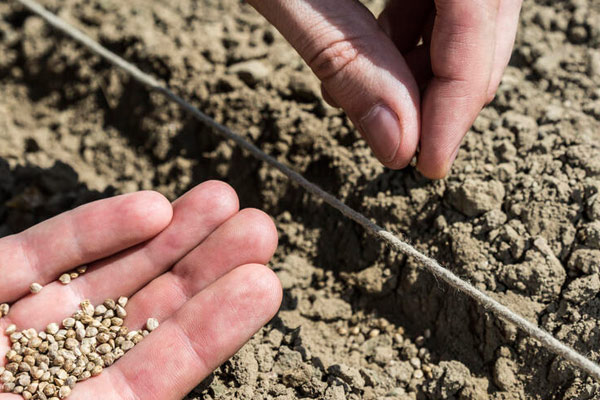
Sowing can be carried out manually or mechanically with a row seeder, depending on the conditions and the size of the area. When sowing by hand, the seeds may be broadcast over the area or sown in rows in shallow furrows with an inter-row spacing of 20 cm. The sowing depth should be between 2–4 cm. After sowing the seeds, it is advisable to roll the area. The seeding rate per hectare varies between 20–30 kg.
For harvesting during winter and early spring, spinach must be sown in the second half of September, no later than 10–20 October, especially in the more northern regions. Spinach from very late autumn sowings may not root well and thus is more likely to freeze. In order for spinach to overwinter without problems, the latest sowing date should be chosen so that by the onset of winter the plants have formed 3–4 leaves.