

![MultipartFile resource [file_data]](/assets/img/articles/media.media.0df27a10-af22-4a04-923a-51c9afd63d9d.original1024.jpg)
In September, the summer-autumn drought continues. It is felt more distinctly in the eastern regions, where the average monthly rainfall is 25-30 l/sq. m. In the western part of the country it does not exceed 40-50 l/sq. m.
In some years, the average monthly rainfall reaches between 5 and 10 l/sq. m. The average daily temperature is from 15 to 20 °C, and after 20 September it decreases by almost 2-3 °C. The highest daily temperature reaches 28-32 °C, and the lowest average temperature is between 3 and 8 °C.
Under these climatic conditions, the environment is favourable for the occurrence and multiplication of multigenerational insects and mites. They develop their last generations, and the density of these populations will largely determine the damage in the following year. During the month, conditions are created for the formation of abundant dew, which is a cause of infections of apple and pear scab, late blight on late tomatoes and others.
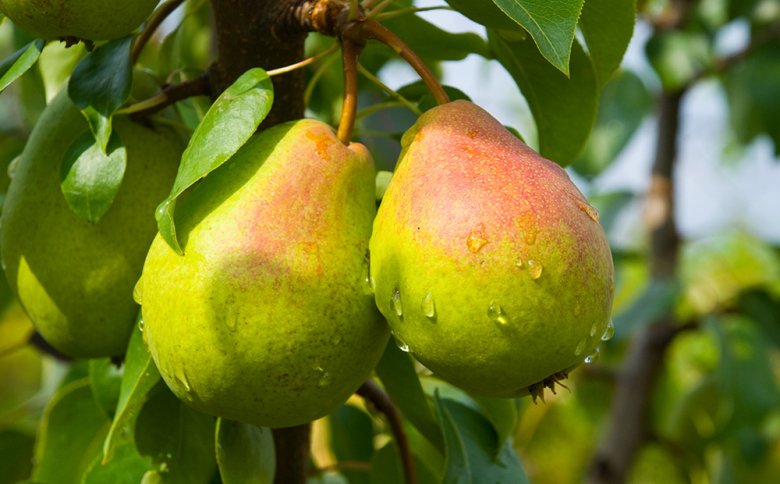
Apples and pears
At the beginning of the month, the flight of the codling moth (end of the second generation and partially the third) must be monitored and, if necessary (economic injury threshold – for the second generation: 1.5-2% fresh entries into the fruits), treatment should be carried out with authorised plant protection products: Bellis WG - 80 g/ha; Embrélia - 150 ml/ha; Score 250 EC - 0.02%; Sercadis - 15 ml/ha; Flint Max 75 WG - 0.02%.
After a thorough inspection and detection of late scab infections, as well as against diseases that develop during storage of the produce, treatment is carried out with the following PPPs:
Apple
Bellis - 80 g/ha; Delan 700 WDG - 0.035%; Difcor 250 SC - 15 ml/ha; Luna Experience - 20-75 ml/ha; Merpan 80 WG – 200 g/ha; Syllit 544 SC - 125 ml/ha; Score 250 EC - 0.02%; Thiovit Jet 80 WG - 600 g/ha; Faban - 120 ml/ha; Flint Max 75 WG - 0.02%; Folpan 80 WDG - 0.15%; Fontelis SC - 75 ml/ha; Chorus 50 WG - 0.03% (preventive) 0.05% (curative); Champion WP - 0.3%.
Pear
Difcor 250 SC - 15 ml/ha; Captan 80 WG - 150-180 g/ha; Luna Experience - 20-75 ml/ha; Polyram DF - 200 g/ha; Scab 80 WG - 188 g/ha; Thiovit Jet 80 WG - 600 g/ha; Faban - 120 ml/ha; Funguran OH 50 WP - 150-250 g/ha; Champion WP - 300 g/ha.
For good storage of apples and pears and for reducing rots during storage, it is advisable to carry out one post-harvest treatment with plant protection products. After spraying, the fruits are left to dry and are arranged in cold stores or deep and cool cellar premises.
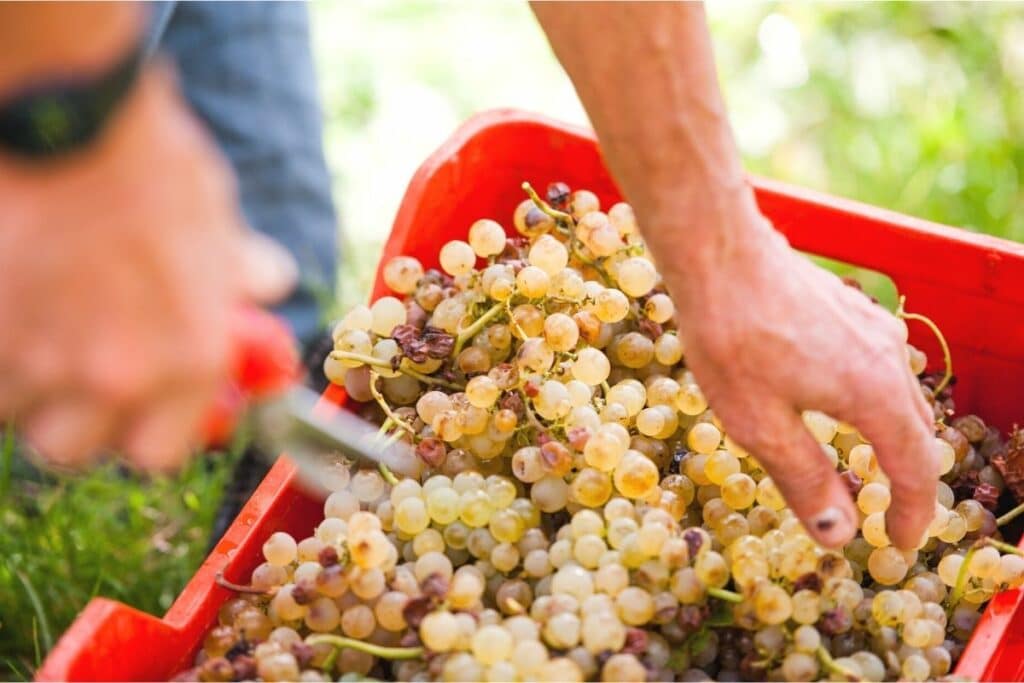
Vineyards
During this period, grey mould causes significant damage to the vine from berry colouring to consumption. Therefore, in wet and cool weather in September, treatment should be carried out with the following authorised plant protection products: Cabrio Top – 0.2%; Cantus - 100 g/ha; Prolectus 50 WG - 120 g/ha; SWITCH 62.5 WG - 0.08%; Follow 80 WG, Friller 80 WG, Flowet 80 WG - 187.5 g/ha; Folpan 80 WDG - 0.15%; Avalon - 250 ml/ha, Banjo - 100-150 ml/ha.
At this time, adults from the third generation of the European grapevine moth are also flying. The larvae damage the ripening or already ripe grape berries. Treatment should be carried out at the economic injury threshold: for table varieties 7-8 larvae per 100 grape clusters, and for wine varieties 10-12 larvae per 100 grape clusters.
Authorised plant protection products: Aficar 100 EC - 40 ml/ha; Decis 100 EC - 12.5-17.5 ml/ha; Dipel 2 X - 0.1%; Efcimetrin 10 EC, Ciper 10 - 40 ml/ha; Karate Zeon 5 CS - 0.02%; Coragen 20 SC, Voliam - 15-27 ml/ha; MAGEOS - 10 g/ha; Rapax - 75-100 ml/ha; Sumi Alpha 5 EC, Sumicidin 5 EC - 0.025%; Foray 48 B - 0.15%; Cyclone 10 EC - 50 ml/ha; Citrin Max, Ciperkil 500 EC, Cipert 500 EC, Poly 500 EC - 6 ml/ha; Sherpa 100 EC - 40 ml/ha, Delmur - 50 ml/ha, Kedu - 40 ml/ha.
One-year-old vines are covered with soil 3-5 cm above the graft union. This operation is carried out at the end of September.
Late tomatoes suffer from late blight in wet weather and from powdery mildew in dry weather. They are sprayed with approved fungicides. Control of moths, cutworms and caterpillars of various cabbage butterflies with pyrethroids continues.
Carrots - if spots of powdery mildew are detected, they are treated.
Soil for growing vegetable seedlings is disinfected with Basamid granulate 980 g/kg at a rate of 4-5 g/sq. m. Five days before application, the soil is thoroughly moistened. The product is spread with rubber gloves evenly over the soil surface, immediately mixed with the soil by digging in and covered with polyethylene. After 4-5 days the sheet is removed, the soil is left open for 2-3 days and then dug again. After 20-25 days it is collected in a heap and left to mature during the winter months.
For tobacco seedlings, the rate is 10-20 g/sq. m. It is applied 10-15 days before sowing with incorporation and covered with polyethylene.
Field crops
Proper seedbed preparation, sowing depth of 5-6 cm, seeding rate, pre-sowing or at-sowing fertilisation, rolling and the necessary moisture are prerequisites for well-established stands. Observance of the sowing time and seeding rate is also of great importance. Wheat and barley seeds are treated against loose and covered smut, and barley seeds also against stripe disease. In autumn, winter-annual and spring-annual weeds appear: annual grasses (annual meadow grass, brome, wild oat, field foxtail, etc.), annual broadleaf weeds (chamomile, cleavers, field speedwell, corn poppy, larkspur, etc.) and perennial rhizomatous and root-sprouting weeds (creeping thistle, field bindweed, couch grass, etc.).
Autumn herbicide treatment is applied when the annual broadleaf weeds have emerged en masse but have not passed the 3rd-4th leaf stage. Thus, the crops are freed early from their competition. If autumn treatment against weeds is possible, the following conditions must be met: the area is well tilled and rolled after sowing, the sowing depth is 5-6 cm, and the species composition of the weeds is known; soil moisture and temperature at herbicide application should be above 5 °C; grass weeds should not have passed the 3rd-4th leaf stage. During vegetation, the application of grass herbicides is carried out when the crop plant has passed the 3rd leaf stage, there is sufficient soil moisture and temperature, and the grass weeds have developed three to four leaves.
After emergence, the crops must be inspected for pests such as: common vole, wheat ground beetle, cereal flies and aphids – all of them cause serious damage.
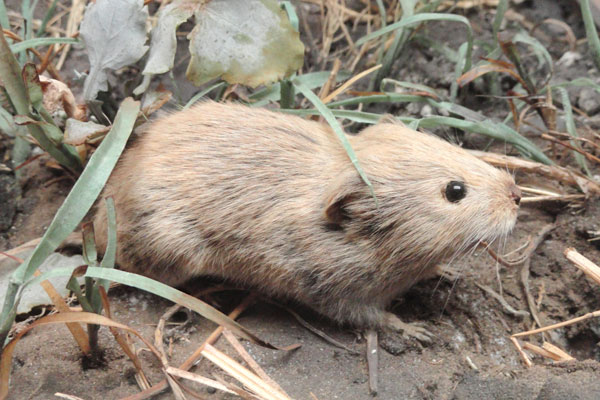
Common vole ( Microtus azvalis) – it is widespread throughout the country. It causes damage to cereal crops, lucerne, oilseed rape, orchards, etc. It lives in colonies in long burrows with various numbers of holes on the surface. Inhabited colonies are identified by scattered soil heaps, a well-shaped opening and green leaves inserted into it. In warm and dry winters, the reproductive capacity of the vole is very high. It reproduces year-round and the offspring of one pair can reach up to 2400 individuals. It feeds on the green parts of the plant. Damage is observed from plant emergence to harvest. In case of heavy infestation, the crop is completely thinned out. After harvest, deep ploughing is recommended to destroy the colonies and to eliminate any emerged weed vegetation that serves as food for the vole. When inspecting the crops, the density of the vole population is determined and, if 2 active colonies per hectare are found, poisoned baits are placed in the inhabited holes and the openings are trampled down to protect birds and useful game.
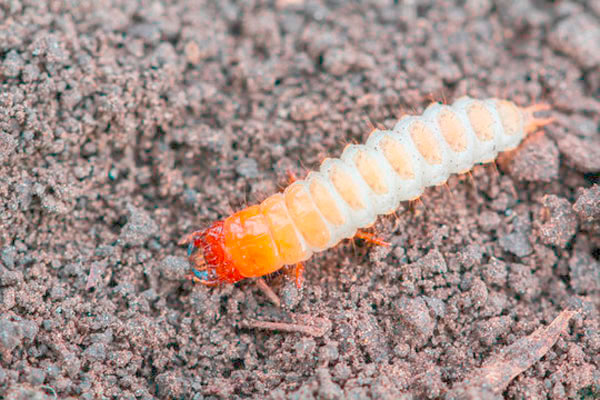
larva of wheat ground beetle
Wheat ground beetle ( Zabrus tenebrioides )
This is the most dangerous pest of cereal crops. In dry and warm summers, strong development of the adults is observed. One of the reasons for its mass occurrence in recent years is the monoculture cultivation of cereals. Damage from the adults is insignificant. They appear from June until late autumn. The beetles feed on wheat and barley grains at the milky stage. They gnaw them and cause shedding. During heatwaves they burrow into the soil. After the rains in September, they come to the soil surface, mate and lay eggs at a depth of 5 cm under soil clods, in clusters of about 20. They prefer couch grass-infested areas, which is why damage appears in patches. The larvae dig burrows up to 40 cm deep, where they spend the day, and come out to feed at night. They gnaw off the sprouts of the plants, chew the leaves of young plants and suck the sap; subsequently the leaves turn brown, dry up and look like small bundles of fibres. In case of light infestation the crop thins out, and in case of mass infestation the entire crop can be destroyed and ploughing up becomes necessary.
The following measures must be observed: proper crop rotation, timely soil cultivation and destruction of grass weeds, especially couch grass. Thus, the density of larvae is significantly reduced and insecticide treatments are saved. Chemical control is carried out at the economic injury threshold: at emergence and tillering growth stages – wheat 3 larvae/sq. m, barley 4 larvae/sq. m.
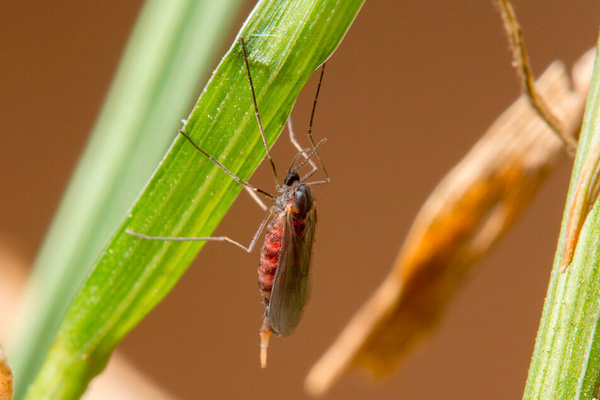
Hessian fly (Mayetiola destructor)
Cereal flies – frit fly (Oscinella frit), Hessian fly (Mayetiola destructor), wheat stem fly (Chorops pumilionis) and others.
They are widespread in the crops and cause severe damage to the infested stands. Larvae of the autumn generation cause identical damage to the plants. They sever the central leaf, which turns yellow and curls, while the other leaves remain green. When the central leaf is pulled out, it separates easily and more than one Hessian fly larva is found at the damaged site. The larvae of the frit fly feed on the succulent and tender tissue in the lower part of young plants, and the tissue decomposes. They also attack the stem – the central leaf curls, turns yellow and is easily pulled out, with one larva found at the site of damage. The damage symptoms of the wheat stem fly are the same as those of the frit fly. As a result of the infestation, weaker plants die, and the remaining ones produce additional tillers, but this cannot compensate for yield losses in the infested crops. Control of the flies is very difficult due to their concealed development. Observance of sowing dates is of great importance; earlier sowing coincides with the mass flight of the flies. Balanced and timely fertilisation promotes uniform emergence of the plants and contributes to faster passing of the critical growth stages. To determine the flight, inspections are carried out with an entomological net in calm and sunny weather. When 3 flies/sq. m are detected, treatment of the crop is undertaken.
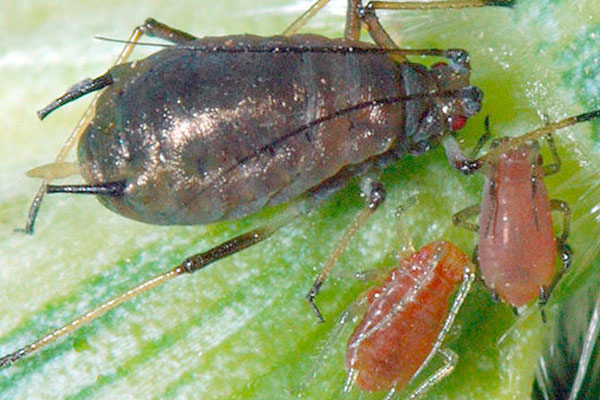
Aphids – oat bird-cherry aphid (Macrosiphum avenae), greenbug (Schizaphis graminum). The oat bird-cherry aphid is the most harmful and most frequently encountered and attacks cereal crops and many grass species. It feeds by sucking sap from the plants. In addition, it is a vector of viruses and causes barley yellow dwarf disease. This aphid is a non-migrating species and overwinters as eggs on winter cereals and perennial grasses. Sparse and earlier sown crops are more heavily infested. The oat bird-cherry aphid is controlled by ladybirds, syrphid flies and lacewing larvae. To reduce the level of aphid infestation, volunteers must be destroyed, sowing dates must be observed and fertilisation must be balanced, because unilateral nitrogen fertilisation weakens the plants and infestation in them is greater. The crops are inspected at emergence-tillering stage and when 10 aphids/plant are detected, chemical control is undertaken.
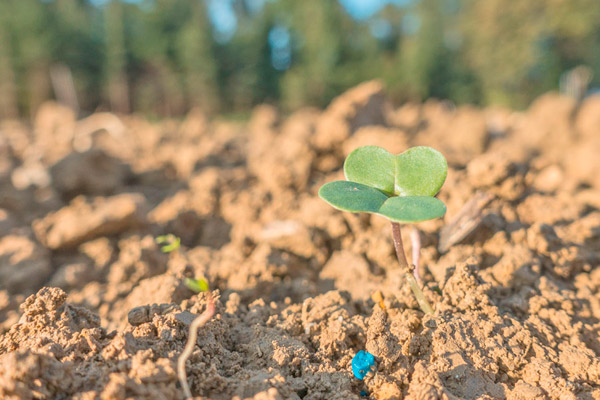
Oilseed rape
Oilseed rape is sown at the end of August to the beginning of September. It is a demanding crop in terms of soil – it requires soils rich in nutrients with a good water regime. The best preceding crops are wheat, barley, early potatoes and others. It is infested by several types of weeds: winter-annual, early spring and root-sprouting. Early destruction of weeds reduces competition with the crop and contributes to uniform stand establishment and rosette development.
The main diseases of oilseed rape in autumn are:
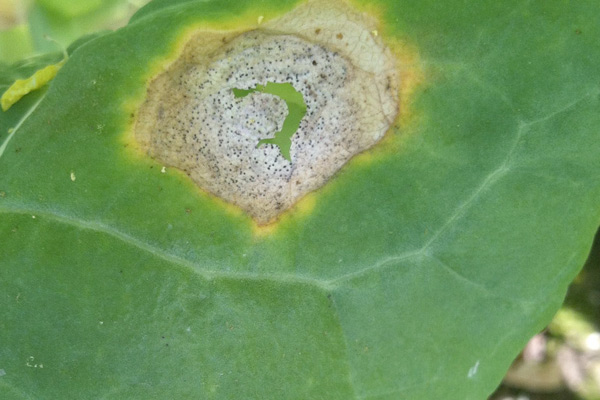
Dry stem rot (Phoma lingam)
The first symptoms – yellow spots appear on the leaves, later they become speckled with black dots – pycnidia. Plants infected in autumn die in spring or their stems break.
Phoma spreads in foci and very quickly covers the entire field. From the leaves the fungus passes into the petioles and penetrates the crown. Therefore, regular autumn inspections are necessary and treatment must be carried out when the first light-yellow spots on the leaves are detected.
Measures to control dry stem rot include proper crop rotation, destruction of plant residues and control of the cabbage stem flea beetle, which transmits diseases.
In autumn, the following pests are dangerous:
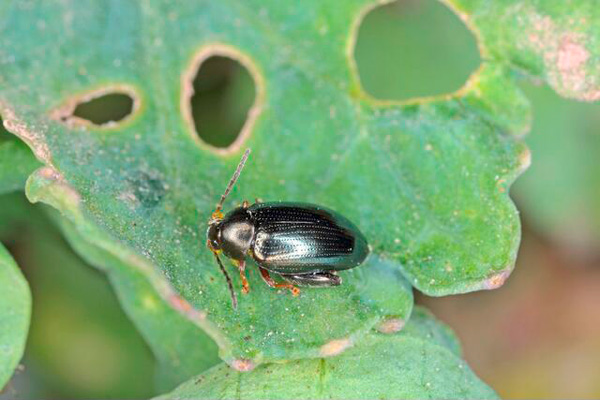
Cabbage stem flea beetle (Psylliodes chrysocephala)
It causes damage in autumn by gnawing the leaves and making small holes, which turn into larger perforations as the leaves grow. It can be found in the crop as soon as the plants emerge, therefore continuous monitoring is necessary and, when 2 adults/sq. m are detected at the 3rd-9th leaf stage or more leaves, chemical control should be undertaken.
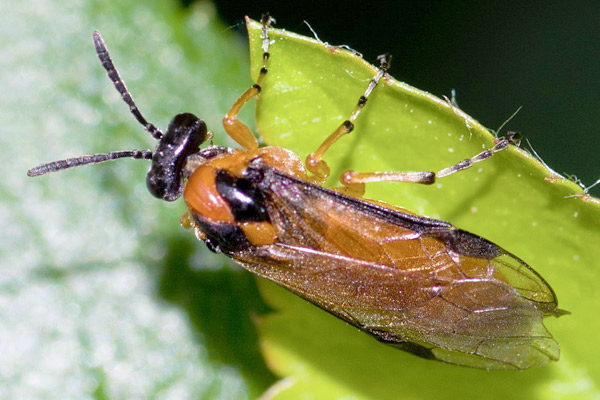
Turnip sawfly (Athalia colibri)
It develops three generations per year, with the greatest damage caused by the larvae of the third generation in autumn – they eat the entire leaf blade, leaving only the main vein. Chemical control is carried out at the economic injury threshold of 2-3 false caterpillars/sq. m.
Aphids (Brevicoryne brassicae)
Adults and larvae suck sap from the leaves and stems of the crop. The plants weaken and stop growing. Aphids are vectors of many viral diseases.
Attention! When working with plant protection products, all requirements for occupational safety, protection of bee colonies from poisoning and protection of the environment from pollution must be observed!