

![MultipartFile resource [file_data]](/assets/img/articles/may-blog-hightunnelbedlayout_0.jpg)
Many plant pathogens and pests are transmitted through the soil. There they overwinter or pass through a certain stage of their development. Intensive and monoculture cultivation of vegetable crops in protected structures leads to an accumulation of pathogenic microorganisms and pests in the soil. It is considered that losses caused by soil-borne pathogens amount to 1/3 of the losses caused by all pathogens. Various methods are applied to control soil pests – physical (steaming, solarization), chemical (fumigation) and biological (biofumigation).
The purpose of soil disinfection is the destruction of:
- pathogens causing damping-off and root rot;
- nematodes;
- soil pests;
- weed seeds and others.
Before disinfecting the greenhouse, it must be prepared by means of the following activities:
- Collection and removal of plant residues;
- Cleaning and washing of the glass and the structure;
- Soil preparation and moistening;
- Destruction of the weed vegetation around the greenhouse.
Physical methods for soil disinfection
Soil steaming
It covers all groups of harmful organisms, including bacteria and viruses. It is a very effective but expensive method. It is applied only in greenhouse complexes supplied with gas. A disadvantage of the method is that it has no selectivity. Together with the pathogenic organisms, saprophytic and beneficial species are also destroyed. A “biological vacuum” is created and the possibility for rapid recolonization of the soil by pathogens – the “boomerang effect”. The high temperature causes changes in certain chemical compounds, which leads to acidification of the soil reaction, release of toxic substances and changes in the availability of nutrients. Under this treatment: nematodes die at up to 50oC; at 60-72oC bacteria and soil fungi are eliminated; above 82oC – almost all weed seeds, viruses, insects and other pests. To obtain a good result, the soil must be well tilled. It can be combined with subsequent application of beneficial microorganisms.
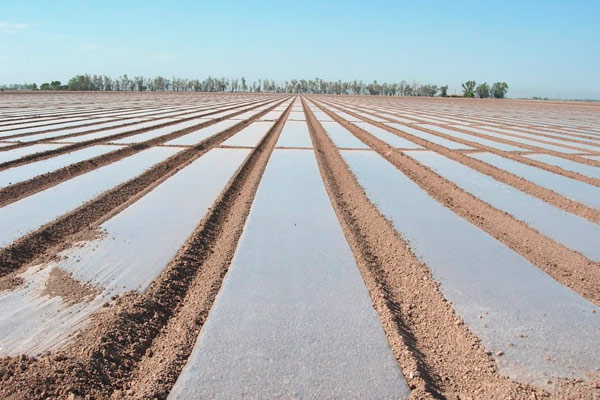
Soil solarization
Solarization is a non-chemical method for soil disinfection using solar radiation. It is based on solar heating of the soil surface when it is covered with transparent polyethylene film. The film serves as a trap for capturing solar energy. The use of this method has been continuously increasing in recent years. It makes use of the days with intensive sunshine in July and August, when daytime temperatures exceed 32oC. The soil is covered with polyethylene film, which increases its temperature to lethal levels for soil pests and weed seeds.
Advantages of the method:
- no harmful effect;
- minor impact on the environment;
- longer-lasting effect on disease-causing agents;
- increases yield and product quality, due to biological and chemical mechanisms;
- significantly cheaper method than steaming;
- there is no “biological vacuum”, therefore there is no “boomerang effect”, because solarization represents pasteurization of the soil. Beneficial flora and fauna are preserved;
- improves the soil water content;
- the mulching period can be reduced if combined with other methods.
Disadvantages of the method:
- the covered area cannot be used for 1 month during the hottest period of the year;
- unpredictability of climatic and biological conditions;
- problem with polyethylene recycling;
- more limited spectrum of action compared to chemical fumigants.
Soil preparation: It is tilled so as to ensure a smooth surface, allowing the polyethylene film to adhere closely to it. The presence of coarse fractions and plant residues may lead to the formation of air pockets, which will insulate the soil and reduce the increase of its temperature to the required effective levels.
Soil moisture: Soil moisture should not be less than 70% of field capacity, and the depth of the moist layer should not be less than 60 cm.
Soil temperature: The effective temperature of the solarized area should reach 60oC at a depth of 10 cm, which guarantees the destruction of weed seeds and soil-dwelling pests.
Exposure: Required period of action – 4-6 weeks. When combined with other methods, this period can be reduced.
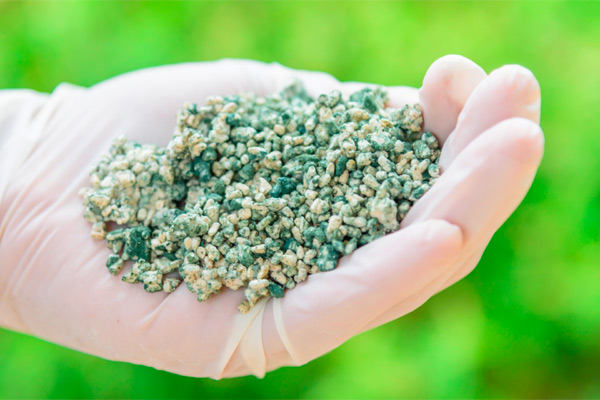
The effect of solarization will be enhanced if, after its completion, bioproducts such as Trichodermin (10–15 kg/da) and others are applied to the soil.
The quality of solarization depends on the quality of the polyethylene, soil moisture, air temperature, intensity of solar radiation and other factors.
Chemical methods for soil disinfection
Basamid granules (a.i. dazomet) is a fumigant for disinfection of crop-free soils and substrates. Active substance – dazomet 98%; LD50 520 mg/kg. Granular fumigant. In contact with moist soil, dazomet decomposes into methyl isothiocyanate, formaldehyde, methylamine, hydrogen sulfide. It is applied at a rate of 50-70 kg/da.
Effective against: nematodes – root-knot and cyst-forming; soil fungi – Pythium, Phytophthora, Verticillium, Fusarium, Rhizoctonia, Pyrenochaeta, Phoma, Didymella and others; weeds – nettle, Poa, shepherd’s purse, lamb’s-quarters, chickweed, barnyard grass, knotgrass, black nightshade and others; soil pests – wireworm larvae, cutworms, May beetles and others. In trials conducted at the Maritsa Vegetable Crops Research Institute in Plovdiv, high efficacy of the product against root-knot nematodes (Meloidogyne spp.) was recorded – from 96.84% to 100%.
In contact with soil moisture, dazomet degrades to methyl isothiocyanate, which is active against root-knot nematodes, soil-dwelling fungi, weed seeds and some soil pests. The distribution and movement of toxic gases depend on soil structure, soil temperature and moisture. After the exposure period is completed, the structures are opened. After aeration, the polyethylene cover is removed. After 2-3 days the soil is rotary-tilled. Degassing continues for another 5-7 days. Disinfection with Basamid G is carried out at an interval of 3-4 years.
When applying it, the following requirements must be observed:
- the most suitable soil temperature for product activity is from 12oC to 15oC;
- for uniform distribution of Basamid granules the soil must have a fine structure, well prepared as for sowing;
- to achieve optimal product activity, the soil should be moistened 8-14 days before treatment to full field capacity or at least 60-70% moisture;
- the product is in the form of small granules which, during application, are distributed evenly over the soil surface, manually or with a tractor equipped with an applicator;
- the product must be incorporated into the soil;
- followed by rolling, surface irrigation with water as sealing, or placing a polyethylene cover;
- exposure time 7-15 days, depending on the temperature during treatment;
- after the fumigation period, the soil is degassed by tillage and left to aerate;
- pre-harvest interval 45-50 days at 70-80% of field capacity;
- the doses of Basamid G are determined depending on the pests, the type of pathogens and the soil type;
- a suitable period for soil disinfection is late summer or early autumn;
- after the degassing period, a “cress test” must be performed to determine the degree of degassing. A composite sample is taken from the 0-30 cm layer into small sealable containers (jars). It is placed in the jar, moistened, covered with filter paper or cotton wool. Cress or lettuce seeds are placed on the cotton wool. The jar is tightly closed. Evaluation is done after 3-4 days. If the seedlings are fresh, degassing is successful; if they darken – there are still residues of methyl isothiocyanate in the soil and degassing must continue.
Nemasol 510 (a.i. metam sodium)
The active substance is metam sodium 510 g/l. It is registered in the country at a rate of 80 and 100 l/da for control of root-knot nematodes, soil pathogens (Pythium, Verticillium, Fusarium, Rhizoctonia, Pyrenochaeta, Sclerotinia) and weed seeds. The product can be used for soil disinfection in steel-glass greenhouses (in the absence of plants), with the higher dose applied in case of predominant pathogen infestation. It is applied by means of an applicator with rolling, as well as through drip irrigation systems, followed by polyethylene covering.
When applying Nemasol 510, the following requirements must be observed:
- the soil must be prepared before product application as for sowing, free of weeds and plant residues;
- on the day of application, soil moisture should be 50-60% of field capacity;
- when applying the product via drip irrigation, the hoses must be placed in two lines for each row of plants under the polyethylene;
- application is carried out with a dosing pump of the Dosatron type, which injects Nemasol 510 into the irrigation system;
- the concentration of the solution depends on the total amount of water that must be applied to achieve moistening of the soil to a depth of 20-25 cm;
- it is effective in the zone reached by the solution;
- after application, the irrigation hoses must be flushed with clean water;
- two weeks after application, the polyethylene cover must be removed and then another 7-10 days are allowed to pass;
- for good degassing, soil tillage is necessary. The duration of fumigation and degassing is directly dependent on soil temperature. At lower temperatures they are extended, and at higher temperatures the quality of disinfection may deteriorate due to rapid gas escape from the soil. Exposure is as with Basamid G.
- after completion of degassing, a “cress test” is carried out as with Basamid G.
Nemasol 510 at doses of 80 and 100 l/da showed high efficacy of 95.17% and 96.76%, respectively, against root-knot nematodes. The product is registered in more than 20 countries worldwide.
Vydate 10 G (a.i. oxamyl)
Vydate 10 G is used for control of root-knot nematodes in greenhouses at a rate of 3 kg/da at transplanting (in the furrow) or 4.5-5.5 kg/da before transplanting with incorporation at a depth of 10 cm in the soil. In studies conducted on Vydate 10 G, efficacy from 77.50% to 90.63% was recorded under natural infestation by root-knot nematodes in steel-glass greenhouses.
Vydate 10 L (a.i. oxamyl)
Vydate 10 L is applied through the drip irrigation system at a rate of 1-2 l/da immediately after transplanting. It is successfully used to control root-knot nematodes. Trials have shown high efficacy against nematode larvae up to 20 days after application. In tomatoes, product efficacy for this period reaches 100%, and in cucumbers it is 100% 10 days after application and 82.69% after 20 days. The advantages of Vydate 10 L and the good results from the conducted trials are grounds for its successful use in greenhouses with drip irrigation systems. It is an alternative solution for the control of root-knot nematodes and other insect pests.
Other products with active substance oxamyl that can be used for soil disinfection are Afromil SL at 1 l/da and Allready SL at 1 l/da. They are applied immediately after transplanting the crop via the drip irrigation system. From 1 to 3 applications can be made.
Velum Prime SC (a.i. fluopyram)
Velum Prime SC is applied at a rate of 37.5-62.5 ml/da through the drip irrigation system. The first treatment is carried out 1-3 days before or after transplanting, the second treatment – 15-30 days after transplanting. The lower dose is used in case of low infestation by root-knot nematodes. The product has fungicidal activity against powdery mildew. It is registered for tomatoes, eggplant, pepper, melons, watermelons, pumpkins, cucumbers, gherkins, zucchini.
Nemathorin 10 G (a.i. fosthiazate)
It is registered for control of root-knot nematodes in tomatoes at a rate of 3 kg/da. Maximum number of applications – 1 in 3 years. In production trials under natural infestation to determine the efficacy of Nemathorin 10 G at 3 kg/da against root-knot nematodes (Meloidogyne spp.) in tomatoes grown in steel-glass greenhouses, good efficacy was recorded – from 80.63% to 85.00%. The product was applied immediately before transplanting the crop with subsequent incorporation at a depth of 10-15 cm.
When using plant protection products for soil disinfection in greenhouses, strict compliance with pre-harvest intervals and application methods is required, in accordance with their registration with the Bulgarian Food Safety Agency (BFSA).
Biological methods
Biofumigation
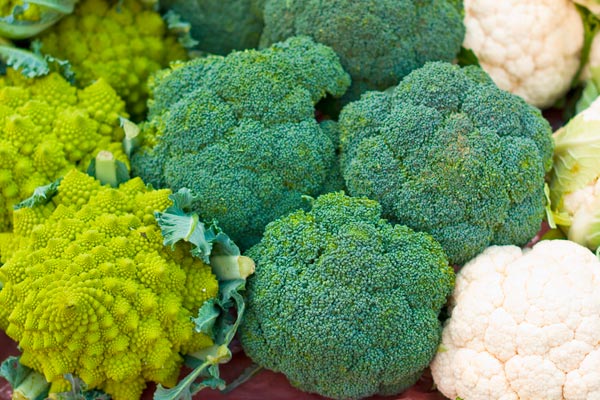
Biofumigation is an alternative to the chemical method for soil disinfection in greenhouses and in the open field. It involves the use of plant material and organic amendments (farmyard or poultry manure), which, when incorporated into the soil, decompose and produce volatile substances. These substances act lethally on soil pathogens, pests and weeds. Cruciferous vegetables such as broccoli, cauliflower and other species of the genus Brassica, are rich in organic compounds collectively called glucosinolates, which under certain conditions are converted into isothiocyanates. They can be used to control nematodes, weeds and soil pathogens. During their mineralization in the soil, they release chemical compounds similar to methyl isothiocyanate – a toxin formed during the degradation of metam sodium. Biofumigation can be applied alone and in combination with solarization. It has been established that the combination of solarization and biofumigation successfully controls root-knot nematodes, soil-dwelling pathogens and weeds.
In addition to species of the genus Brassica tagetes extract also successfully controls root-knot nematodes. High efficacy has also been recorded when incorporating plant residues of chrysanthemum and tagetes. The results obtained from conducted trials show that biofumigation is a reliable method which, after optimization of the parameters, can be successfully applied for soil disinfection in greenhouses.
The genus Trichoderma includes 89 species. Those of greatest importance for industrial and biocontrol application are: Trichoderma hamatum; Trichoderma harzianum; Trichoderma koningii; Trichoderma viride
Microbial agents
Fungi of the genus Trichoderma are among the most common saprophytic fungi. They are isolated from both arable and forest soils. Many of them possess antagonistic abilities, and some stimulate the growth of cultivated plants. The mechanism of action of the fungus is as follows – the bioagent colonizes the soil around the plant roots and protects them from pathogenic fungi through the following four mechanisms:
- Competition for space and nutrients;
- Production of biologically active substances;
- Mycoparasitism – Trichoderma can grow on the mycelium of phytopathogenic fungi, degrading it by enzymes and feeding on the resulting substances. In this way it physically destroys the pathogen.
- Improves the condition of the plant.
The genus Trichoderma includes 89 species. Those of greatest importance for industrial and biocontrol application are: Trichoderma hamatum; Trichoderma harzianum; Trichoderma koningii; Trichoderma viride.
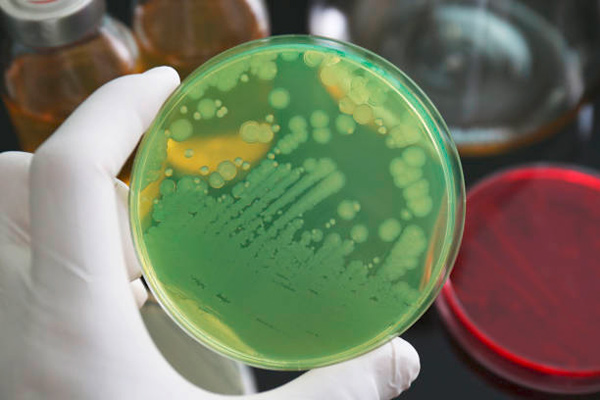
Among the dominant populations in the rhizosphere that act antagonistically to nematodes are bacteria of the genera Bacillus and Pseudomonas. They reduce nematode populations by inhibiting egg hatching, stimulating plant growth, inducing systemic resistance, or producing toxic substances, enzymes and other metabolic products.
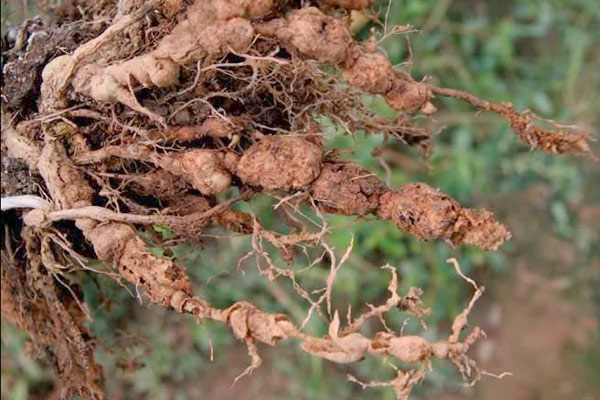
Control of root-knot nematodes is very difficult because they are soil pests and their attack is detected only at harvest of the crop
Among obligate parasitic bacteria, successful antagonists of nematodes are species of the genus Pasteuria, parasitizing several genera of plant-parasitic nematodes. The most important of them is the Gram-positive bacterium Pasteuria penetrans, an obligate parasite of root-knot nematodes Meloidogyne spp. The spores of the bacterium are resistant to drought, fumigant nematicides and extreme temperatures. They attach to the cuticle of second-stage larvae during their migration in the soil, subsequently parasitizing the larvae that have penetrated the plant roots. At the end of the nematode life cycle, infected females cannot lay eggs because the ovaries are completely utilized for maturation of the bacterial spores. Thereafter, infected female nematodes release the spores of P. penetrans into the soil, which can again infect new larvae.
Disinfection of the structure
At the end of the vegetation of crops in greenhouses, a significant amount of pathogen inoculum accumulates and insect populations increase. When plant residues are taken outside, they are dispersed in the area and during the next vegetation they attack young plants. In such cases, burning of old plants with 60 l/da formalin is recommended. It can be applied through the overhead sprinkler system above the plants.
Disinfection of equipment
Wooden crates, hoes, shovels and other tools can be disinfected by soaking in a 2% copper sulfate solution for 24 hours.