

![MultipartFile resource [file_data]](/assets/img/articles/organicawards.jpg)
The Municipality of Troyan, which is among the nominees for the annual EU Organic Awards, together with the City of Vienna and the Municipality of Seeham am Obertrumer See, Province of Salzburg, will compete for a distinction in the category “Best Organic City”.
The list of finalists for the first-ever annual EU Organic Awards was announced at the end of July, with a total of 24 projects from 11 different Member States selected to participate in the final round of the European awards, which will compete for 8 awards in 7 categories. The finalists were selected from more than 200 applications submitted by 26 countries.
The winners of the eight awards will be announced at the official award ceremony in Brussels on 23 September, as one of a series of events and activities held to mark the annual EU Organic Day.
The awards are the first example of EU-wide awards for organic production and are intended as a follow-up to the Action Plan for the Development of Organic Production, adopted by the Commission on 25 March 2021. The current Action Plan adopts the approach that, in order to stimulate organic production, consumer demand for organic products must increase. This requires, among other things, raising public awareness of the characteristics and benefits of organic production. For this reason, the Action Plan includes annual awards to recognise excellence in the organic value chain. These awards will be presented for the first time in 2022.
They are a recognition for the participants throughout the organic value chain who have developed an excellent, innovative, sustainable and inspiring project that creates real added value for organic production and consumption.
The awards are jointly organised by the Commission, the European Economic and Social Committee, the European Committee of the Regions, COPA-COGECA and IFOAM Organics Europe. The jury consists of representatives of these organisations, as well as representatives of the European Parliament and the Council of the EU. The President of the International Federation of Organic Agriculture Movements (IFOAM), Jan Plagge, stressed that “the current climate crisis shows that the European Union must strive to accelerate its work towards an agroecological and social model of agriculture that is more sustainable, fairer, healthier, more knowledge-intensive and based on shorter supply chains”.
Awards will be presented in the categories “Best Organic Farmer”, with separate awards for men and women in this section, as well as for Best Organic Small or Medium-sized Enterprise, Retailer, Restaurant, Organic Area, Region or City.
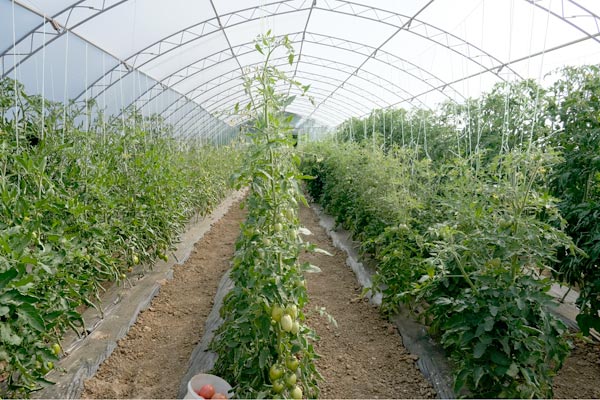
The Bulgarian representative is the Municipality of Troyan, which is among the three selected in the category “Best Organic City”, together with the Gemeinde Seeham am Obertrumer See in the Province of Salzburg, Austria, and the City of Vienna, Austria.
Troyan has established a municipal farming complex of organic greenhouses, orchards and apiaries with a focus on soil and water protection. The products are used for local kindergartens’ canteens and homes for the elderly. The focus is on short supply chains and healthy food for children.
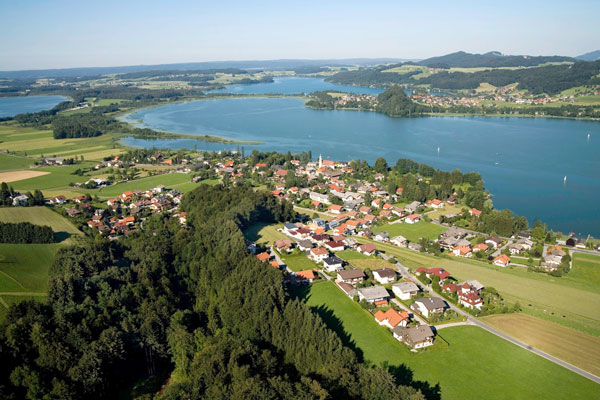
The Municipality of Seeham am Obertrumer See in the Province of Salzburg, Austria.
The organic village “Seeham” includes 33 organic farms, a developed system of local suppliers and producers, and the pride of the area – its own dairy.
All local schools and kindergartens offer lunch menus made exclusively from products of local farms, and 100% of the food in the municipal canteens of the town is also provided by farmers from the Municipality of Seeham am Obertrumer See.
Approximately 80% of farmers in Seeham practise organic farming and, due to the developed tourism, the local authority has decided that organic farming will play an important role in the further sustainable development of the area.
Initially, they started offering breakfasts made entirely of organic products in Salzburg, which over time gained increasing popularity and became sought after by guests of hotels and guesthouses in the region. Gradually, the municipality expanded its criteria for sustainable agriculture to include water protection, energy production and climate protection.
Thus the idea to close the organic product cycle was born, and currently the residents and guests of the town and the region can choose from various offers such as organic hotels, guesthouses, holidays on small farms, restaurants and shops.
The local organic shop is a key partner that enables the town to supply regional and seasonal products, delivering food with electric vehicles. A tourist trail has been developed, where beehives are placed on an area of 3,000 sq. m of flowering plants. There is also a community garden. An important focus is raising awareness of quality food and creating local jobs.
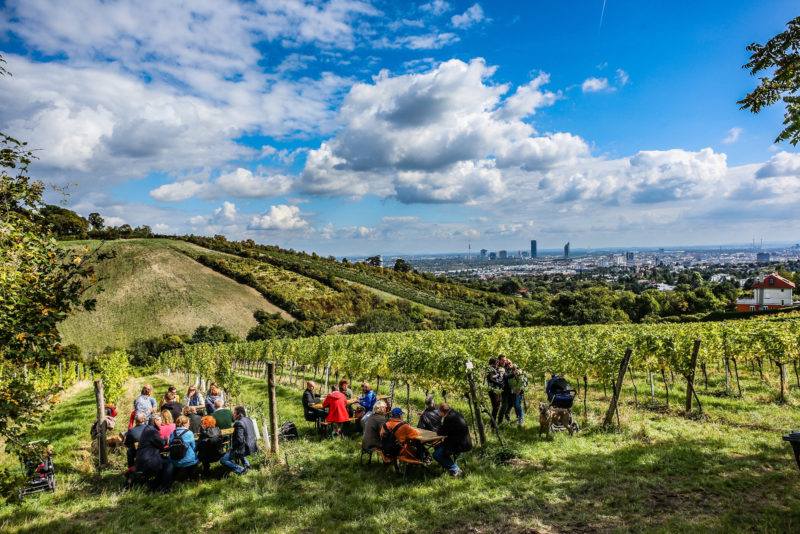
Vienna, Austria.
Vienna currently chairs the “Network of Organic Cities in Europe” and is part of the Milan Urban Food Policy Pact. The city’s Food Action Plan promotes sustainable organic production and consumption. Some of the measures include a new nutrition strategy, more organic food in public catering, training and environmental consulting for companies. 17% of the city’s area is used for agriculture and almost 30% of all farms within the territory of the Municipality of Vienna have converted to organic production. 50% of all food served in school or institutional canteens in the city is of organic origin, and 60% is locally produced. The city itself operates an urban farm that is 90% organic.
photos: EU Food & Farming