

![MultipartFile resource [file_data]](/assets/img/articles/tomato-diagnostik-недостик-цинк.jpg)
Are we able to “communicate with plants"?
Visual diagnosis
ZINC (Zn – Zinc from Persian – stone)
Importance of zinc for plants
Zinc is a micronutrient that affects photosynthesis, respiration, the formation and action of hormones, carbohydrate and protein metabolism, and other important processes in the plant organism. It participates in enzymatic reactions. Seven enzymes containing zinc are known.
Plant demand for zinc
In the plant organism, zinc is concentrated in the young organs and vital centres – the shoot tips, young roots, and conductive tissue. The uptake of zinc is influenced by phosphorus and nitrogen in the nutrient medium. High levels of these elements hinder the uptake and distribution of zinc in plants. It is assumed that phosphorus precipitates zinc along the veins of the plant, while nitrogen fixes and retains it in the roots as a result of the formation of zinc-protein complexes.
Light conditions also affect zinc uptake. Increased solar radiation reduces its uptake.
It is considered that plants are insufficiently supplied with zinc when they contain less than 15–20 mg/kg dry matter. Of course, this threshold varies depending on the plant species, and within the same species – on the growing conditions.
Uptake
It is taken up in the form of the zinc cation (Zn+2).
ZINC DEFICIENCY
General symptoms – the first signs appear on the young organs
Zinc is immobile in the plant, which means that zinc deficiency first appears in the new growth, usually as light green to yellow discolouration between the green veins. In more severe cases, the upper internodes are shortened and the plants acquire a bushy appearance in their upper part.
Leaves are irregularly shaped with wavy margins and are narrower. Although the new leaves are the most vulnerable, the symptoms also affect the older leaves, which become yellow, pale yellow to white or bronze, while the venation remains green. Later, the chlorotic tissue turns brown or transparent and subsequently dies.
Small tumours form on the roots.
Overall growth is restricted. Product quality deteriorates.
Symptoms of zinc deficiency are similar to those of manganese (Mn), iron (Fe) and magnesium (Mg), and in many cases, to confirm them, it is necessary to perform an agrochemical analysis of the nutrient medium (soil, substrate) or a leaf analysis.
Causes
Zinc deficiency; elevated levels of nitrogen, phosphorus and/or calcium; improperly conducted liming; alkaline reaction (pH ≥ 8.0); high solar radiation; low temperature in the root zone.
Recommendation
Application of 2 – 4 kg/da zinc sulphate; foliar fertilization with zinc sulphate 0.1 – 0.2%.
Identification of zinc deficiency symptoms by crop
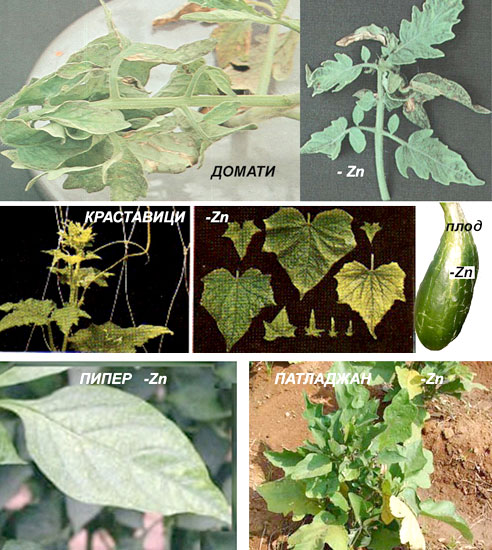
Zinc deficiency in fruit vegetable crops
Symptoms of zinc deficiency in fruit vegetable crops:
- Internodes are shortened, stop growing and the upper leaves are crowded close to each other;
- Leaves are smaller than normal. Bronzing, browning, interveinal chlorosis, spots and death of leaf tissue may occur;
- Older leaves show slight chlorosis and irregular wrinkled brown spots, especially on the petioles and between the leaf veins;
- Leaf petioles bend downwards, leaves curl;
- With prolonged or severe zinc deficiency, necrosis develops, which within a few days affects the entire leaf mass. Leaves may wilt;
- Flower abortion and fruit drop increase;
- Growth is slowed, and in severe deficiency – stops;
- Yield decreases and quality deteriorates.
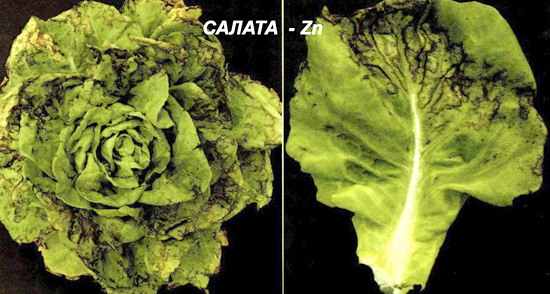
Zinc deficiency in leafy vegetable crops
Symptoms of zinc deficiency in leafy vegetable crops:
- In zinc deficiency, chlorosis of the young leaves is accompanied by a reduction in their size;
- Later, necrosis appears on the margins of the older leaves, which progresses inward and spreads from the top downwards along the leaves. The plant looks „burnt“;
- The leaf margins are often distorted or wrinkled. Purple pigmentation may appear;
- Yield is low and quality deteriorated.
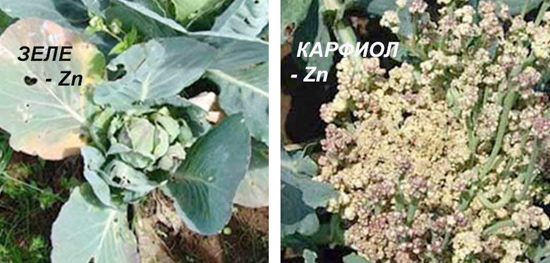
Zinc deficiency in leafy-stem vegetable crops
Symptoms of zinc deficiency in leafy-stem vegetable crops:
- Young leaves are light-coloured and smaller. Chlorosis appears later;
- Product quality is reduced – the head is loose, and the flower buds of cauliflower are discoloured;
- Growth is retarded;
- Yield is low.
<
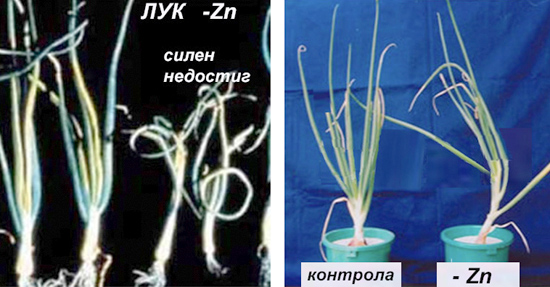
Zinc deficiency in bulb vegetable crops
Symptoms of zinc deficiency in bulb vegetable crops:
- Leaves are narrow, deformed and with noticeable twisting;
- In the early stages of zinc deficiency, younger leaves become yellow and holes form in the interveinal tissue in the upper part of mature leaves. With prolonged deficiency, these symptoms develop into intense interveinal necrosis;
- Growth is restricted or stops;
- Yield is low and quality is reduced.
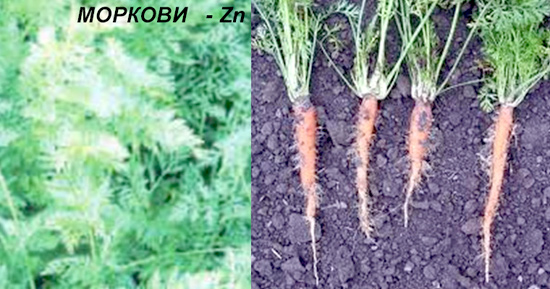
Zinc deficiency in root vegetable crops
Symptoms of zinc deficiency in root vegetable crops:
- Young leaves become brittle and chlorotic. Older leaves are flaccid and wrinkled with yellow-red shades;
- Many lateral roots appear and the formation of the root crop is inhibited;
- Growth is slowed and plants become stunted;
- Yield is low with reduced quality.
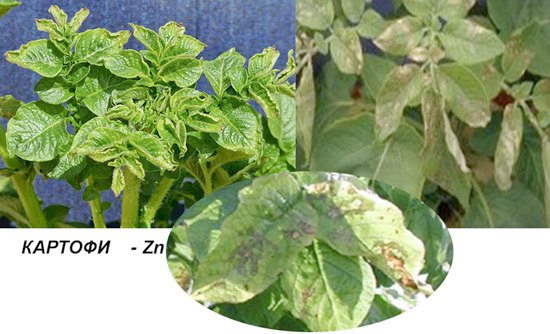
Zinc deficiency in tuber vegetable crops
Symptoms of zinc deficiency in tuber vegetable crops:
- Young leaves become chlorotic (light green or yellow). They are narrower and smaller, erect and with a „burnt” tip;
- Venation may remain green and necrotic spots develop in the interveinal tissue;
- Plants are stunted;
- Growth is retarded.
ZINC EXCESS
General symptoms
Growth is slowed. Apical buds die. In some plants, excess zinc leads to the appearance of transparent areas at the base of the main veins, which remain green. Chlorosis develops between the veins. Older leaves have veins coloured red or black and may fall without wilting. The black appearance of the main veins helps to distinguish zinc toxicity from manganese deficiency, in which the veins remain green.
In severe cases of zinc toxicity, the symptoms resemble those of iron deficiency. Zinc toxicity causes pale green chlorosis of the newer leaves. If toxicity is severe, light brown spots may appear between the veins. Other symptoms of zinc toxicity include severe stunting, reddening, poor germination, older leaves wilting, the entire leaf being affected by chlorosis, with the edges and the main vein often retaining their colour.
Black spots appear on the leaves. Concentric rings develop within the spots and the tissue becomes necrotic.
Causes
High zinc level in the nutrient medium; use of contaminated irrigation water with elevated zinc content (Zn>1.0 ppm); high acidity of the nutrient medium (pH<5.0). Contact of corrosive nutrient solutions with galvanized pipes or fittings may lead to zinc toxicity in seedlings.
Zinc toxicity occurs in individual greenhouse crops when condensation water from corroded structural elements drips onto the plants below them.
Recommendation
Increase the level of phosphorus in the nutrient medium. Correct pH – lime acidic soils.
Identification of zinc excess symptoms by crop
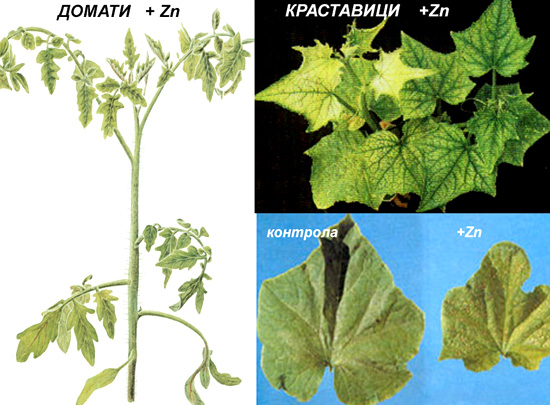
Zinc excess in fruit vegetable crops
Symptoms of zinc excess in fruit vegetable crops:
- Symptoms of zinc excess are similar to those of iron deficiency: younger leaves are extremely small; they yellow between the veins, after which necrotic areas appear on the veins themselves;
- Older leaves curl and may become purple on the underside and along the margins, after which they yellow and the venation becomes reddish-brown, and they fall off;
- Growing buds die. Growth is slowed;
- Plants are stunted and spindle-shaped.
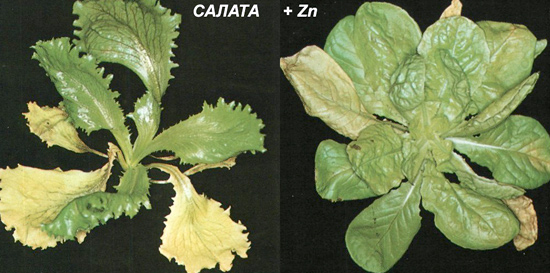
Zinc excess in leafy vegetable crops
Symptoms of zinc excess in leafy vegetable crops:
- The older leaves are most severely affected. They yellow, wilt and die;
- Sometimes red-brown spots appear on the main veins and the surrounding leaf tissue of the middle leaves;
- In cases of acute toxicity, leaves are cup-shaped and erect;
- Growth is slowed.