

![MultipartFile resource [file_data]](/assets/img/articles/нерва.jpg)
In the valley of the Neretva River, between Ploče, Metković and Opuzen, there is a large area full of citrus orchards.
The river delta covers 20,000 hectares, of which 8,000 belong to Bosnia and Herzegovina in the Hutovo Blato Nature Park and 12,000 hectares belong to Croatia. Here the Neretva forms three branches, and from each of them thousands of other smaller canals branch out over an area of 196 square kilometres for irrigation of the plots. Initially, the delta formed 12 large branches and was an impassable area of swamps, where in the past the Neretva pirates found shelter in the tall reeds. The swamps, however, were drained after malaria outbreaks in the last century and since then one of the most fertile regions in Europe has been located in this territory between Split and Dubrovnik. Primarily fruits and vegetables are grown here, including 8 different types of oranges and mandarins, kiwifruit, pomegranate, melons, lemons, persimmon and other tropical fruits. Mandarins, however, are grown mainly in the Croatian part of the valley, because the climate there is warmer.
Due to its broad agricultural importance, the Neretva Delta is also called the “Croatian California”.
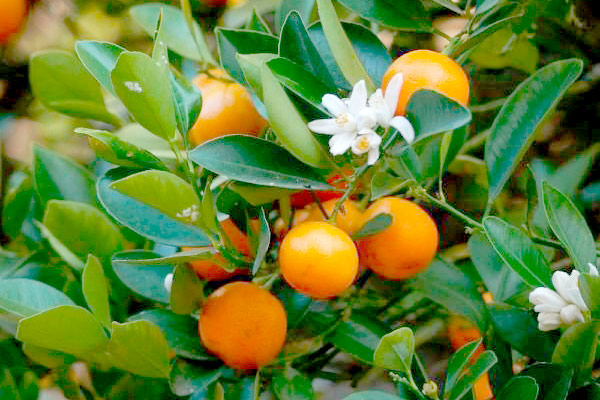
More than one million mandarin trees grow throughout the delta area of the river, which begin to ripen at the beginning of September. There are also other citrus fruits and crops grown in the numerous plantations of Dalmatia. But it is precisely mandarins that have become the symbol of the Neretva Valley and are the main source of income for the local population. The mandarin appeared in Croatia in the first half of the 20th century. More specifically, mandarin seedlings of the Unshiu variety arrived in the country from distant Japan in 1933 as a gift from the Japanese consul, who traded with the then Kingdom of Yugoslavia. Over time, due to their high yield, they completely replaced the grapes that had been grown until then.
Different mandarin varieties are grown in the valley – from early- to late-ripening. Thus, in the mandarin orchards the harvest first begins with the earliest variety "Ichimaru", which ripens between the beginning and the middle of September, and ends with the variety "Unshiu owari", which marks the end of the mandarin season in December.
The Mediterranean fruit fly attacks ripening fruits
The main economically important pest that is significant for mandarin production in Croatia is the Mediterranean fruit fly (Ceratitis capitata). A large share of mandarins is exported to a number of EU countries, as well as to Russia, Serbia and other states in which the species is a quarantine pest and is regulated. At the same time, intensive control with the help of insecticides is not recommended, on the one hand due to the specific ecological importance of the region, and on the other hand due to the risk of pesticide residues in the fruits.
Integrated control of the Mediterranean fruit fly in Croatia
The Ministry of Agriculture of Croatia, with the support of FAO/IAEA and last but not least – of local agricultural producers, has decided to implement a programme for large-scale integrated control through the introduction of sterile insects, the SIT (Sterile Insect Technique) – technique for the introduction of sterile insects.