

![MultipartFile resource [file_data]](/assets/img/articles/tulips.jpg)
In April, the University Botanic Gardens are adorned with the colourful diversity of spring. The bulbous plants currently in bloom in the garden in Balchik include an enormous collection of different tulip cultivars. A sea of tulips – 50,000 bulbs of 64 cultivars. In the Varna garden you can see the famous tulips with peony-like flowers and the fringed edges of the petals. The University gardens have a long history, including three gardens located in three cities and established at different times. Their appearance and specific character are the result of generations of gardeners and reflect the richness of the plant kingdom. In connection with the 130th anniversary of the establishment of the University Botanic Gardens, the team in Balchik has prepared a commemorative first edition: „The Tulip Book – Botanical Guide“, dedicated to the bulbous plant from the family „Liliaceae“ – the tulip.
130 years – Botanic Garden in Sofia
The University Botanic Garden in Sofia was established back in 1892 by the first Bulgarian professor of botany, Dr Stefan Georgiev (1859 – 1900). In Leipzig he completed his studies in natural sciences with a doctorate on the topic „On the comparative anatomy of Chenopodiaceae“. This is the first scientific article written by a Bulgarian in the field of botany. During his short earthly life he managed to compile a complete list of alpine and glacial plants, containing 275 species. He discovered a total of 520 new plant species for Bulgaria and created herbaria with about 50,000 plants.
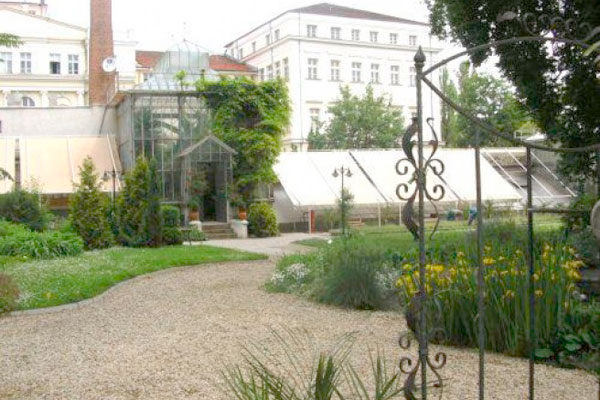
In 1892 Dr Stefan Georgiev created the University Botanic Garden in Sofia, which at that time contained 6,000 trees and shrubs and a greenhouse with 3,500 plants. At the opening of the Botanic Garden an oak tree (Quercus robur L.) was planted, in the roots of which Tsar Ferdinand I placed a gold coin. Today the oak, with its mighty trunk and crown, provides cool shade, recalling the spacious oak forests that once covered the Sofia plain.
In this garden today there are greenhouses with a unique species diversity of orchids, bromeliads, Araceae, as well as collections of palms, cycads, cacti and other succulents. The Mediterranean garden has characteristic subtropical plants, among which citrus, olives, myrtle and bay laurel. In the rosarium more than 40 cultivars of rose shrubs are grown. There is also a rock garden and water areas with typical aquatic and hygrophilous plants. One of the modern attractions of the green oasis in Sofia is Grandma’s Garden, where various edible plants and green roofs – a modern element of the urban environment – are presented together. In the information centre, young saplings of the centuries-old oak can be purchased.
The Tulips of Varna
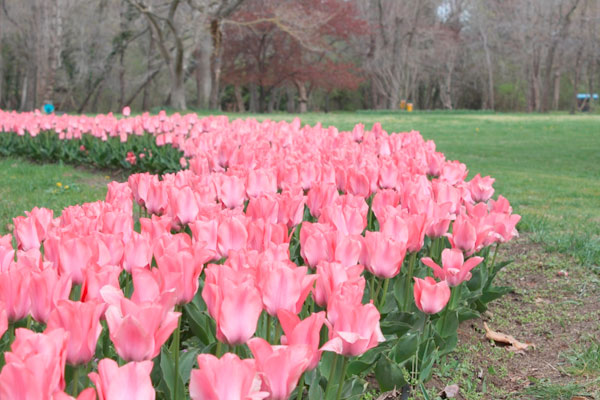
The collection „The Tulips of Varna“ has begun its gradual blooming, with the peak of flowering expected in the second half of April and the beginning of May. In autumn more than 50,000 bulbs from a total of 56 tulip cultivars were planted.
Interesting cultivars that can be observed this year in Eco-park Varna are Tulipa ‘Queensland’ and Tulipa ‘Snow Crystal’ from the group ‘Double Fringed’. Characteristic features of these tulips are the large peony-like flowers and the fringed edges of the petals, the garden team shares.
The graceful tulips from the group ‘Lilyflowering’, the beautiful Darwin tulip 'Banja Luka', the double, fragrant tulip 'Monsella', which opens its flowers wide when lit by the sun, and many other cultivars will adorn the University Botanic Garden – Eco-park Varna.
The University Botanic Garden in the city of Varna is the first Eco-park in the country, harmoniously combining artificial and natural ecosystems. The park covers an area of 360 decares. The arboretum includes more than 300 species of exotic trees and shrubs, the herbaceous plants are more than 100 species, and the iris collection numbers more than 250 varieties and cultivars.
Parade of the Tulips
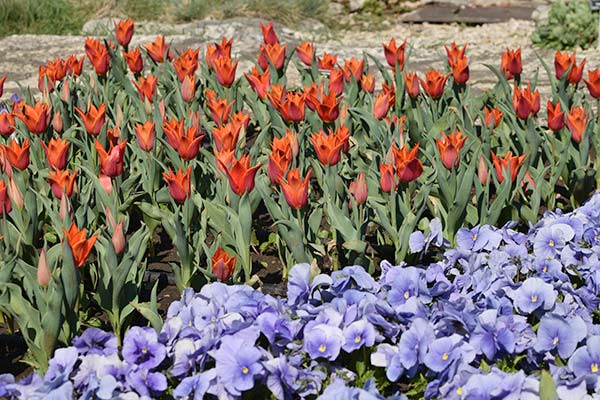
By tradition, the University Botanic Garden in Balchik also presents its collection of bulbous plants „Parade of the Tulips” – tulips (Tulipa), hyacinths (Hyacinthus), daffodils (Narcissus) and grape hyacinths (Muscari).
This spring, 50,000 tulip bulbs from 64 cultivars will open their beautiful cups in the seaside town. The cultivars new to the garden are 34 and come from all groups (early-flowering tulips, mid-season tulips, late-flowering tulips and botanical tulips) and classes: single early and single late tulips, double early and double late tulips, Triumph, Darwin hybrids, lily-flowered, fringed, viridiflora, Rembrandt, parrot, multi-flowering tulips and botanical tulips, including the classes Kaufmanniana, Fosteriana and Greigii. The tulips are concentrated in the two largest flower beds with a total area of about 1,200 sq.m. in the „Nursery Garden“ and „Divine Garden“.
In connection with the 130th anniversary of the establishment of the University Botanic Gardens, the team in Balchik has prepared a commemorative first edition: „The Tulip Book – Botanical Guide“, dedicated to the bulbous plant from the family „Liliaceae“ – the tulip.
The University Botanic Garden in Balchik was established in 1955 by Acad. Prof. Daki Yordanov, Rector of Sofia University „St Kliment Ohridski” for the period 1956-1962. Today it extends over an area of 194 decares and has plant collections of over 4,900 species, which are continuously increasing. It has established itself as an important tourist site. Alongside this, it is a cultural monument and a protected area under the Biological Diversity Act.
The greatest attraction in the Botanic Garden is the permanent exhibition of cacti and succulents. Lovers of these spiny exotics can also enjoy the large-sized outdoor cacti, as well as the corner with winter-hardy cacti. Of interest to specialists and tourists are the exotic species successfully introduced into the garden – the ancient ginkgo, the dawn redwood (an individual of such size and age outside its natural range exists only in the Royal Botanic Gardens in London), the candy tree and the rubber tree, the holm oak, the large-flowered evergreen magnolia and others.
Botanic gardens are gardens with a special purpose – they carry out activities for ‘ex situ’ conservation of rare and endangered plant species. According to the Biological Diversity Act: „A botanic garden is an institution that maintains collections of living plants for the purposes of botanical research, science, education and nature conservation education and is open to visitors for more than five months a year.“
The University Botanic Gardens are members of Botanic Gardens Conservation International (BGCI), the Consortium of European Botanic Gardens (EBGC), and the Education Network for Environmental Education in Botanic Gardens (EBGEN).
Photos: University Botanic Gardens