

![MultipartFile resource [file_data]](/assets/img/articles/Root-system-of-a-tomato-plant.jpg)
Damping-off (true and false), black leaf spots, leaf mold and gray mold may occur on tomato seedlings. Cucumber seedlings may be attacked by powdery mildew and downy mildew. Pepper seedlings are most often attacked by black leaf spots.
Damping-off in seedlings
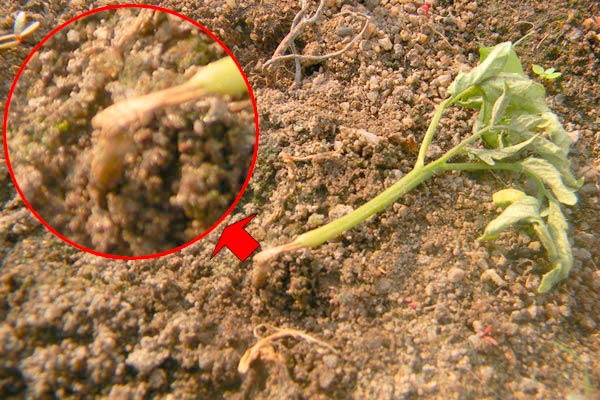
True damping-off occurs in all vegetable crops grown from seedlings – tomato, pepper, cucumber, eggplant, lettuce, etc. It develops year-round in the production of seedlings for the different production directions. It appears when conditions for plant development are unfavorable – low air and soil temperatures, waterlogging, excessive nitrogen fertilization, etc. The pathogens can attack the already swollen seeds and cause them to rot. Sometimes they affect very young, still ungerminated sprouts, which die very quickly. Since these processes take place in the soil, the damage cannot be observed. Seedlings emerging under such conditions are poorly established. It is caused by fungi of the genera Pythium, Phytophthora, Fusrium, Pyrenochaeta lycopersici and Colletotrichum atramentarium, which are widespread and have different temperature requirements.

In false damping-off the stem becomes thread-like above the root collar and the plant lodges. The spots are dry. Saprophytic microorganisms penetrate through them and may cause rotting. It appears at temperatures higher than the optimum, when the soil surface overheats. It also attacks overgrown plants. Small cankers and rings appear on their bark. Such damage is observed when plants are grown on light, sandy soils and are exposed for a prolonged period to high temperatures. False damping-off can be avoided if soil drying is not allowed. Unbalanced nitrogen fertilization and insufficient light are also preconditions for its occurrence.
Control
Sowing of disinfected seeds; Seed disinfection: thermal treatment against viruses; hot-water treatment of small-seeded crops; chemical treatment – with perhydrol, hydrochloric acid; When sowing in mixtures containing soil, they must be disinfected with Nemasol 510; Dusting of the seedbed before sowing with 3–4 g/m2 of Kocide DF or Funguran 50 WP; Maintaining an optimal temperature–moisture regime. The difference between day and night temperature should not exceed 6–8oC; Regular irrigation of seedlings with low irrigation rates. Waterlogging and subsequent soil drying should not be allowed; Regular ventilation of the facilities; Preventive treatments of seedlings are carried out every 7–10 days with copper-containing fungicides; When damping-off appears, diseased plants are collected and destroyed outside the facility. The sites are disinfected with a 3% solution of copper sulfate or ammonium nitrate. The remaining plants are treated with registered fungicides – Beltanol 400 g/ha, Proplant 722 SL 0.1%.
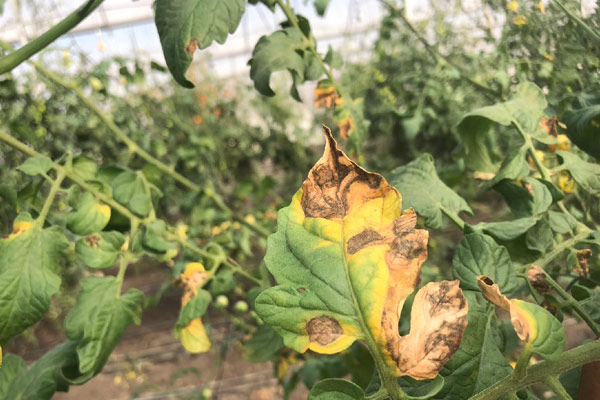
Brown leaf spots (Alternaria leaf spot) (Alternaria spp.)
Small watery spots appear on the leaves, reaching 5–7 mm in diameter. Later the spots dry out, become dark brown to black with a concentric structure, coalesce and the leaf scorches. The spots on the stem and petioles are similar, with the characteristic concentric structure. They may completely encircle the affected parts and cause their drying above the site of damage. The spots on the pedicels cause flower drop. The affected areas are covered with a black coating from the sporulation of the fungus. It survives as mycelium in plant residues in the soil. It is transmitted externally with the seeds. The fungus prefers old leaves that have completed their growth, but it also attacks the entire plant. It develops under high relative humidity.
Control
Seed disinfection; Production of seedlings in sterile or disinfected substrate; Maintaining an optimal temperature–moisture regime in cultivation facilities; Regular ventilation of the facilities; Treatment with plant protection products upon appearance of the disease or when favorable conditions are present;
Authorized plant protection products: Azaka 80 ml/ha; Dagonis 100 ml/ha; Zoxis 250 SC 70–80 ml/ha; Ortiva Top SC 100 ml/ha; Polyram DF 0.2%; Sinstar 70–80 ml/ha; Tazer 250 SC 80–200 ml/ha.
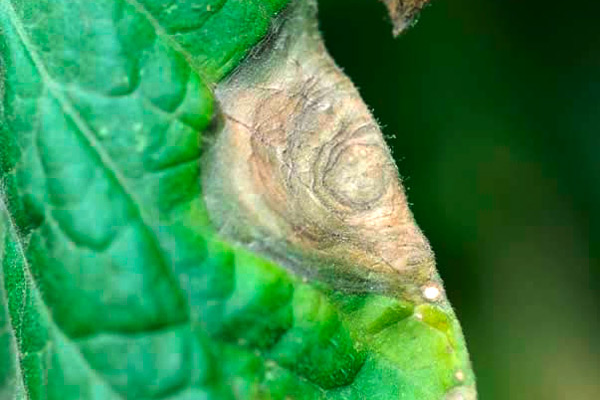
Gray mold (Botrytis cinerea)
At the base of the stem a dry brown spot appears, affecting only the cortex. The pathogen penetrates inward, interrupts sap flow and the plant dies. The spots are covered with abundant gray-brown mycelium and sporulation of the fungus. Plant parts located above the affected area wilt and die. The pathogen also attacks the foliage. Light brown elongated spots appear on the petioles and on the tips of the leaf blades, covered with sporulation of the fungus. It survives as sclerotia in the soil or in plant residues. Under favorable conditions they germinate and form mycelium with abundant sporulation. In greenhouses the fungus also survives as conidia on the soil surface, plant residues and constructions. Carried by air currents, the conidia land on the plants and cause infection. The fungus can also exist as a saprophyte in the soil.
Control
Maintaining optimal air humidity in the seedling compartment; Regular ventilation; Destruction of plant residues and weeds, since the pathogen survives in them; When removing side shoots, no parts of them should be left. It is advisable this operation to be carried out in sunny weather and after the dew has lifted; The affected plant parts are collected in bags and destroyed outside; Under increased air humidity and upon appearance of the first spots, treatment with plant protection products is carried out;
Authorized plant protection products: Avalon 200 ml/ha; Geox WG 50 g/ha; Prolectus 50 WG 80–120 g/ha; Signum 100–150 g/ha; Switch 62.5 WG 100 g/ha; Folpetis 50 SC 250 ml/ha; Fontelis SC 240 ml/ha.
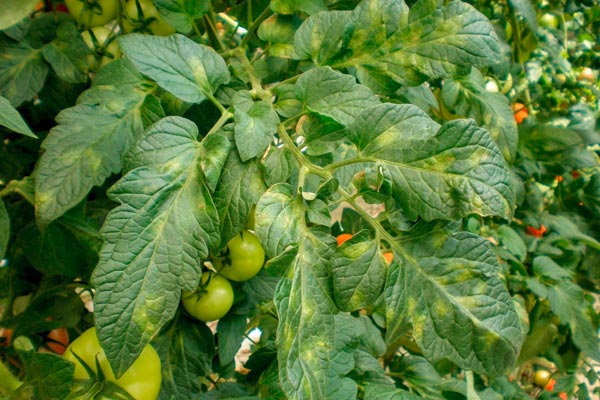
Leaf mold (Fulvia fulva)
On the upper side of the leaves relatively large, light spots of irregular shape appear, with indistinct margins. Later they turn yellow. At high air humidity their lower surface is covered with a light coating of the fungus sporulation, which later darkens and becomes velvety brown. When the number of spots on one leaf is significant, they coalesce and the leaf scorches. Under favorable conditions the plants may become defoliated. It develops under high air humidity.
Control
Maintaining optimal air humidity in the seedling compartment; Regular ventilation; Destruction of plant residues and weeds, since the pathogen survives in them. When necessary – treatment with plant protection products.
Registered plant protection products: Zoxis 250 SC 70–80 ml/ha; Ortiva Top SC 100 ml/ha; Signum 100–150 g/ha; Sinstar 70–80 ml/ha; Folpetis 50 SC 250 ml/ha.
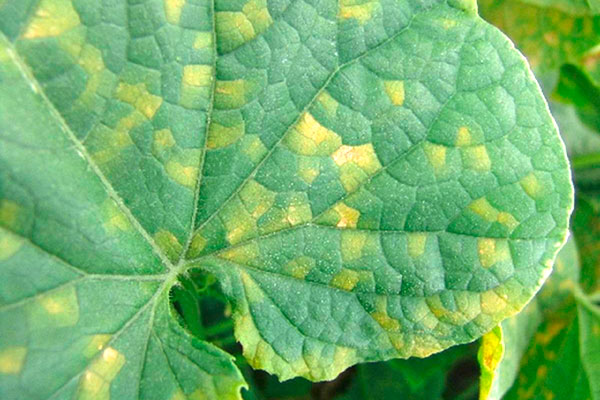
Downy mildew (Pseudoperonospora cubensis)
This disease is important in cucumber cultivation throughout the entire vegetation period. On the upper side of the leaves yellowish spots of irregular shape appear, delimited by the veins. In wet weather they are watery, and their lower surface is covered with a loose gray-violet coating of the fungus sporulation. Later the spots enlarge, coalesce and the whole leaf scorches. At high air humidity in the seedling compartment the disease can encompass the whole plant in a short time and greatly reduce yield.
Control
Maintaining an optimal air and moisture regime. Regular ventilation of the compartment. If possible, switching on the heating in the early hours of the day. Removal of the first diseased leaves and their destruction outside the greenhouse. When necessary, treatment with plant protection products.
Registered plant protection products: Zoxis 250 SC 70–80 ml/ha; Equation Pro 40 g/ha; Infinito SC 120–160 ml/ha; Korzate 60 WG 20–30 g/ha; Taegro 18.5–37.0 g/ha.
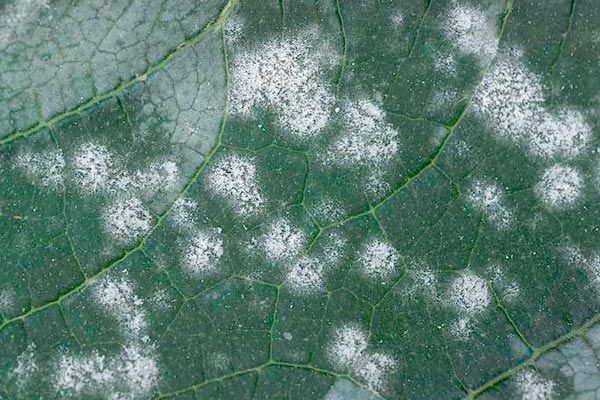
Powdery mildew on cucumbers (Podosphaera xanthii, Erysiphe cichoracearum)
Small spots of irregular shape appear on the leaves, covered with a white powdery coating of the fungus sporulation. Later the spots coalesce. The leaves scorch. Spots may be observed on the upper and lower leaf surfaces, on the petioles and on the stem. The pathogen overwinters as conidia on plant residues, as mycelium and spores on greenhouse crops. Conidia are spread by air currents and cause new infections. Favorable conditions for development are: disturbed temperature–moisture regime; unbalanced nitrogen fertilization; reduced light.
Control
Cultivation of resistant varieties; Removal of plant residues from the previous vegetation; Balanced nitrogen fertilization; Maintaining an optimal temperature–moisture regime; Treatment with plant protection products upon appearance of the first spots;
Authorized plant protection products: Vivando 20 ml/ha (0.02%); Dagonis 60 ml/ha; Domark 10 EC 50 ml/ha; Zoxis 250 EC 70 ml/ha; Collis SC 40–50 ml/ha; Ortiva Top SC 100 ml/ha; Sivanto 80 ml/ha; Fontelis SC 240 ml/ha.