

![MultipartFile resource [file_data]](/assets/img/articles/tomaten-beitragsbild-6993.jpg)
Good Agricultural Practices aim at the production of healthy vegetable seedlings with high quality indicators, without risk of contamination of the soil and water, which will ensure a good start of vegetable production. Planting such seedlings saves at least one plant protection treatment after transplanting to a permanent place. Therefore, the production of healthy, pest-free and hardened seedlings is of paramount importance.
GAP do not allow seedling production to be carried out in greenhouses together with the previous crop. The requirements of plants to environmental conditions are different. The risk of transfer of pathogens and pests from the old to the seedling plants is very high. Therefore, seedling production must be carried out in a specialized, isolated seedling compartment, in which conditions corresponding to the biological requirements of the young plants are created – light, temperature, humidity and compliance with phytosanitary requirements.
At present, in the seedling premises seedlings are grown for unheated glass and polyethylene greenhouses and for low tunnels. Sowing of seeds for early field crops begins – tomato, pepper, eggplant, cabbage, and later for medium-early crops. The seedling premises are cleaned of plant residues from the previous vegetation, weeds and volunteers. The seedling mixture is prepared. GAP do not allow the use of manure-soil and peat-soil mixtures for the purposes of industrial seedling production. An exception is made for small-scale seedling production, but only after disinfection. It is best for it to be a peat-perlite mixture, which is used to fill trays, flats and pots. If they are placed directly on the soil, the surface must be well leveled. A polyethylene film is placed on it, which insulates the seedling containers from the soil and does not allow the transfer of pathogens and pests.
GAP are a set of technological requirements, the observance of which is a prerequisite for the production of quality seedlings. They include:
- The choice of variety should be consistent with the period and duration of cultivation of the crop, the cultivation technology and varietal characteristics – earliness, productivity, resistance to biotic and abiotic environmental factors, plant habit, product quality.
- The seeds should be authentic, certified, disinfected; calibrated and with high sowing qualities:
- germination above 96%
- varietal purity above 98%
- moisture 6 – 8%
- The growing medium should be well prepared, disinfected, free from weed seeds. It should provide a water-air and nutrient regime favorable for the plants.
The implementation of these practices also leads to a reduction in plant protection treatments.
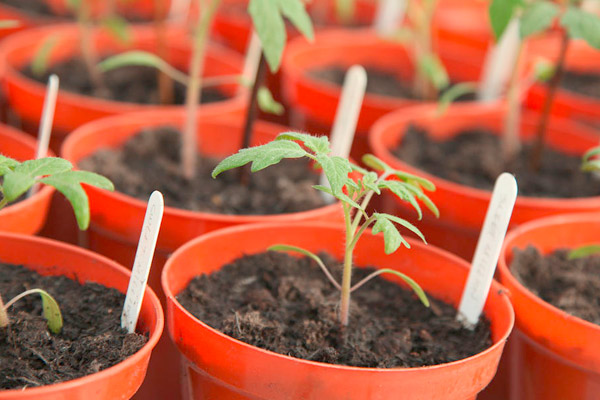
GAP in the cultivation of dense and pricked-out seedlings include agrotechnical requirements related to sowing, pricking out and care during the growing period, in order to produce healthy and high-quality seedlings. The more important of these are:
- Sowing is carried out in a substrate moistened with water to 70–75% of field capacity and compacted, in order to prevent the “sinking” of the seeds.
- Shallow covering of the seeds and drying of the mixture is not allowed, as this leads to abnormal elongation of the sprouts. The resulting weak and deformed seedlings are predisposed to pest attacks and require plant protection treatments.
- The difference between day and night temperature should not exceed 6 – 8oC, so as not to provoke “false damping-off” of the seedlings.
Control of growth through control of light in the facilities and the moisture of the substrate.
➢ Control of the microclimate in the seedling compartment – moisture 50-60% of field capacity; substrate temperature – 20-25°C.
➢ Control of the nutrient regime – pH = 6.2 – 6.8; total salt concentration of the substrate – EC = 1.2 – 1.8 mS/cm depending on the seedlings (dense, pricked-out) and the crop.
➢ Regular monitoring for early detection of the occurrence of diseases and pests; preventive plant protection, in accordance with the economic threshold of harm (ETH).
For the detection and capture of flying forms of small insects (greenhouse whitefly, aphids) it is appropriate to hang yellow sticky traps, for thrips – light blue, and for leaf-mining flies – orange-yellow. Pheromone traps can also be used to detect the beginning of the flight of the tomato leaf miner, as well as to reduce its population. Leaves, petioles with disease spots, aphid colonies, egg clusters, larvae, mines, etc. should be collected, taken out of the greenhouse and destroyed.