

![MultipartFile resource [file_data]](/assets/img/articles/зимно-пръскане-в-овощната-градина.jpg)
Tips for a Healthy Orchard
Winter spraying is a very important measure, because it destroys a large part of the overwintering reserve of diseases and pests. In addition, it ensures a significantly good phytosanitary status in the orchard and greatly facilitates pest control during the vegetation period.
Winter spraying is carried out at the end of winter, after the cold has passed – from mid-February until the swelling of the tree buds, i.e. when winter dormancy ends (mainly during the second half of March). This is done in dry and relatively warm weather, because if temperatures are below 0°C and it is windy, the spray solution may damage the branches and freeze on them. Winter spraying, besides being highly effective against a large number of pests, is also environmentally friendly – it is carried out during the non-vegetation period.
Key Points of Winter Spraying
• Against pests, winter spraying is required only if there is a proven density above the economic injury threshold. For diseases, however, it is mandatory!
• The best effect from winter spraying is obtained when it is done immediately before the buds swell. At that time the development of the overwintering stages of insects and mites begins. The egg embryo is in advanced development, and the overwintering caterpillars and adult insects leave their winter shelters and move along the branches of the trees.
• The plant protection products and your labour will be wasted if you do not spray properly. Thoroughly drench with solution all parts of the branches, twigs and branching points, where pests most often accumulate, as well as the trunk. In other words, “bathe” the entire tree.
Which Major Diseases in the Orchard are Controlled by Winter Spraying
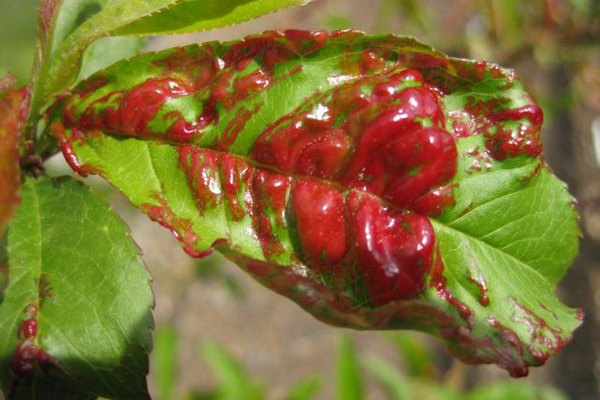
Peach Leaf Curl
Peach leaf curl is the most common disease, which primarily attacks peach, but is also a dangerous disease for apricot and nectarine. The causal agent is a fungus (Taphrina deformans), which overwinters as ascospores on the bud scales and on the surface of the branches. In early spring, during rain and dew, these spores infect the bursting buds. From them the infection passes into the leaves, which are most severely affected – they become curled due to thickened tissue, which is light in colour, then they turn from pink to scarlet red. On the shoots small blister-like swellings with pale green to pink colour are formed and they remain shorter. In a cool, wet and prolonged spring the disease may develop on a mass scale.
Peach cultivars have different susceptibility to leaf curl. Redhaven and Rubired are slightly susceptible; moderately susceptible are Garrison, Dixired, Somerset, Cresthaven, Glohaven; and susceptible – Plovdiv 2, July Elberta, Armgold, Blake, Collins, Hale, Mayflower Bouquet, Elberta and others.
For the control of peach leaf curl two sprayings are carried out: the first is an early winter spraying – in autumn after leaf fall, the second is a late winter spraying – before bud swell. For both sprayings the classic product can be used – Bordeaux mixture 1-2%, with thorough drenching of the branches and the whole tree.
Chemical control may also be carried out with the following plant protection products:
Champion WP - 0.3%; Funguran OH 50 WP – 0.15%; Kodimur 38 FLO – 320-400 ml/ha; Kodimur 50 WP - 240-400 ml/ha; Copper Key – 240-300 g/ha; Kocide 2000 WG – 155-285 g/ha; Coprantol Duo – 400 g/ha; Airone SC – 400 ml/ha; Captan 80 WG – 250 g/ha; Merpan 80 WG – 375 g/ha; Syllit 544 SC – 165 ml/ha
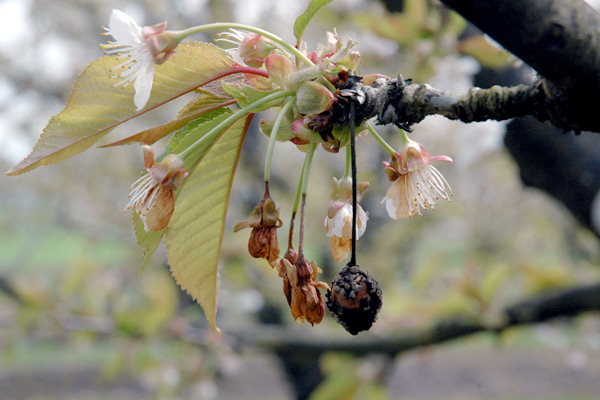
Early Brown Rot
Early brown rot is a very serious disease of fruit trees. It causes “blighting” of blossoms, wilting of fruit buds, damage to shoots and death of fruits. The causal agent is the fungus (Monilinia laxa), which overwinters as mycelium in mummified dried fruits, in affected blossoms and in cankers on the shoots, where abundant gummosis is observed. In spring, the mycelium produces many spores at temperatures above 5 °C and in the presence of abundant moisture. The disease most severely affects apricot, plum, sweet cherry and sour cherry. It also attacks apple.
The main objective in the control of early brown rot is to reduce the source of infection to a minimum. Therefore, sanitary measures are of particular importance – removal from the orchard of mummified fruits and pruning out of dried twigs back to healthy tissue. Proper pruning is also important, as it ensures not only good ventilation, but also proper arrangement of fruit buds, thus preventing twigs from injuring fruits.
Winter spraying destroys the accumulated spore inoculum on the plant parts and prevents mass infestation during flowering.
Registered fungicides for control:
Captan 80 WG – 150-180 g/ha, Bordeaux Mix 20 WP – 375-500 g/ha, Kocide 2000 WG – 185-280 g/ha, Funguran OH 50 WP – 150-250 g/ha, Champion WP, Champ WP, Macc 50 WP – 300 g/ha, Vitra 50 WP, Cuproxy 50 WP – 150 g/ha, Delan 700 WDG in peach – 50 g/ha, Difcor 250 EC – 20 ml/ha, Karamba 2.5 EW – 300 ml/ha, Prolectus 50 WG in peach and nectarine – 80 g/ha, Signum WG in peach – 30 g/ha, Systhane 20 EW – 25-30 ml/100 l water (12.5-30 ml/ha), Chorus 50 WG – 0.045% (45 g/ha), Coprantol Duo – 400 g/ha and others.
Shot Hole Disease in Stone Fruits
Shot hole disease is a dangerous disease most often in peach, apricot, myrobalan plum and almond, while sweet cherry, sour cherry and plum are attacked to a lesser extent.
Two types of shot hole disease are distinguished according to the causal agent.
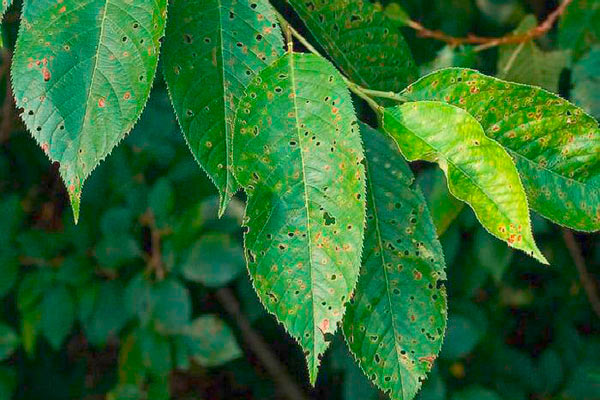
Bacterial shot hole – Xantomonas campestris and Bacillus pumilus
In this case, small necrotic spots with a light yellowish-green halo and a clearly defined border of the affected tissue are formed on the leaves. The affected areas on young leaves become perforated. In addition to shot hole type damage, the bacteria also cause bud death, cankers and gummosis on one-year-old shoots.
The two bacteria overwinter in the infected plant parts, and Bacillus pumilus can also overwinter in fallen leaves and in the soil. The inoculum is spread by raindrops, wind and sucking insects. Entry points for infection are wounds of various origin (stomata and unhealed leaf scars after leaf fall).
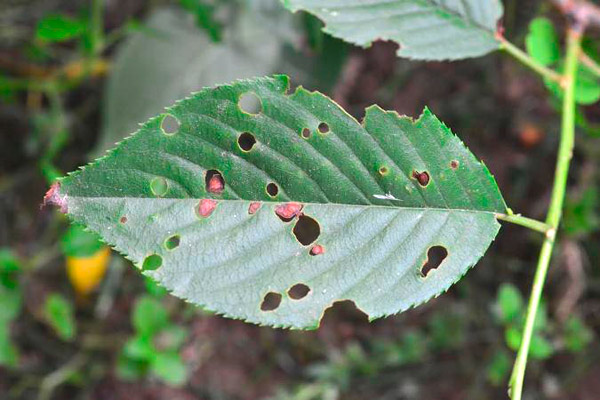
In fungal shot hole disease – Stigmina carpophila small purplish dots first appear on the leaves, which develop into small rounded spots (1-6 mm) with a pale brown to ochre colour. The tissues around the spots acquire a reddish-brown colour in the form of a ring. In young, still growing leaves, the tissues in the centre of the spots become necrotic, fall out and perforations form on the leaf blades. In peach, apricot and almond the fungus also causes damage to buds and shoots, resulting in brown or purplish small rounded spots.
The fungus overwinters as mycelium and conidia in infected twigs and buds. At high humidity and temperatures above 3°C, conidia are formed on the surface of the infected parts, which in spring cause primary infections. Due to the low minimum temperature required for the development of the fungus, it is able to multiply during mild winters and in the dormancy period, as well as at 100% humidity. Such conditions usually occur early in spring. The fungus enters the tissues through wounds, buds and leaf scars formed during leaf fall.
The protection of stone fruit species from shot hole disease includes one autumn and one winter spraying before bud burst. These two sprayings are essential to prevent mass development of the disease in the orchard.
Registered fungicides for control:
Captan 80 WG – 150-180 g/ha, Bordeaux Mix 20 WP – 375-500 g/ha, Kocide 2000 WG – 155-285 g/ha – for peach and nectarine, for apricot – 185-280 g/ha, and Funguran OH 50 WP – 150-250 g/ha, Champion 50 WP / Champ 50 WP / Macc 50 WP – 300 g/ha, Vitra 50 WP / Cuproxy 50 WP – 150 g/ha; Merpan 80 WG, Coprantol Duo – 400 g/ha and others.
Fire Blight – Erwinia amylovora
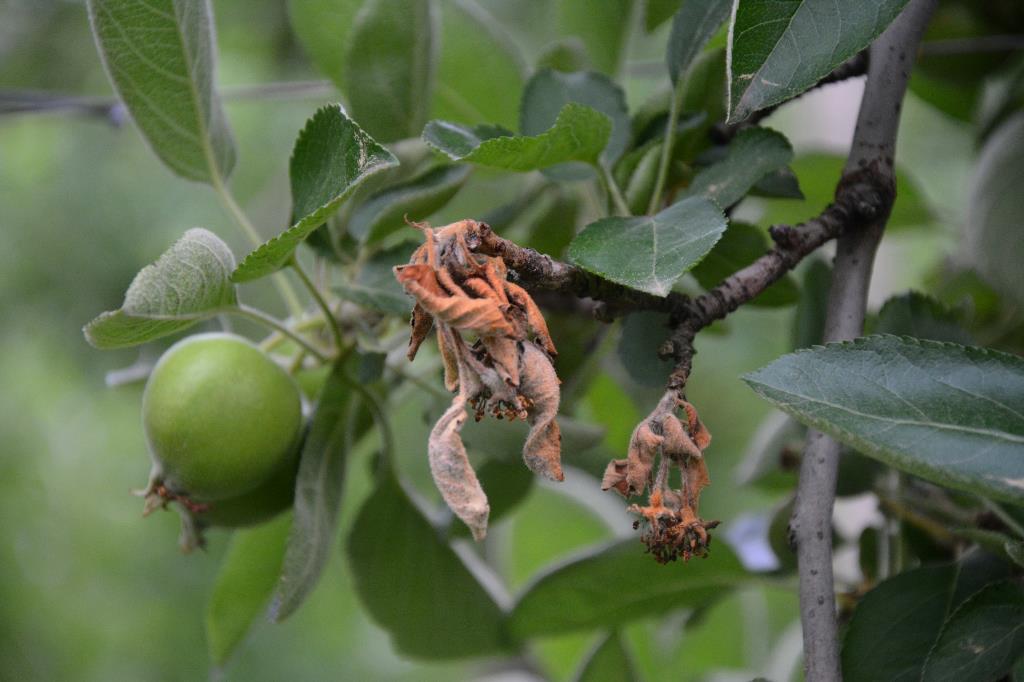
Fire blight often has a very strong and catastrophic effect on infected plants. Usually the disease rapidly affects a large part of the trees and they die within 1-2 years. The bacterium attacks about 200 species from the family Rosaceae, but pear, quince, apple, apricot, sour cherry, sweet cherry are most severely affected, and it is less frequently found in plum and peach. Blackberry, raspberry, strawberry and others are also hosts.
The manifestation of the disease begins early in spring during flowering – flowers, inflorescences and young shoots suddenly wilt and turn brown, and later blacken. The damage caused by the bacterium on the trunk, scaffold branches and branchlets is characterised by sunken or swollen tissues. The bark is darker in colour and there is intensive gummosis. Drops of exudate are secreted from the damaged one-year-old growth; if they are not spread by rain, they gradually dry out in the form of amber-coloured crusts. A characteristic feature of the disease is the retention of leaves on the affected shoots even after autumn leaf fall, which gives the trees a scorched appearance.
For infection and development of the disease, a specific combination of temperature and moisture is required. The development of the bacterium starts at temperatures above 18.5°C and air humidity above 80% during the flowering period, with infections occurring in rainy weather.
The causal agent of fire blight is the bacterium Erwinia amylovora. It overwinters in infected branches, penetrates the plant through wounds and cracks, through stomata and flowers, and is spread by insects, bees, birds and by humans during operations – for example, during winter pruning. Fire blight is a very dangerous disease and all possible measures are taken to control it and eliminate its foci. Heavily infected trees are uprooted and burned. Pruning in the orchard should start from healthy trees, and those showing symptoms on the bark of the branches should be pruned last, with tools being disinfected.
Chemical control may also be carried out with the following plant protection products:
Champion WP – 0.3%; Cuproxat FL – 0.3%; Captan 80 WG – 150-180 g/ha; Merpan 80 WG – 200 g/ha; Syllit 544 SC – 125 ml/ha; Kodimur 50 WP - 240-300 ml/ha; Copper Key – 180-300 g/ha; Airone SC – 300 ml/ha; Bordeaux Mix 20 WP – 375-500 g/ha; Vitra 50 WP / Cuproxy 50 WP – 150 g/ha; Kocide 2000 WG – 155-680 g/ha; Coprantol Duo – 300 g/ha; Serenade ASO SC – 400-680 g/ha;
Plum Pockets – Taphrina pruni
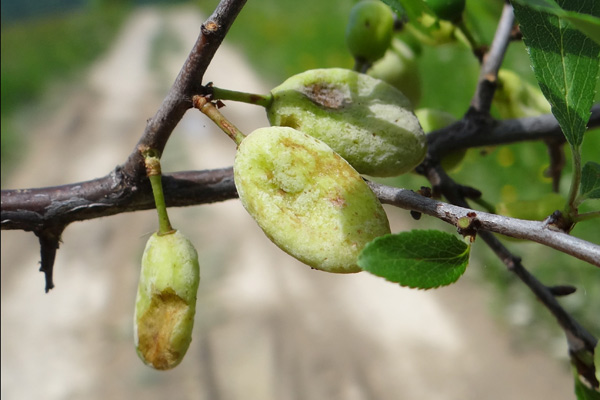
Winter spraying is of great importance for the protection of plum against plum pockets. The disease attacks the fruits, which become deformed and elongated and remain light green in colour. When cut, it is found that the fruits are hollow, with a spongy and soft structure, without a stone, but with an embryo of the kernel. The attacked fruits dry out and fall off.
The fungus (Taphrina pruni) overwinters as ascospores in the buds or in the cracks of the bark. Infection occurs as soon as the flower bud opens, from which a diseased fruit develops. It very rarely develops on branches and shoots. The development of the disease is favoured by high humidity and moderate temperature during flowering.
Chemical control may also be carried out with the following plant protection products:
Bordeaux Mix 20 WP – 375-500 g/ha; Coprantol Duo – 400 g/ha; Airone SC – 400 ml/ha; Funguran OH 50 WP – 130-200 g/ha; Kodimur 50 WP - 240-300 ml/ha; Champion WP – 300 g/ha; Captan 80 WG – 225 g/ha;