

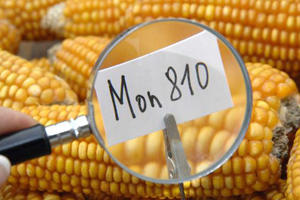
On Tuesday, January 13th, the European Parliament voted on new legislation that allows each EU country to control the introduction and use of genetically modified crops (GMOs) on its territory. The ban or approval of these crops will be a personal priority for the Union's members, while the general European-level decision for or against GMOs also remains in force. The new rules have been discussed in the plenary hall since 2010, but the debate was difficult given the controversial subject and the lack of consensus among representatives of the different European countries.
According to Frédérique Ries, the rapporteur for the new legislation, the agreement will deepen the debate on the acceptance or complete rejection of GMO products within the EU territory. On the other hand, it provides an opportunity to restrict the cultivation of genetically modified crops according to the legislation of a specific country.
The new rules will regulate a ban on GMOs based on a member state's conducted environmental policy, territorial and settlement planning, as well as socio-economic impact. The European Food Safety Authority (EFSA) will periodically monitor the data submitted by the different countries to ensure correct and objective decision-making.
The agreement on the opt-out from GMOs will provide a procedure whereby large companies can give their consent for restricting their access to the local market. The lack of mutual agreement between a state and a global corporation will not restrict the unilateral decision to ban a specific crop on the territory of a given country.
The new regulation of GMO crops is part of the package of agreements of the Transatlantic Trade and Investment Partnership (TTIP), whose entry into force is planned for 2015. And although specific documents on this controversial treaty between the US and Europe were published for the first time at the beginning of January, it is still not clear how common legislation will function in each area, including the safety standards for agricultural products and food. One of the major threats is that corporate firms will have significantly greater power than before, through the introduction of an "investor-state" dispute settlement tribunal. Thus, if one of the Union's members decides to refuse the introduction of GMO crops on its territory, the corporation that is refused can sue the state without the EU, as the ultimate institution, being able to intervene. In this game of nerves, it is not clear who will be the winner?
Member states must also ensure that genetically modified crops do not contaminate other products, with particular attention to be paid to preventing contamination of neighboring countries.
Currently, in Europe, the only approved GMO crop is Monsanto's MON810 maize - resistant to pest insects, after in 2013 the Amflora potato variety by BASF was officially banned, although previously the European Commission had allowed it onto the European market.