

![MultipartFile resource [file_data]](/assets/img/articles/ToBRFV_NVWA_1__1_.jpg)
![MultipartFile resource [file_data]](/assets/img/articles/tobamovirus.jpg)
In recent years, there has been intensive discussion about a new virus from the group of tobacco mosaic viruses, known as Tomato brown rugose fruit virus (ToBRFV). The virus is highly virulent and successfully overcomes the resistance genes to the tobamoviruses known so far – TMV and ToMV. Yield losses in commercial tomato varieties and hybrids range from 30 to 70%, which presents researchers with the challenge of finding a solution to the problem of resistance to this virus.
Symptoms
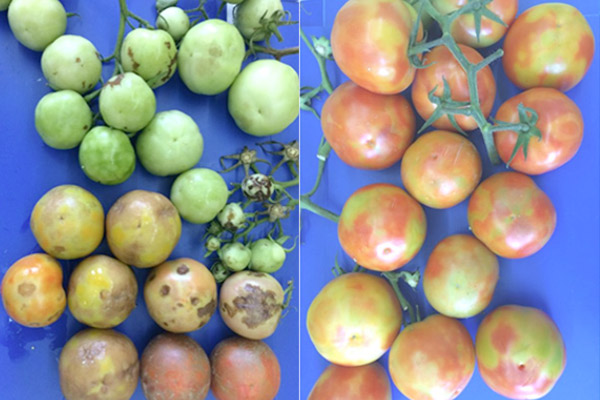
The most common symptoms caused by ToBRFV are mild to severe mosaic or chlorosis, the appearance of blister-like formations and filamentous leaves. The symptoms on the leaves are similar to those caused by the tobacco mosaic and tomato mosaic viruses known so far. On the fruits, uneven ripening or yellow spots are observed, resembling those caused by Pepino mosaic virus. Yellow to brown spots with characteristic rugosity on the fruit surface are also observed, from which the name of the virus is derived.
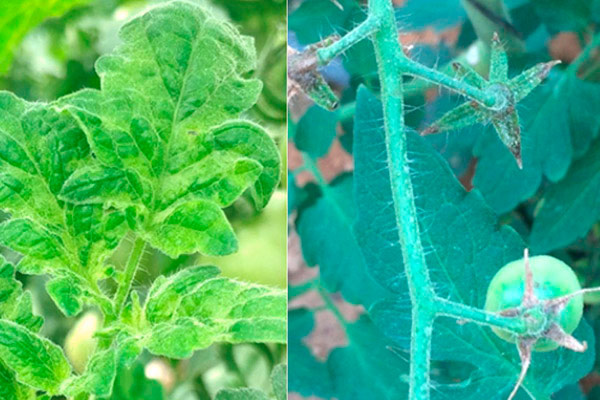
In some cases, necrotic spots are also found on the pedicels and sepals of the fruits. For proper diagnosis of ToBRFV, it is necessary to use the more reliable serological and molecular methods.
Modes of transmission
The virus is transmitted by the mechanical mode known for tobamoviruses from plant to plant through contact or during operations such as side-shoot removal, tying and other practices characteristic of the cultivation of indeterminate varieties, as well as through plant residues in the soil or contaminated tools and equipment.
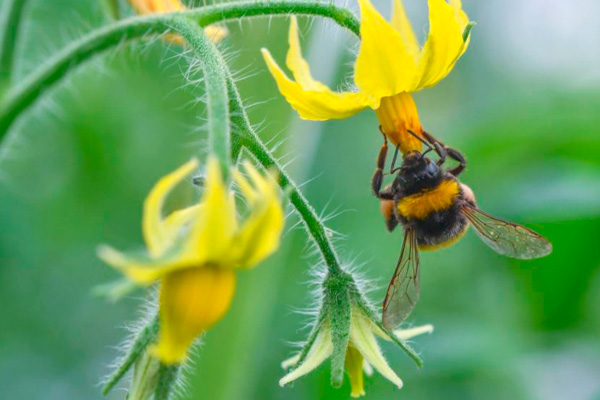
In greenhouse tomato production, bumblebees (Bombus terrestris) are often used as pollinators to increase the quantity and quality of fruits. Scientists from Israel have proven that they are a major vector of the virus under such practices, and thus of the disease. The hives in turn become a primary source of inoculum, which has been detected on the honeycomb. On the other hand, analyses of seeds from cherry tomatoes with the Tm22 resistance gene show that ToBRFV is localized in the seed coat (in rare cases in the endosperm), but not in the embryo. The transfer of viral particles from the infected seed to the young plants occurs through micro-lesions during germination. The percentage of transmission in this way varies from 1.8–2.8.
Hosts
In addition to tomatoes, pepper, also a member of the family Solanaceae, is a major host and source of infection. Additional hosts may be tobacco and petunia, as well as some weeds such as black nightshade and lamb’s quarters.
Distribution
The virus was reported for the first time in Jordan in 2015, and in the following few years it was registered in other countries in the Middle East such as Israel and Palestine. Due to the easy mechanical mode of transmission, the spread of the pathogen has reached the USA, Mexico and China, as well as several countries in Europe – Italy, Germany, Cyprus, Spain, the Netherlands, France, the Czech Republic, Poland. Outbreaks have been reported in neighboring countries – Turkey and Greece, which represents a potential threat to Bulgaria as well, due to the intensive import of finished products from these countries.
Phytosanitary measures
It is recommended to observe the phytosanitary measures relating to contact-transmissible viruses. Disinfection of tools and equipment, work clothing, washing of hands with detergents, as well as collection, storage and destruction of plant residues by burning are mandatory. Attention should also be paid when using bumblebees as pollinators in greenhouse cultivation.
Recommendations
Before sowing, it is recommended to disinfect the seeds with a 2.5% sodium hypochlorite solution for 15 minutes and then rinse thoroughly with water for 5 minutes. Thermal disinfection can also be applied at 80°C for 24 h; 75°C for 48 h or 70°C for 96 h. In case of symptom appearance in the crop, contact a specialist for on-site diagnosis or send photos of symptomatic plants from the crop and a shipment of whole plants wrapped in moist paper, packed in a polyethylene bag, to a phytopathology laboratory for diagnosis (CPSBB).
The article is part of the content of issue 4/2021 of the journal “Plant Protection”.
Authors: Chief Assistant Prof. Dr. Gancho Pasev from the Maritsa Vegetable Crops Research Institute in Plovdiv, Valentina Ivanova, Assoc. Prof. Dr. Dimitrina Kostova from the Center of Plant Systems Biology and Biotechnology (CPSBB) in Plovdiv