

![MultipartFile resource [file_data]](/assets/img/articles/лукови-заглавна.jpg)
The beneficial properties of allium crops (onion, leek, garlic) have been known since ancient times. They were popular among the ancient Egyptians, Greeks and Romans. In addition to their nutritional value, their medicinal properties were also very well known. In Egypt, onions and garlic were regularly included in the diet of slaves, and the ancient Romans introduced them into the mandatory soldier’s ration as a means of protection against colds, coughs and throat diseases. Worldwide, the most commonly grown and consumed are chives, garlic, onion, shallot and leek.
The genus Allium is very large and consists of a great number of wild species (only a small part of the representatives of this genus are grown for the commercial network). Representatives of this genus are widely distributed in the temperate zones of the Northern Hemisphere – more than 780 species with large differences in morphological traits.
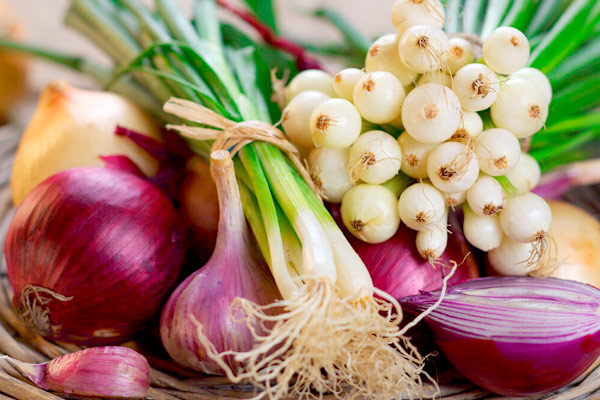
Onion (Allium cepa) has been used by humans since the Neolithic period, initially as a medicine and later also as food. The ancient Egyptians regarded the spherical bulbs as a symbol of the universe. The first known written document about onion comes from the Sumerians and dates from 2600–2100 BC. Hippocrates recommended onion as a diuretic and laxative. He also used it to treat pneumonia and externally for wound healing. Owing to the valuable taste, aroma and medicinal properties of the aromatic compounds it contains, it is one of the most consumed foods in the world. Onion is involved in the preparation of the majority of dishes. According to FAO data, onion is grown in 175 countries, almost twice as many as the countries where wheat is grown. By volume of cultivated production it ranks after tomatoes and cabbage. It is used all year round – in dishes, salads, seasonings, both raw and boiled or baked. It is present in processed foods – paste, powder, dried flakes, canned products. It has a very low content of calories and fats. One hundred grams of fresh mass contain only 40 calories. It is rich in soluble dietary fibre. Consumption in raw form is particularly valuable, as it involves direct intake of phytochemicals in raw form. They contribute to the treatment of various human diseases. This also determines the great importance of this crop for the food and pharmaceutical industries.
Breeding work in onion is aimed at creating elite cultivars with a high content of phytochemicals. Onion exhibits remarkable variation in the content of phytochemicals of high biological significance, depending on the species, cultivar and geographical area where it has been grown. Strategies are being developed for cultivating onion varieties possessing sufficient quantities of phytochemicals, as well as technological solutions for preserving them during processing.
Global onion production amounts to 74,250,809 t from an area of 4,364,000 ha. Its origin is in Asia. China and India rank first in production, followed by the USA, Egypt, Iran, Turkey, Pakistan, Brazil, the Russian Federation and the Republic of Korea (FAO, 2012). The average productivity worldwide is 19.790 t/ha.
Onion is grown on large areas in North America, although commercial production of sweet cultivars is rather concentrated in the southern regions, while pungent cultivars are grown in more northern latitudes. In the United States, the leading producers are California, Washington, Texas, Colorado, New York and Georgia. California also leads the nation in garlic production. Ontario and Quebec produce most of the onions grown in Canada.
Onion is widely cultivated in Europe. Its greatest diversity is found in the Mediterranean region. Annual production is 47 million t. It is among the most commonly grown crops in the Netherlands, where it occupies 2% of the total agricultural area. The country is the largest exporter of onions (90% of its total production), followed by India, China, Egypt and Mexico. Three colour types (groups of cultivars) are distinguished: white, yellow and red onion.
Essential oil is obtained from onion, which is used for the production of food supplements and medicines (as an antimicrobial, antiviral, carminative, diuretic, expectorant and spasmolytic agent, against rheumatism, for colds, cough and others). It is suitable for the prevention of diseases of the bones, connective tissue, digestive system and cardiovascular system. It has anti-inflammatory properties. The main nutrients contained in 100 grams of fresh onion are: calories – 40; water – 89%; proteins – 1.1 g; carbohydrates – 9.3 g; sugars – 4.2 g; fibre – 1.7 g; fats – 0.1 g. The carbohydrates are mainly simple sugars – glucose, fructose and sucrose.
The compound allyl disulfide contained in onion is converted into allicin through an enzymatic reaction when it is crushed.
Studies show that phytochemical compounds have antimutagenic (cancer-preventive) and antidiabetic properties (they help reduce blood sugar levels in diabetics). It has been established that allicin reduces cholesterol production and has antibacterial, antiviral and antifungal properties. It preserves the elasticity of blood vessels and maintains blood pressure within optimal limits. It blocks the formation of platelet clots and has a fibrinolytic effect in the blood vessels. In this way it reduces the risk of coronary heart disease, peripheral vascular diseases and stroke. Onion is a rich source of chromium, a microelement that helps tissue cells respond appropriately to insulin levels in the blood. Thus, it facilitates insulin action and control of blood sugar levels in diabetes. Onion is a good source of the flavonoid quercetin, which is known to have anticarcinogenic, anti-inflammatory and antidiabetic functions. Red cultivars contain anthocyanins, which are powerful antioxidants. Onion contains many vitamins of the B-complex group, pantothenic acid, pyridoxine, thiamine, vitamin C and mineral nutrients – manganese, copper, phosphorus and potassium. The outer dry layers of the bulb, which constitute the main onion waste, are a source of valuable polyphenols such as flavonoids and anthocyanins.
Onion prefers well-drained soils rich in organic matter, with neutral pH, well aerated and with good solar exposure. It develops at a temperature of 15–26oC. When well rooted, it can withstand down to -25oC in winter. During this period it is also grown for green leaves. To achieve high yields and large bulbs, it is important to form the maximum number of leaves at the beginning and to preserve them until harvest.
Raw onion can be easily available in all seasons. Depending on the cultivar, onions can be hot, pungent or mild and sweet. In shops they can be available in fresh, frozen, canned, pickled, powdered and dehydrated forms.
In India and Pakistan, onion is one of the most sought-after ingredients in cooking, where it is regularly used in curries, soups, fillings, pastes, dips, sauces and others. It is also widely used in Chinese, Mediterranean and African cuisines.
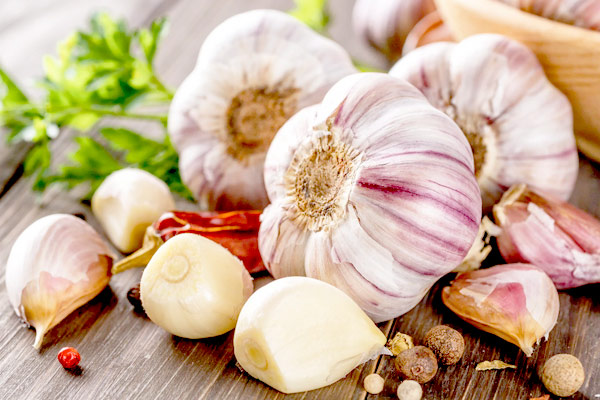
Garlic (Allium sativum) is a perennial vegetable from the family Alliaceae (Alliaceae). This species does not occur in the wild and is considered to have resulted from cultural selection and probably originates from the species Allium longicuspis, which grows wild in Southeast Asia. Garlic has been used worldwide for thousands of years. Some manuscripts indicate that it was already known during the construction of the pyramid of Giza about 5,000 years ago. Again Hippocrates, the “father of medicine”, prescribed garlic for a wide range of diseases. He used it to treat respiratory diseases, parasites, poor digestion and fatigue. Since ancient times in the Middle East, East Asia and Nepal, garlic has been used to treat bronchitis, hypertension, tuberculosis, liver problems, dysentery, flatulence, colic, intestinal diseases, rheumatism, diabetes and fever. Raw, it has a strong and pungent odour, which becomes milder during cooking. Garlic produces a chemical called allicin, which gives it medicinal properties and its characteristic smell. It is used in cookery and as a medicine for a wide range of diseases. It is consumed both raw and cooked and has antibiotic properties. It is recommended for heart problems, high blood pressure, high levels of cholesterol or other fats (lipids) in the blood. It boosts immunity and combats colds and viral diseases.
The nutritional value per 100 g of product is: water – 70 ml, protein – 6.5 g, carbohydrates – 21.2 g, calories – 106. It also contains manganese, vitamin B6, vitamin C, selenium, calcium, copper, potassium, phosphorus, iron and vitamin B1.
Worldwide, garlic is grown on 925,000 ha. China is the largest producer of garlic. Other major producers are India and South Korea. The maximum possible yield of garlic for bulbs is 16 t/ha. Garlic is irrigated in the early stages of its development during the formation of the leaf mass and bulb growth; in the later stages, when bulbs are already formed, irrigation leads to rotting. It prefers sunny sites, well-drained soils rich in organic matter, with pH 6–7. It can be planted as an autumn and spring crop. It is cold-resistant and, when well rooted, withstands down to -25oC. The optimal temperatures for garlic growth are 15–26oC. Garlic is used in cookery, for obtaining essential oil and for medicinal purposes.
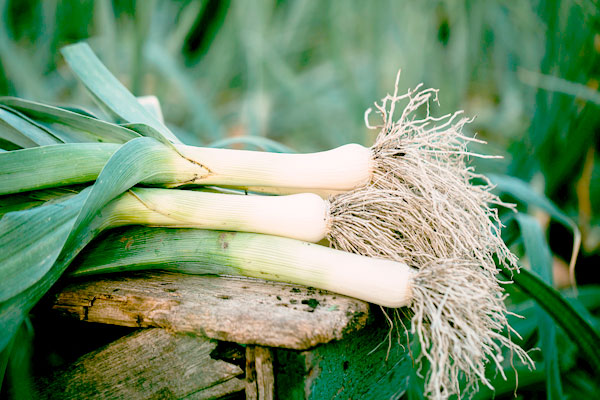
Leek (Allium porrum) is a vegetable crop and belongs to the family Alliaceae (Alliaceae). This species has two more quite distinct representatives: elephant garlic (Allium ampeloprasum var. ampeloprasum), grown for its bulbs, and Egyptian leek or “kurrat” (Allium kurrat), grown in Egypt and the Middle East for its leaves. Leek forms a long cylinder of leaves, which become blanched when covered with soil. When planted in the field, it is hardy and many cultivars can be left in the soil over winter and harvested as needed. Leek cultivars can be classified in several ways, but the main one is the division into summer leek, which is harvested in the same season in which it is planted, and winter leek, which can be harvested in the spring of the following year. Summer leek cultivars are smaller than winter ones, and winter cultivars usually have a stronger flavour.
Archaeological sites in ancient Egypt, as well as wall carvings and paintings, show that leek has been part of the Egyptian diet since at least the second millennium BC. According to the Papyrus Ebers, which is based on ancient Egyptian writings, leek had an important role in ancient Egypt. It is now grown on larger areas in Asia and the Mediterranean. Worldwide it occupies about 250,000 ha. The largest producers of leek are Indonesia, Turkey, Belgium, France, Korea, Poland, Germany, China, the Netherlands and Spain. The average yield of leek is 600–4,000 kg/da. The maximum possible yield is 6,000 kg/da. Leek can be grown in the same regions where onion is grown. It usually reaches maturity in the autumn months. It is used in cookery and for medicinal purposes. Its mild flavour and easy preparation make the vegetable a favourite addition to soups, casseroles, dishes and side dishes. It contains many vitamins – vitamin K, B-group vitamins, vitamin C, vitamin A and vitamin E and minerals – manganese, copper, iron, magnesium and calcium. Leek contains antioxidants and has an anti-inflammatory effect. It protects blood vessels from blockage. It prefers sunny sites, well-drained soils rich in organic matter, with pH 6–7. It requires constant soil moisture. In Bulgaria it is grown as a second crop. Seeds for seedling production are sown in March, and the seedlings are transplanted in June.
In our country, the largest areas are those on which onion is grown. Over the years they vary significantly. Garlic ranks second in terms of area occupied, and leek – third.