

![MultipartFile resource [file_data]](/assets/img/articles/den-na-narodnite-buditeli-2020.jpg)
![MultipartFile resource [file_data]](/assets/img/articles/учебник-земеделие.jpg)
On 1 November we celebrate the Day of the National Awakeners. On this day we pay tribute to the work of all enlighteners who opened the doors of knowledge in the name of the common good. We will also discover the flame of a noble cause in the establishment of agricultural science in Bulgaria as early as 140 years ago. We thank all awakeners who recognise the need for quality education and, with great work and effort, continue moving forward!
On the Day of the National Awakeners we will turn back time to remind you that the work of the Bulgarian enlighteners can also be found in the creation of agricultural science in our country. According to the Agricultural Academy, as early as 1853 Nikola Ikonomovich – Zheravneneца published the first book on agriculture, thus laying the foundations of agricultural literature in the country. A teacher by vocation and soul, he managed to systematise the main directions for the development of agriculture in Bulgaria at the beginning of the 19th century.
A little later, in 1888, Georgi Zlatarski and Nikola Lazarov coped with the difficult task of publishing a zoology textbook for the lower grades of secondary schools – “Animals”, illustrated with 298 figures. And in his textbook on husbandry (Textbook on Husbandry – Household and Field Gardening, Sericulture, Beekeeping, Poultry Farming and Animal Husbandry) from 1894, Dimitar Popov wrote that love for agriculture, gardening, beekeeping and sericulture must be encouraged and spread.
140 years of agricultural science in Bulgaria
Perhaps few people know, but historically the agricultural science of Bulgaria started as one of the first in the world. In 1835 the researcher Boussingault founded the first agricultural experimental station in France, his example was followed in England in 1843, in 1847 the well-known Svalöv Experimental Station in Sweden was opened, and in 1852 this happened in Germany as well. One hundred and forty years ago, in 1882, after tremendous efforts by the prominent Bulgarian National Revival figure Dimitar Naumov, instead of establishing a model, well-equipped farmstead with a demonstrative character at the newly built agricultural school in Sadovo, the first experimental field was created and thus the beginning of agricultural science in Bulgaria was laid. The regional administration in Plovdiv approved the establishment in Sadovo of an Experimental (testing) field with well-equipped for its time laboratories for research and educational activities, then called “services”. It is now hard to imagine, but it is a fact that only a few years after our liberation from Ottoman rule, still in “Eastern Rumelia”, a few enlightened, progressive people, who had completed their education “abroad” and had seen what “modern agriculture” was, decided that our young agrarian state needed enlightenment and development. Therefore they created an experimental field where they could study and verify what was more appropriate under our conditions and what was better for our farmers. They also organised publishing activities in order to popularise their “discoveries” and accumulated experience. The journal “Sadovo” is one of the first agricultural publications to appear in our lands at the end of the 19th century.
The first agricultural experimental station in Bulgaria was established in 1902 in Sadovo by the exceptional researcher Konstantin Malkov, who played a fundamental role in the development of the main areas of agricultural science: plant genetic resources, breeding, seed production and plant protection.
Great Bulgarians in agriculture
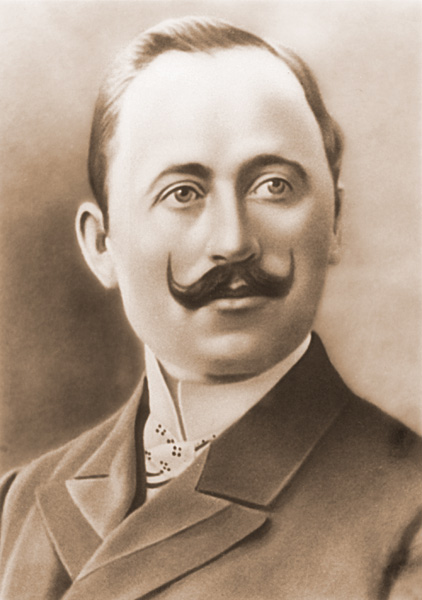
Konstantin Malkov
Konstantin Malkov was born in the Bulgarian quarter of the rebellious mountain town of Krushevo in 1873, Macedonia (now North Macedonia). His family moved to live in Orhanie (Botevgrad). He studied at the State Secondary Agricultural School in Sadovo. He completed his higher agricultural education in Halle, Germany. He specialised in experimental work in Göttingen and in diseases of cultivated plants in Berlin. After returning to Bulgaria, he taught at the State Secondary Viticulture and Agriculture School in Pleven, at the Secondary Agricultural School “Obraztsov Chiflik” in Ruse and at the State Secondary Agricultural School in Sadovo, where Malkov conceived the idea that the small experimental field at the school should be turned into an Agricultural Experimental Station, like those he had seen in Europe. After certain difficulties, on 27 August 1901, by Order No. 838 of the Ministry of Trade and Agriculture, he was appointed its director. Thus, 120 years ago, in September 1902, the State Agricultural Experimental Station Sadovo was officially opened with the task of working to improve agricultural crops in quantitative and qualitative terms and to study the diseases and pests of cultivated plants.
Konstantin Malkov bequeathed to generations of agronomists and researchers extremely valuable studies, including the classification of Bulgarian wheats; he studied southern crops, mainly cotton; he carried out, for his time, large-scale research into the diseases and pests of cultivated plants, discovering new diseases of these plants previously unknown to science. During his short but extremely fruitful life, the scientist published 273 papers related to agricultural science. Authentic scientific works are preserved in the specialised library of the Institute of Plant Genetic Resources (IPGR).
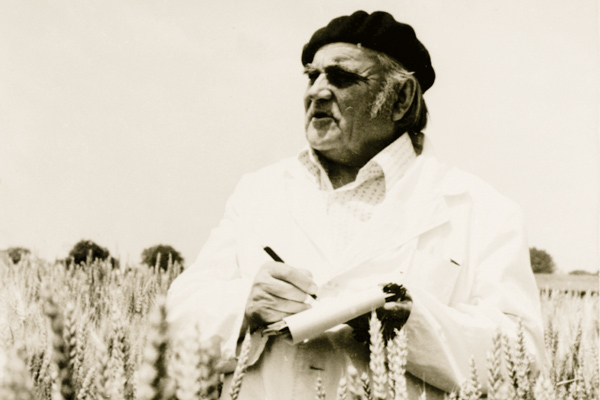
Acad. Pavel Popov
By a twist of fate, 120 years ago, in the same year 1902, the year of the opening of the State Agricultural Experimental Station in Sadovo, one of its most prominent future representatives, one of the luminaries of agricultural science in Bulgaria – Acad. Pavel Popov – was born. Starting work in Sadovo in 1928, he took part in a period of the station’s development distinguished by unceasing progress in the research process and by its consolidation as a vital unit dealing with the problems of wheat breeding and many other crops important for our country. Acad. P. Popov was the scientist who worked in Sadovo with the greatest international authority; he was the man who created a school of thought of which all his followers are proud. Although he never became Director, he left the deepest mark in the glorious history of agricultural science in Sadovo. With his participation, 67 varieties of wheat, pepper, peanuts, poppy, sesame and others were created. He brought wheat breeding in Bulgaria to a world level and wrote over 750 scientific and popular-scientific articles. His words are: “Sadovo may be considered a pioneer in the agronomic science of Bulgaria and deserves to become a memorial town of Bulgarian agricultural science.”
*The article was updated on 01.11.2022