

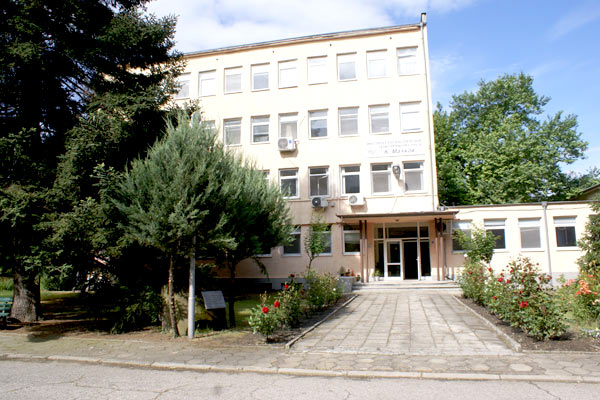

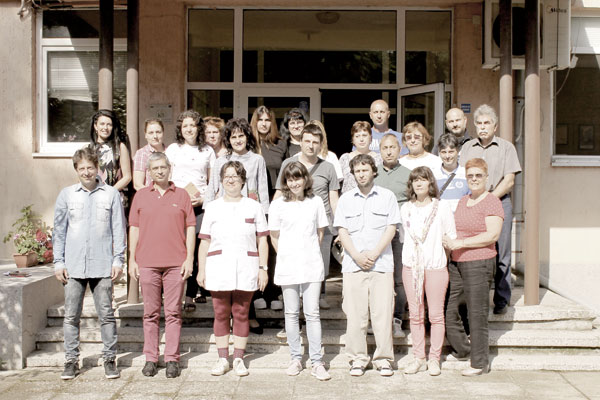
Today, the Institute of Plant Genetic Resources continues to generate energy for the success of Bulgarian agriculture
Interview with Assoc. Prof. Katya Uzundzhalieva, PhD, Director of IPGR in Sadovo, who answered the questions of the journal „Plant Protection“ within the framework of the editorial initiative „Presenting the institutes of the Agricultural Academy“
Assoc. Prof. Uzundzhalieva, would you briefly acquaint our readers with the history and activities of the Institute of Plant Genetic Resources in Sadovo?
The establishment and development of agricultural science in Sadovo has passed through several stages:
In the period from 1882 to 1902 the „experimental“ field at the Agricultural School shed light on a number of issues related to the introduction of new crops unknown to our agriculture at that time – cotton, peanuts, fodder and sugar beet, hops, alfalfa, clover.
In September 1902, the Sadovo Agricultural Experimental Station was officially opened, representing a qualitatively new, pivotal moment in the development of agriculture in our country.
In the period 1922–1944 a laboratory was established, the experimental field was expanded and appropriate equipment was supplied for the needs of the agricultural process. Breeding activities were initiated in a number of crops of major importance for the country, such as wheat, rye, barley, beans, as well as research on their cultivation technology.
Until 1976, the main scientific activity during this period was related to the breeding of soft wheat and the development of varieties ensuring high yields under the specific environmental conditions of Southern Bulgaria. Targeted breeding work was also carried out with southern oilseed crops – peanuts, sesame and poppy. Research was also conducted on the agronomy of these crops.
During this period, a number of new wheat varieties were bred at the Experimental Station. The best-known among them – variety Sadovo 1 – matched the top achievements of world breeding and for many years remained the leading variety for Southern Bulgaria.
In addition to wheat varieties, new high-yielding varieties of rye, cotton, peanuts, poppy, sesame and others were developed for the country.
In 1977, by a Council of Ministers Decree, the Institute of Introduction and Plant Resources was established, which was later renamed Institute of Plant Genetic Resources „K. Malkov“. The plant resources were relocated from Sofia to Sadovo. The scientific fields at IPGR include research, applied and service activities in the area of plant genetic resources, breeding and biotechnology. During this period, the National Seed Genebank, a Plant Biotechnology Laboratory, a botanical garden, a computer centre, a museum and a herbarium were established.
The main scientific areas at the Institute of Plant Genetic Resources „K. Malkov“ in Sadovo are focused on:
- Collection, study, conservation, documentation and utilization of plant genetic resources;
- IPGR is the National Coordinator of the Plant Genetic Resources Programme, which is part of the European Programme on Plant Genetic Resources;
- Maintenance of plant species in the National Genebank, quarantine facilities and the botanical garden according to criteria harmonized with FAO;
- Implementation of breeding programmes for crops of primary importance for the country and development of competitive high-quality varieties of wheat, triticale, oats, rye, rice, peanuts, sesame, pea, chickpea, tomato, pepper, eggplant, lettuce, etc.;
- Application of modern plant biotechnological methods for the conservation of plant genetic resources and in breeding.
Active wheat breeding continues at IPGR. What are the latest achievements in this field? Does this project have energy and prospects against the background of the situation in our country – the powerful invasion of foreign genetics?
Bulgarian wheat varieties, the result of domestic breeding, are currently facing serious competition from imported ones. Varieties from Western European breeding – French and Austrian – are entering the country, backed by powerful lobbies. These are companies that can afford expensive advertising, deferred payments and other attractive offers for farmers. The truth is that such varieties may not adapt well to our conditions. Moreover, the seed will certainly be more expensive due to transport and other costs.
The meteorological conditions in the country, especially during the current year, revealed the shortcomings of Western breeding. A large part of the areas in Northeastern and Southeastern Bulgaria were compromised due to the lack of a real winter, the manifestations of which occurred at the beginning of the active vegetation of the crop, combined with pronounced spring drought. Many farmers were forced to plough up their wheat fields and suffered serious economic losses.
Climate change is already underway and this phenomenon will become increasingly common in our country. This necessitates the creation of a new varietal structure on farms, in which Bulgarian varieties must occupy a central place.
Domestic wheat varieties are the most suitable for Bulgarian agriculture. Their qualities are recognized worldwide and they are more successful than those developed in leading grain-producing countries such as Ukraine, Russia, Turkey, Portugal and others. Their main advantage is that they have been developed under the changing conditions typical of Bulgaria. Under these conditions, selection was carried out first for yield and then for quality, for drought and winter hardiness, and resistance to economically important diseases, i.e. they have undergone testing for at least 10 years. On this basis, a technology for their cultivation has been developed, which we provide when delivering the seed. It is adapted to their varietal specificity. Our latest varieties have both high productivity potential – Nikolay, Nikibo, Gizda, Ginra, Nadita, and high quality – Sashtets, which is a joint product with the Cotton and Durum Wheat Research Institute – Chirpan. We constantly strive to meet farmers’ demands.
According to the latest data from the JRC MARS Bulletin Crop monitoring in Europe of 15 June 2020, the forecast for the yield of winter crops in Europe is currently below the 5-year average, with the reasons for the poor outlook for winter cereals being the persistent rainfall deficit.
The National Seed Bank, the largest in the Balkans, as well as a botanical garden with a unique identity, are based at IPGR. This fact is an indicative sign that the institute in Sadovo has a very special mission in the plant world, which escapes the attention of the general public. How is this invaluable capital resource maintained, vital and necessary for the conservation and study of cultivated plants, medicinal and ornamental species, as a basic material for future breeding discoveries, and for the preservation and enrichment of biological diversity? Genebanks and botanical gardens are part of the national security of many countries and their sustainable management is a great responsibility, involving high scientific standards and adequate targeted funding. What is the status of the Bulgarian Seed Bank and the botanical garden? What is their condition and what are the prospects for their further successful development?
The National Genebank was established in 1984. Its main task is the implementation of the scientific programme for long-term and medium-term conservation of germplasm through seeds under controlled conditions, in compliance with FAO standards (1980, 1995, 2014). The conservation of the diversity of cultivated plant species and their wild relatives is achieved through the maintenance of three collections:
Base collection – maintained under conditions for long-term storage of seed accessions, which are kept in hermetically sealed containers, at low seed moisture and a temperature of minus 18 °C. Under these conditions the seeds retain their viability without change for several decades to a hundred or more years.
Active collection – ensures safe storage of seeds for three to ten years at + 6 °C.
Exchange collection – provides material for free exchange with partners from the national and international system.
The National Genebank maintains over 60,000 accessions, of which 43,147 under long-term storage conditions. The base collection is represented by 33 families, 150 genera and 600 plant species.
The collection maintained in the National Genebank is published in the European Electronic Catalogue of Plant Genetic Resources EURISCO (http://eurisco.ipk-gatersleben.de).
The National Genebank at IPGR in Sadovo carries out non-currency exchange with more than 100 genebanks, botanical gardens and international PGR centres worldwide. On the other hand, it provides all interested partners in the country with access to global collections through free exchange of germplasm, registration and storage of seed accessions from varieties, breeding lines, local forms, wild species, including rare and endangered species.
Unfortunately, at this stage the Genebank has no targeted funding and is supported by the institute’s own revenues, which is extremely insufficient. It must be understood that the Genebank is a structure that does not generate income, and that all genebanks in Europe receive national funding in order to carry out their activities. The purpose of the Genebank is entirely different, namely to preserve the rich biodiversity in the form of seed material for future generations, which material is to be used in breeding in view of the changing climatic conditions that have become increasingly tangible in recent years.
At present we are making efforts for the Genebank to obtain the status of a site of national importance, following the example of many European genebanks.
The botanical garden is a specialized unit within the PGR programme of IPGR. It was established in 2002 and aims at conserving local resources through in garden/in vivo conservation.
Even before taking up the position of Director of the Institute, Assoc. Prof. Katya Uzundzhalieva created the botanical garden, where she still maintains the rich collection with great enthusiasm to this day.
The area of the demonstration collections is 1.1 ha and by 2016 a collection fund of 400 species of higher plants had been established, representing the Bulgarian wild and cultivated flora, as well as 57 species with protected status. The plant species are thematically grouped according to their utilization potential:
- Wild relatives of cultivated plants;
- Food species;
- Medicinal and spice plants;
- Forage species;
- Oilseed species;
- Ornamental species.
The main activities include:
- Establishment and maintenance of a scientifically organized and documented collection of living plants of wild origin from the flora of Bulgaria for the purposes of PGR research, their conservation and sustainable use.
- Coordination of on garden conservation measures jointly with other botanical gardens.
- Establishing a link between the two types of conservation – ex situ and in situ/on farm of the wild relatives of cultivated plants.
- Nature conservation, natural science and educational activities at regional and national level.
What is the activity of the institute’s team, its capacities, creative drive and conceptual potential to be a full-fledged part of the country’s agribusiness? To cooperate in a solidaristic, responsible and competent manner with Bulgarian farmers for building sustainable production in an uncertain climatic and phytosanitary environment?
The team of IPGR – Sadovo has the capacity to successfully partner with agricultural producers. Our breeders develop new varieties, mainly cereal crops (wheat), adapted primarily to the conditions of Southern Bulgaria. They proved their worth this year under extremely unfavourable conditions for wheat development, in contrast to foreign varieties, which are adapted to a more humid climate and did not withstand the drought.
Does IPGR participate in the discovery complex of European agricultural science? Does it have a presence in high-value international projects?
At present, IPGR – Sadovo is participating in a Horizon 2020 project together with 19 partners from European countries.
Work is also underway on a major project funded by the Research Fund for the establishment of a National PGR Network. This is an issue that has been discussed for a long time, but will now be implemented in practice, and the collection maintained in the National Genebank will become visible to the public in Bulgaria and abroad.
In issue 7 of the journal “Plant Protection” we will present in detail the long and successful history of the Institute of Plant Genetic Resources “K. Malkov” in Sadovo, as well as its activities and contribution to Bulgarian agriculture.