

The rose chafer – Cetonia aurata L. is widespread throughout the country. It damages fruit trees, with a preference for cherry and pear. It is also found on grapevine, rose and dog rose. It has additionally been found to cause damage to maize and cabbage. It most frequently occurs on the blossoms of dog rose and rose. It also feeds on the floral parts of chamomile, coriander and yarrow.
In recent years the rose chafer has been observed in some cherry plantations and household gardens in the Kyustendil region. Its population density is higher in weedy areas and overgrown dog rose shrubs and cherry orchards. On individual trees up to 80 – 100 beetles have been recorded.
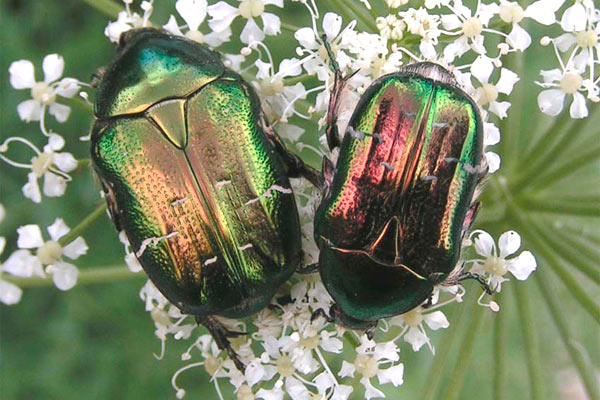
The adult insect is a relatively large beetle. The body length is up to 2 cm. The pronotum and elytra are intensely green with a golden metallic sheen. The ventral side is copper-red in colour. There are white transverse stripes on the elytra.
The rose chafer has one generation per year. The beetles overwinter in the soil. In spring they appear during the flowering of fruit trees. The beetles are active and fly around midday, when it is warmest. They gnaw the stamens and pistil of the flowers and damage the leaves and fruits.
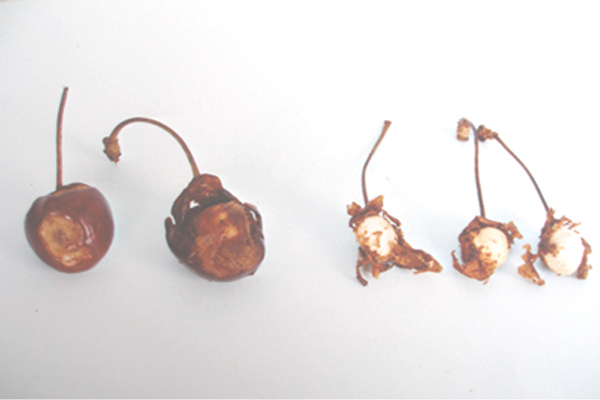
On infested cherry fruits they gnaw deep wounds and in most cases destroy them completely. We have recorded 80% damaged fruits on a single tree.
Damage
Fertilized females lay their eggs in rotten wood and in soil rich in decayed wood. The larvae develop in this decaying environment and pupate in the same year.
Chemical control against the rose chafer should be directed at the adult stage, which causes the main damage. Insecticides have not been tested so far against this pest because it did not occur frequently. Control is also complicated by the fact that spraying must be carried out at the time of fruit ripening and quarantine periods must be observed.
Control
The rose chafer belongs to the family Scarab beetles, which also includes the hairy beetle. It is recommended to use insecticides with a short pre-harvest interval, which are approved against the hairy beetle: Vaztak Nov 100 EC – 10 ml/da. Light blue or white traps with an attractant can also be used. To reduce the damage caused by the rose chafer, good agronomic practice is also necessary – regular tillage, fertilization, collection, removal and destruction of weed vegetation, dog rose shrubs and decaying plant residues, where the larvae of the pest develop.