

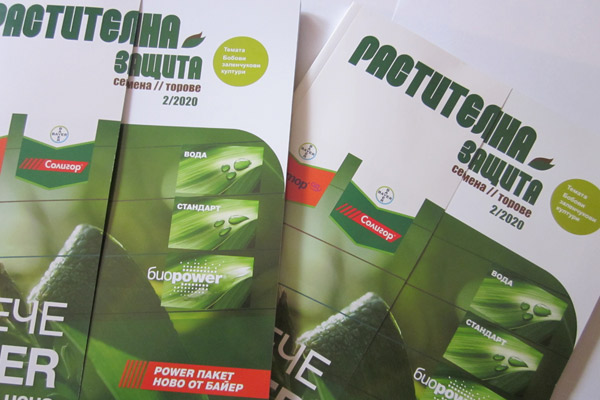
See which topics are current in this issue.
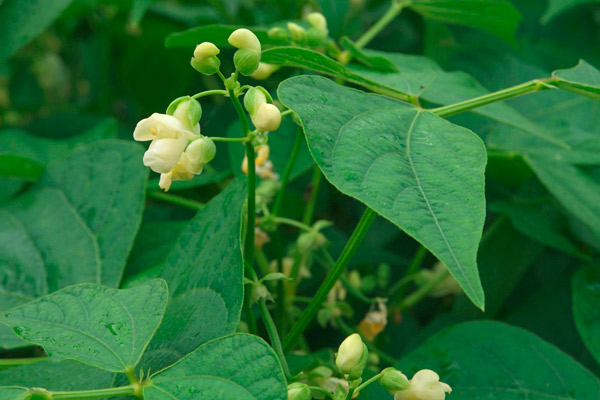
The second issue of the journal „Plant Protection” in 2020 is dedicated to legume vegetable crops. In Bulgaria, from the family Fabaceae, about 275 species from 38 genera are naturally distributed. Among them are the familiar bean, pea, soybean, peanut, clover, chickpea, sainfoin, faba bean, vetch and lentil. Legume vegetable crops are an excellent source of dietary fibre and nutrients such as folate and potassium, and they are also a source of plant proteins, iron and zinc, which makes them an excellent food with high biological value.
Legume vegetable crops have a short vegetation period, which makes them very suitable as fillers in vegetable crop rotations. They improve soil fertility through symbiotic relationships with bacteria of the genus Rizobium and are good predecessors for all other crops, except those from their own family.
The varieties of bean for consumption in fresh (unprocessed) state are divided into stringless varieties and „filet“ type, which form strings at a later phase of pod development, with preference given to varieties with flat, broad, easily developing pods with a typical bean flavour. In our country, targeted research and breeding work on legume vegetable crops is carried out at the Maritsa Vegetable Crops Research Institute in Plovdiv. The main objective of the breeding is the collection, characterization, study and maintenance of gene donors with valuable economic traits and the creation of new varieties with greater adaptive capacity to the specific combination of temperature and photoperiod in our conditions, resistant to the economically important diseases and pests in the country.
In this issue we will present to you the national collection of grain legumes at the Institute of Plant Genetic Resources (IPGR) „Konstantin Malkov“ in Sadovo. The collection includes accessions from 10 botanical genera (Phaseolus, Vicia, Arachis, Pisum, Glycine, Lens, Lathyrus, Cicer, Vigna, Lupinus). The IPGR also maintains the largest collection of dry bean (Phaseolus sp.) in Bulgaria, consisting of about 2000 accessions, the majority of which are of Bulgarian origin.
In addition to the well-known legume varieties, in this issue you can also read about the diseases (viral, bacterial and fungal) and pests of garden bean and pea, as well as about their control.
The Agricultural University will advise you on how to keep your legume crops free from weeds.
Enjoy your reading!
Here is what else we will present in this issue:
Theme
S. Kalapchieva – Legume vegetable crops – food with high biological value
S. Petrova et al. – The Institute of Plant Genetic Resources in Sadovo presents its collection of grain legumes
S. Kalapchieva – Green bean
S. Kalapchieva – Garden pea
S. Petrova – Chickpea
S. Masheva et al. – Diseases and pests of garden bean and pea
M. Dimitrova – Weed-free legume crops
Quarantine
B. Katinova – New harmful organisms threaten Europe
Information
A. Vasilev, D. Petkova – Biostimulants in modern agriculture
Orchard – Peaches and nectarines
A. Zhivondov et al. – Trends and dynamics in the development of the modern assortment of peaches and nectarines
D. Aleksandrova – Diseases of peach and nectarine
D. Stefanova – Pests of peach and nectarine
Traffic light
M. Borovinova – In the orchard in March
S. Masheva et al. – In the vegetable garden in March
Events
*** – Bayer 2020 – roadmap with key policies
*** – Viola PLC: Creative, business active, successful!
*** – The company UPL, new to Bulgaria, positions its high-class plant protection concept
*** – BASF 2020: Real results in real conditions
The journal „Plant Protection & Seeds and Fertilisers“ has no responsibility for the information presented in the published advertisements and PR materials. Responsibility for their content lies entirely with the advertisers. The authors of the articles bear responsibility for the information in the authored materials.