

In October, the agrometeorological conditions will be determined by temperatures around and above the climatic norms and by precipitation close to the monthly averages.
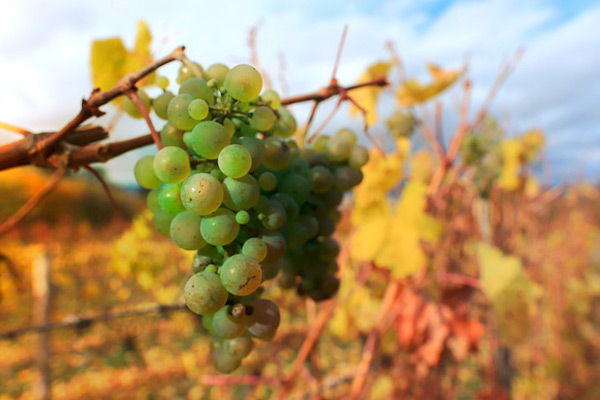
At the beginning of October, the forecast above-normal temperatures, with maximum values up to 29-30°C, will accelerate the ripening of late varieties of fruit trees and grapes and will be a precondition for the formation of additional yield from late vegetable crops.
After the unseasonably warm weather during the second half of the first ten-day period, a normalization of the thermal conditions is expected. The precipitation at the end of September and the expected rainfall during the first ten days of October will provide moisture for the emergence of the crops sown at the beginning of autumn. The drought at the end of summer in many parts of the country delayed the pre-sowing tillage of the areas intended for sowing with autumn crops. For this reason, in a large part of the field regions the agrotechnical sowing dates for winter rapeseed have been missed. October is the optimal period for sowing winter cereal crops. During the first ten days is the agrotechnical period for sowing wheat in Northern Bulgaria, from 15 to 25 October in Southern Bulgaria, and at the end of the month – along the Black Sea coast.
During most days of the second and third ten-day periods, the development of the sown stands of rapeseed and winter cereal crops will proceed at a moderate rate, under thermal conditions close to the norm. The forecast precipitation in the second half of October is expected to improve the level of soil moisture reserves in the 50 cm layer and the conditions for the course of the initial phases of vegetation of the autumn crops. At the end of the month, in wheat, depending on the sowing dates, the following stages will be observed: emergence, third leaf and beginning of tillering, mainly in the stands sown at the beginning of October. In rapeseed, leaf formation will be in progress. At the end of October, in the earliest sown rapeseed stands, sown in September, the beginning of the rosette formation stage will be observed.
In October, autumn crops are attacked by a number of pests. In winter cereal crops, the harmful activity of the common vole, the wheat leaf beetle, and cereal flies must be monitored, and when pest density exceeds the economic injury level (EIL), timely treatment should be carried out. For the common vole, the EIL is 2 active colonies per decare; for the wheat leaf beetle – 3 larvae/sq.m.
In rapeseed, surveys for the occurrence of the cabbage stem flea beetle (adult individuals) and the turnip sawfly (false caterpillars) must be carried out during the month, and when their numbers exceed the EIL, insecticidal spraying should be performed.
Source: NIMH