

In the 1990s, a large number of native oaks in the coastal areas of California and Oregon died en masse. The symptoms on the trees were expressed as bleeding cankers on the stems. The syndrome was called “sudden oak death”.
In Europe, a new disease on rhododendron and viburnum grown in containers in nurseries was described for the first time in 1997. Wilting of the leaves and stem necrosis were observed. The causal agent was definitively identified in 2000 as Phytophthora ramorum Werres, De Cock & Man in`t Veld. It belongs to Class Oomycetes, Order Peronosporales, Family Peronosporaceae, Genus Phytophthora.
The first outbreak of the disease was reported in England in 2002 on plants of evergreen viburnum (Viburnum tinus) grown in containers. The plants were sent for analysis to the Central Science Laboratory, where the presence of P. ramorum was confirmed. Due to the potential threat to European flora, in 2002 the European Commission introduced Decision 2002/757 EC. It introduced emergency phytosanitary measures to prevent further introduction and spread of Phytophthora ramorum on the territory of the Member States. The disease began to develop increasingly dynamically in Europe and by 2007 it had been established in 16 European countries. It was found mainly on rhododendron and viburnum, but was also isolated from camellia, magnolia, pieris, lilac, yew. The harmful organism has been detected in public areas and parks, with the first reports from the United Kingdom and the Netherlands. Broadleaved species such as oak, horse chestnut and common chestnut, European beech have been attacked. Bleeding lesions on the trunks were observed on them. It is assumed that the trees were infected by rhododendrons growing nearby. Outbreaks of the disease affect 19,000 hectares of Japanese larch in England and Wales.
More than 200 plant host species belonging to 75 families have been described: rhododendrons (Rhododendron spp.), viburnum (Viburnum spp.), blueberry (Vaccinium spp.), camellia (Camellia spp.), magnolia (Magnolia spp.), common lilac (Syringa vulgaris), common yew (Taxus baccata), photinia (Photinia spp.), oleander (Nerium oleander), cherry laurel (Prunus laurocerasus), bay laurel (Laurus nobilis), strawberry tree (Arbutus unedo), heather (Calluna vulgaris), willow (Salix caprea), oak (Quercus spp.), horse chestnut (Aesculus hippocastanum), sweet chestnut (Castanea sativa), maple (Acer spp.), Douglas fir (Pseudotsuga menziesii), Japanese larch (Larix kaempferi), European larch (Larix decidua), fir (Abies spp.) and others.
The pathogen is distributed in North America (USA and Canada) and in Europe (Belgium, Croatia, Germany, Greece, Denmark, Spain, Ireland, Italy, Norway, Poland, Slovenia, Serbia, the Netherlands, the Czech Republic, France, Finland, Portugal, Sweden, Switzerland and the United Kingdom (Channel Islands, England, Scotland, Wales).
The most characteristic distinguishing feature of this species is that it affects all above-ground plant parts; damage to the roots is rarely observed. Unlike other representatives of the genus Phytophthora, its spores are released into the air. Leaves and twigs play a decisive role in the epidemiology of the disease. Leaf infection can occur within 9–12 hours in the presence of water droplets on the leaves and air temperature around 20°C. In the absence of water, the probability of infection decreases. The attacked leaves can remain on the plants for a longer period of time and be a constant source of inoculum. On them, and sometimes on the branches of susceptible hosts, sporangia and chlamydospores are produced which, by means of rain, reach other leaves, the soil or are transported by air. The main function of the sporangia is dispersal and they can survive for several weeks. Motile zoospores are released from them and are considered to be the main source of infection. This species does not form oospores in the natural environment.
For broadleaved species (mainly oak) bleeding cankers on the trunk are characteristic, usually located in the lower parts of the tree, but they can also be found at a height of 20 m. When the bark is removed, areas of necrosis can be seen in the wood. A sharp boundary between diseased and healthy tissue is evident. The leaves become necrotic and remain on the crown even after the tree has died. In some hosts such as sweet chestnut and holm oak (Quercus ilex) only the leaves may be affected. For Europe, the most susceptible tree species are beech and red oak.
The disease is mainly observed on plants grown in nurseries. As a result of stem and/or leaf infection, the symptoms vary depending on the host plant.
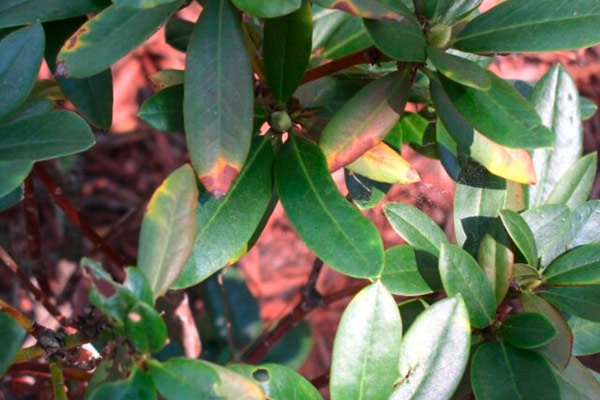
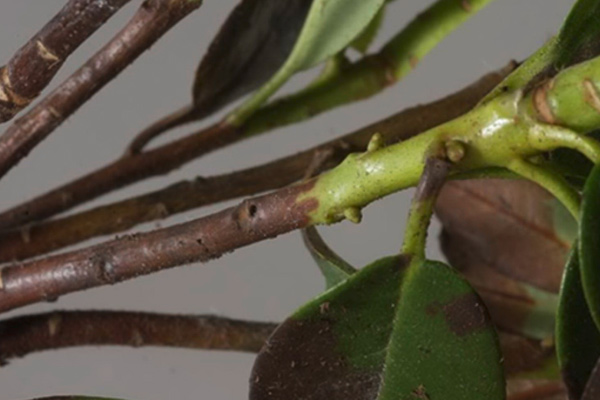
On rhododendron leaves diffuse water-soaked spots are observed, which extend along the petiole and midrib. Necrosis may start from the base or from the tip. The affected leaves curl inwards, remain attached to the plant or fall prematurely. The infected stems are brown to black in colour.
On camellia: mainly the leaves are affected; in rare cases symptoms are observed on petioles and flower buds. Leaf spots are dark brown to black, often with a chlorotic halo. Most often the infection starts from the tip. The leaves dry out and fall.
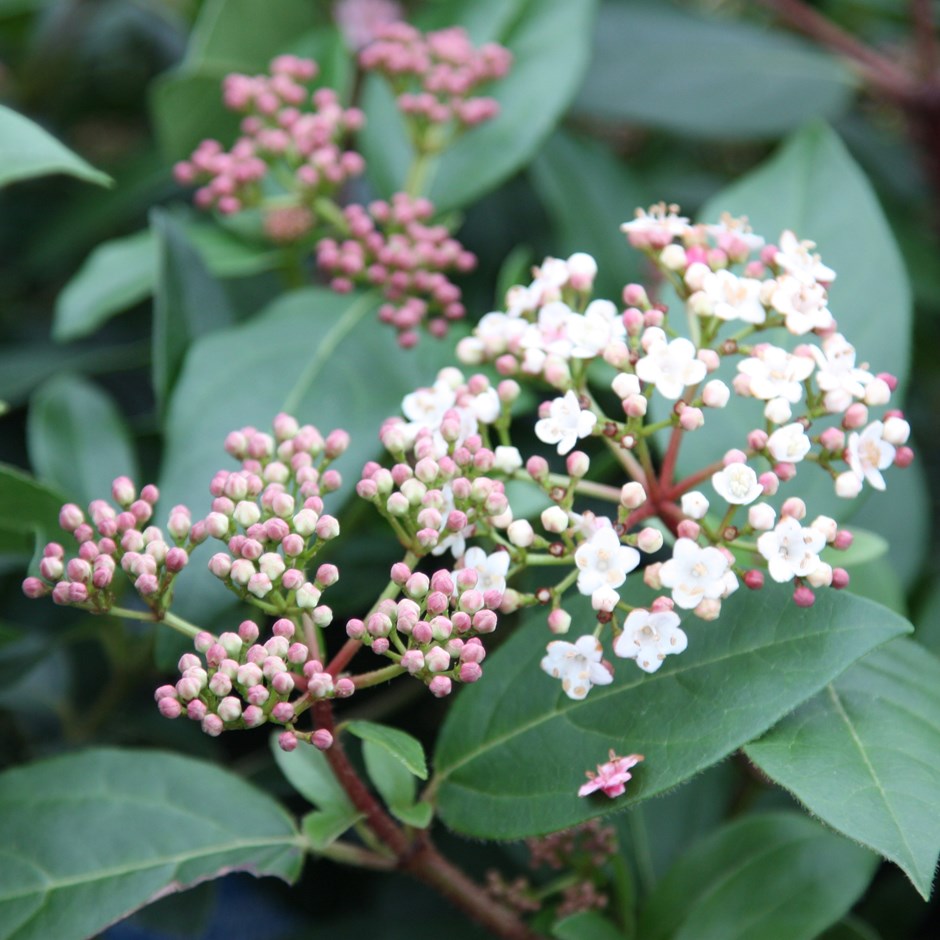
On viburnum the infection usually starts from the base of the plants. Stem cankers and/or leaf spots are observed. As a result of the infection, the plants wilt very rapidly and droop.
On pieris the infected leaves become dark brown. The infection starts from the tip. Young shoots and leaves are particularly susceptible. In older plants the lower leaves may also become infected and fall off.
On lilac, brown to black discolouration is observed on the shoots and branches, and on the leaves necrosis is typically from the tip.
The above-mentioned symptoms can be confused with damage caused by other pathogens, frost injury or sun scorch.
The main phytosanitary risk is trade in infected planting material, since plants may appear healthy during the latent period of the disease (the time between the initial infection and the first visible symptoms).
Over long distances, the harmful organism is spread with plants intended for planting, with wood and bark of Quercus spp. In the natural environment – through spores carried by wind and rain or through plant debris and working tools.
Preventive measures
- Use of healthy planting material
- Avoidance of overhead (sprinkler) irrigation
- Disinfection of tools used
- Removal of plant debris
Control:
For imports from third countries of “susceptible plants” intended for planting, it is required that they be accompanied by a phytosanitary certificate with an additional declaration stating that the requirements laid down in Decision 2002/757/EC have been fulfilled.
Plants of the genus Viburnum spp., g. Camellia spp. and g. Rhododendron spp. may be moved within the Community if they are accompanied by a plant passport.
In the event of an outbreak, the following phytosanitary measures are taken:
- infected areas are placed under quarantine;
- infected plants, as well as all susceptible plants located within 2 m of the place of infection, are destroyed;
- the growing medium associated with the plants and plant debris are destroyed;
- all plants in the infected zone (including the susceptible ones) which are located within 10 m of the infected plants are left in the place where they are grown;
- three months after the implementation of the measures, at least two additional official inspections are carried out when the plants are in active growth;
- during this period, fungicides are not used, as there is a possibility that the symptoms of the pathogen may be suppressed.
By Decision 2002/757 EC, which entered into force on 19 September 2002, all Member States of the European Union are obliged to report annually to the European Commission on the situation regarding the harmful organism on their territory.
In our country, in accordance with the monitoring programme drawn up and approved by the Executive Director of the Bulgarian Food Safety Agency, phytosanitary inspectors from the Regional Food Safety Directorates carry out annual inspections at the following observation points: at border crossing points upon import, on the territory of the country in nurseries and garden centres, public green areas, forest stands and commercial sites.
Observations and sampling are carried out at the place of production and the surrounding area within a radius of 100 m, at least twice a year. Suitable periods are in spring (March–April) and autumn (September–October). The most suitable time for this is during rainy periods, periods of prolonged humidity, and in moist or shaded sites. In case of suspected presence of the disease, inspectors may use rapid diagnostic tests for P. ramorum.
Final diagnosis and identification are carried out at the Central Plant Quarantine Laboratory, in accordance with EPPO Standard PM 7/66 (1). A biological method is used (moist chamber and isolation on selective and semi-selective media), followed by morphological identification. Final confirmation is carried out using molecular tests (Conventional PCR, Real-time PCR).
In 2018 a total of 478 inspections were carried out: 345 in garden centres and nurseries, 86 in public green areas/parks and 47 in forest stands. Seventy-two samples were sent to the CPQL and 171 analyses were performed.
To date, no infection by Phytophthora ramorum has been established on the territory of the country.