

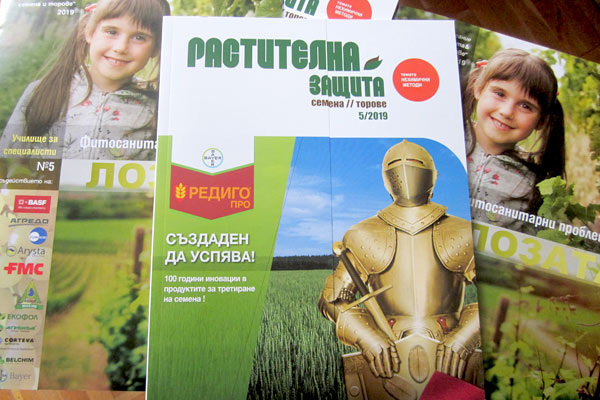
See which are the current topics in this issue.
In the June issue of the magazine “Plant Protection” the main topic is non-chemical methods and means against pests in vegetable crops. It has long been known that vegetables have turned from a seasonal into a year-round commodity on the market, which necessitates their intensive production to meet the continuous demand. As a result of the increased need for overproduction, conditions are created for the accumulation of pests and pathogenic microorganisms in the soil and, for this reason, the number of treatments with chemical plant protection products is increasing. Consequently, the produce and the environment become contaminated and a risk to human health is created.
Global trends in agriculture are turning to various alternatives to conventional production, which reduce the use of pesticides and ensure safe vegetable produce. Thus, since 2014, by an EU directive, integrated production systems and the organic method for the control of diseases and pests in vegetables have become a mandatory requirement for the European market.
In modern plant protection, new pesticides based on plant extracts – phytopesticides – are being introduced, which have repellent and toxic effects on pests. Europe is among the leading regions in the production and use of bioagents, which are increasingly entering crop production. Recognizing the important role of pests in agrobiocenoses and the reduction of the drive for maximum yield in recent years has opened new horizons for the development of global plant protection science. Increasing emphasis is placed on mineral salts, essential oils, plant extracts, biological agents – micro and macro (bioagents), composts, resistant varieties, agrotechnical measures, cover crops, solarization and biofumigation, with a view to reducing the contamination of the environment and vegetable produce with pesticide residues and limiting the resistance of pests to the frequent use of PPPs.
The problem in modern vegetable production, related to the limited use of environmentally friendly plant protection means, is largely due to insufficient knowledge and awareness of alternative methods; the limited choice on the market of authorised biological plant protection products, and the still unrecognised role of biodiversity as a decisive factor for the phytosanitary status of crops.
Enjoy your reading!
Here is what else we present in this issue:
Main topic
S. Misheva – Non-chemical methods and means against pests in vegetable crops
V. Yankova, D. Markova – Bioinsecticides against pests in vegetables
G. Neshev – An alternative to chemistry against soil-borne pathogens in greenhouses
V. Kharizanova – Bioagents – natural enemies of pests
D. Markova et al. – Grafting of cucumbers – an opportunity to increase resistance to soil-borne pathogens and nematodes
M. Naydenov – Multifunctional support for crops
Anti-stress
A. Vasilev–Beneficial effects of biostimulants for increasing plant tolerance to drought
Quarantine
I. Ivanova – Phytophthora ramorum – how to recognise it?
Traffic light
*** – Agropal recommends: Scheme for the protection of tomatoes and eggplant from pests
Events
*** – At Bayer Agro Arena 2019: A new portion of agrochemicals and genetics for growth and resilience
*** – Seed House “Sadovo”: We work at a high level!
School for specialists
P. Abrasheva – Viral and virus-like diseases in grapevine
The magazine “Plant“ Protection Seeds and Fertilizers has no involvement in the information presented in the published advertisements and PR materials. Responsibility for their content lies entirely with the advertisers. The authors of the publications bear responsibility for the information contained in the authored materials.