

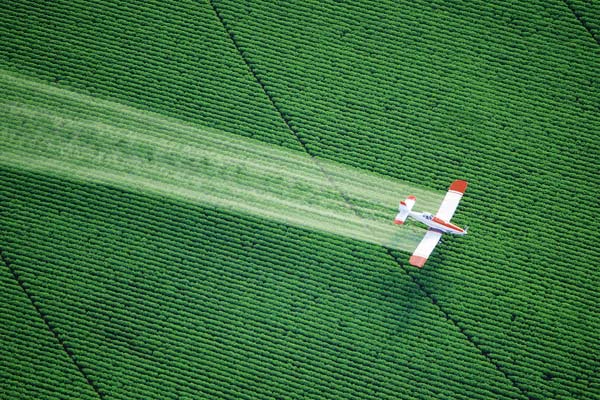
Vegetables are an integral part of human nutrition. Their regular consumption reduces the risk of chronic diseases. It has been established that replacing foods with high energy density (high-calorie) with foods with low energy density (fruits and vegetables) is an important part of the strategy for healthy eating and weight management. According to the European Food Information Council, Bulgaria ranks 13th in Europe in terms of fruit and vegetable consumption. This also stems from the fact that, from seasonal, today they are available on the market all year round. Their production is intensive, monocultural, especially in protected cultivation facilities. Conditions are created for the accumulation of pests and pathogenic microorganisms in the soil, which leads to an increase in the number of treatments with plant protection products (PPPs). As a result, the produce and the environment become contaminated and a risk to human health is created. According to the Stockholm Convention on Persistent Organic Pollutants, nine of the twelve most dangerous and persistent organic chemicals are pesticides.
In 2006 Greenpeace published a detailed report on the residual quantities of PPPs in fruits and vegetables in German supermarkets. It was found that peppers produced in Almeria, Spain, contained residues of active substances that are not authorised for use in Europe. In 2% of the samples of fruits and vegetables, residues above the upper reference dose were detected, and in 44% of the samples residues of three or more pesticides were established. It turned out that the majority of Spanish producers were certified under GLOBALGAP or other quality systems. This caused an unprecedented scandal. As a result, GLOBALGAP convened a working group to revise and develop new IPM guidelines.
In the same year (2006) Greenpeace also collected and analysed samples of fresh vegetables in China. It was found that supermarkets in Hong Kong were selling vegetables with dangerously high contents of pesticide residues – in over 70% of the tomato samples the prohibited substance lindane was detected, in 40% – a combination of three or more pesticides, and in one sample – five types of residues. Residual quantities in 13% of the samples were above the permissible levels according to Codex standards.
Over the last two decades, continuous monitoring has been carried out in European countries for residual quantities of pesticides in fruits and vegetables produced conventionally, in integrated systems and organically. The results are used to assess dietary intake in humans and the cumulative risk from the pesticides detected in food products. In preparing this assessment, the simultaneous presence of residues from two or more pesticides is not taken into account. It is not clear whether there is no synergism in their harmful impact. Therefore, such an assessment is incomplete and inapplicable. A new approach is needed to ensure safe vegetable produce.
In 1986 a National Programme for Reducing the Use of Pesticides was developed in Denmark. As a result, vegetables produced there are six times less contaminated with pesticides, and water quality has improved twofold.
In 2006 the European Parliament adopted Regulation No 396, laying down maximum residue levels of pesticides in or on food and feed of plant and animal origin.
Global trends in organic agriculture require seeking an alternative to conventional production. Such alternatives are integrated production systems and the biological method for controlling diseases and pests in vegetables. Pursuant to Article 14 of Directive 2009/128/EC and Article 55 of Regulation (EC) No 1107/2009, compliance with the general principles of integrated pest management for agricultural crops has been a mandatory requirement since 2014.
Worldwide, intensive work is being carried out on the development and production of bioproducts through which beneficial microorganisms are introduced into the soil, improving the health status and nutrition of plants. New pesticides based on plant extracts (phytopesticides), which have repellent and toxic effects on pests, are already entering plant protection technologies. The main objective is to reduce the use of chemical PPPs. Europe is among the leaders in the production and use of bioagents in crop production. At present, powerful companies such as Koppert (the Netherlands), Biobest (Belgium), Syngenta Bioline and BCP – Certis (England), Bio-Bee (Israel) and Applied Bionomics (Canada) produce a variety of bioagents for crop production.
Modern trends in plant protection are in line with basic ecological principles and approaches of sustainable organic agriculture: harmonious combination of human interests with the capacities of nature; use of methods and means that do not harm the environment; production of healthy food; rational and economical use of energy and natural resources. Plant protection practice must contribute to ensuring access to healthy food and transparent information regarding its production.
Organic farming is a system that fully meets the objectives of sustainable development. This is achieved through: preserving and enhancing soil fertility; minimising the negative impact of agriculture on the environment; introducing agricultural practices that comply with the requirements for the production of safe food; finding alternatives to expensive and hazardous agrochemicals; reducing energy intensity in agricultural production. In organic farming, the entire production system is viewed as a single living organism in which all components (soil, plants, animals, microorganisms, diseases, pests, entomophages) are interrelated in dynamic relationships. Species diversity is used so that the system can be more productive and encompass beneficial interactions between the components. The concept of organic farming emerged as a result of a new attitude towards environmental issues, the provision of healthy produce and the protection of human health. Its development is influenced by: the farmers’ aspiration to reduce production costs; the consumers’ aspiration for healthy food; the possibility of obtaining financial support from the state due to the ecological and social importance of organic farming.
Plant protection is one of the factors with the most significant impact in intensive agriculture and in particular in the production of vegetable crops in protected cultivation facilities. Until recently, the control strategy was aimed at complete eradication of harmful species, without taking into account their place in the structure of the respective agrobiocenoses. Natural ecosystems are balanced and self-regulating. Human management intervention in pursuit of high yields has led to a disturbance of this equilibrium. Intensive use of chemical products has caused unforeseen and negative changes in agrobiocenoses. The reasons for this situation are diverse:
- Greater sensitivity of beneficial species (predators, parasites, antagonists) to the pesticides used, as a result of which their population density is reduced and they are unable to perform their regulatory functions.
- Strong toxic pressure of the applied pesticides on populations of harmful species and the emergence of strains or races with increased resistance to the chemical PPPs used.
- Biological replacement of species, whereby the niche vacated by the destroyed pest is occupied by other species which previously occurred in insignificant numbers and become dominant. Disturbance of the balance as a result of chemical treatments in favour of harmful species.
Protected cultivation facilities are a specific zone where plants are isolated and are characterised by the following features:
- Limited species composition of the cultivated crops and, as a result, limited crop rotation.
- Relatively constant conditions for crop development, favouring the development of pests.
- From an ecological point of view, greenhouses prove to be facilities that are also isolated for the natural enemies of pests.
This necessitates the introduction, adaptation and conservation of bioagents with a view to successful control of diseases and pests. The negative consequences of intensive chemicalisation of plant protection are the result of ignoring the self-regulating mechanisms in ecosystems.
Due to the real danger of contamination of the environment and vegetable produce with residual quantities of pesticides, the development of resistance in pests to frequently used PPPs, and the emergence of new, more aggressive races and strains of pathogens, global science is increasingly relying on alternative non-chemical means and approaches in crop nutrition and plant protection. In recent years, such means have been actively developed and tested for production in protected cultivation facilities and in the open field. Emphasis is placed on mineral salts, essential oils, plant extracts, biological agents (micro- and macro-bioagents), composts, resistant varieties, agronomic practices and others.
Botanical plant protection products (phytopesticides) Their repellent and toxic effects are due to the natural compounds they contain – alkaloids, esters, glycosides and others. The range of these products is constantly expanding. They are an alternative option for the control of diseases and pests in modern environmentally friendly technologies. A characteristic feature of phytopesticides is their rapid action and short persistence, which makes them suitable for vegetable production. Today, the commercial network offers the phytopesticides Trilogy, Timorex 66 EC, Timorex Gold, Neem Azal T/C, Agri 50 FN, Agricol, Pyros, Pyrethrum, Rotena, HF and others.
Microbial bioproducts (biopreparations) are microorganisms or products of their vital activity. They may be: bacterial preparations, based on Enterobacter cloacae; Paenibacillus macerans; Bacillus coagulans; Serratia marcescens; Bacillus pumilis; Pantoea agglomerans; Bacillus subtilis; Pseudomonas fluorescens and Saccharomyces cerevisiae. Isolates of these have been registered for the control of fungal pathogens in some vegetable crops; fungal preparations, based on Trichoderma spp.; Fusarium spp.; Pythium oligandrum; Acremonium alternatum; Acrodontium crateriforme; Ampelomyces quisqualis; Cladosporium oxysporum and Gliocladium virens; viral preparations. Advantages – they do not pollute the environment; they have a narrow specialisation; they do not create resistance. The principles of action of bioagents are: direct antagonism (hyperparasitism); mixed pathoantagonism (antibiotics, proteolytic enzymes); indirect antagonism – induction of resistance in hosts.
Mineral and plant oils can be successfully incorporated into plant protection technologies for pest control. They are another alternative that gives a chance to natural regulators. They have insecticidal, acaricidal and fungicidal effects. Many plant essential oils show a broad spectrum of activity against pests, ranging from insect killing, antifeedant and repellent effects, growth regulation and inhibition of oviposition. Recent studies show that some chemical constituents of these oils interact with the nervous system of insects. They meet the criteria for “risk reduction” from pesticides. These plant oils are well accepted in agricultural practice as “green pesticides”, which may prove sufficiently effective, especially for the production of organic food. While the development of resistance continues to be a problem for many synthetic pesticides, it is likely that such resistance will develop more slowly to essential-oil-based pesticides due to the complex mixtures of constituents that characterise them.
Entomophages and acarophages are of great importance for the biological regulation of harmful insects and mites. To achieve better efficacy against pests and to increase the biological component in integrated systems, new bioregulators with narrow and broader specialisation are being sought.
Solarisation and biofumigation are non-chemical methods for soil disinfestation. They can be applied independently or in combination.
To limit the use of pesticides and obtain healthier vegetable produce as an element of human nutrition, increasing attention in breeding programmes is being paid to the development of varieties with complex resistance to economically important diseases and pests. This applies both to aerogenic pathogens and to soil-borne harmful fungi, bacteria and nematodes and is an element of integrated production.
In recent years, renewed attention has been paid to the method of grafting. In many countries around the world, greenhouse production uses tomato, cucumber and pepper plants grafted onto resistant rootstocks. This technological solution is effective for controlling root-knot nematodes and soil-borne pathogens.
Cover crops are one of the components in sustainable agriculture systems and, although the practices for their cultivation are very old, their role changes over time. The benefits of using cover crops include reducing soil erosion, increasing its water-holding capacity, controlling weeds and pests, as well as fixing nitrogen and ensuring the cycling of nutrients in the soil. As a result, the use of synthetic fertilisers, especially nitrogen fertilisers, as well as other agrochemicals is reduced.
The use in protected cultivation facilities of pheromone traps and yellow and blue sticky boards serves not only to detect pests, but also provides an opportunity to reduce their population density.
The problem in modern vegetable production, related to the limited use of environmentally friendly plant protection means, is largely due to insufficient knowledge and awareness of alternative methods; the limited range on the market of authorised biological plant protection products and the still unrecognised role of biodiversity as a decisive factor for the phytosanitary status of crops.