

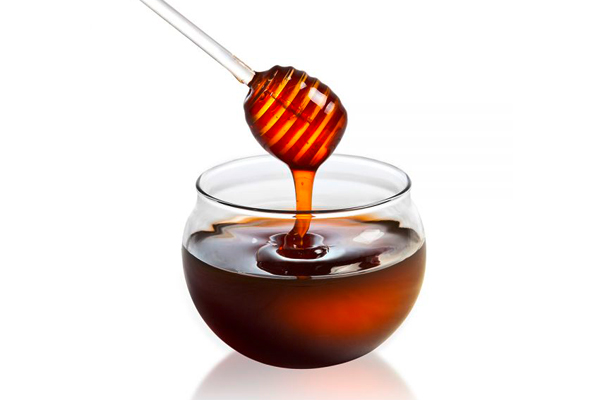
The European Commission has entered “Strandzha Honeydew Honey” in the register of Protected Designations of Origin (PDO), the press service of the institution announced. The honey, characteristic of the Strandzha region, has a dark brown to black colour and a bitter taste. Its aroma and sweetness are not as strongly pronounced as in other types of honey. The liquid elixir contains a large number of free amino acids, the more important of which are aspartic acid, alanine, arginine, cystine, glycine, glutamic acid, histidine, lysine and methionine. The mineral substances in the honeydew solution are 5 to 9 times more than in its nectar variant. One hundred grams of honeydew honey contain 323 kcal, 77.3 g carbohydrates, iron, calcium, sodium, potassium, magnesium and phosphorus. The trace elements in it are in almost the same proportion as in human blood. It contains the monosaccharides – glucose and levulose, which are absolutely necessary for the normal functions of the liver, as well as vitamins B1, B2, PP, B12 (about 16 times more than in apples and apricots), B6, folic acid, biotin and others. The rich mineral composition of honeydew honey also determines its alkalizing effect.
At the ceremony for the awarding of the certificate of registration of the honey to Manol Todorov, Chair of the beekeepers’ association “Strandzha Honeydew Honey”, and to Elka Bozhilova, representative of the Ministry of Agriculture, Food and Forestry of the Republic of Bulgaria, which took place on 3 April in Brussels, the official guests were the Commissioner for Digital Economy and Society Mariya Gabriel and the Commissioner for Agriculture and Rural Development Phil Hogan.
The initiative for registration comes from the producers’ group “Strandzha Honeydew Honey”, which submitted the application to the Ministry of Agriculture, Food and Forestry in April 2016. After the national procedure passed without objections, in April 2017 the application was sent to the EC for review.
The registration is expected to open up new prospects for beekeepers in the region and to stimulate the economic development of the municipalities of Sozopol, Primorsko, Tsarevo, Malko Tarnovo and Sredets, where honeydew honey is traditionally produced.
Currently there are seven foods with protected designations in Bulgaria, five of which are foods with a traditional-speciality character – fillet “Elena”, cured neck “Trakia”, “Pastrama Govezhda” (cured beef), “Lukanka Panagyurska” and roll “Trapezitsa”. The register also includes two products with Protected Geographical Indication – Bulgarian rose oil, which may be produced on the territory of the Rose Valley, as well as “Gornooryahovski Sudzhuk”, which may be produced only in Gorna Oryahovitsa.