

I. Main diseases and pests
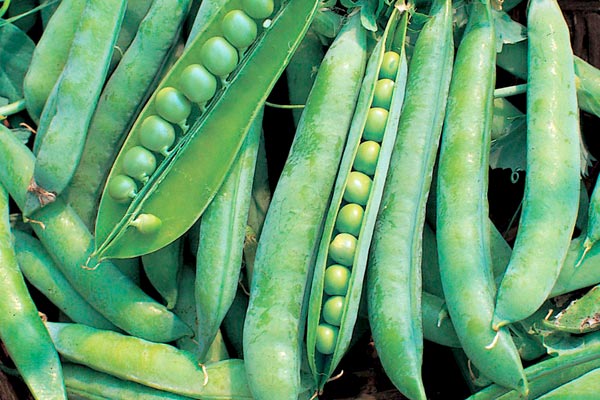
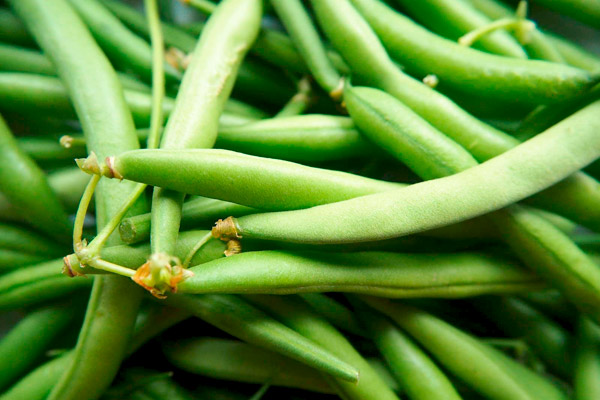
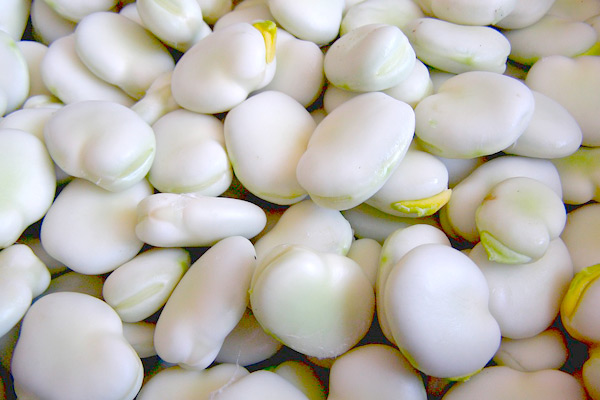
The crops most commonly grown in the vegetable garden are: garden bean, garden pea and broad bean. At different stages of their development they are attacked by a large number of diseases and pests belonging to various orders and families.
Diseases of garden bean
Viral diseases
Among the viral diseases affecting garden bean, those of greatest economic importance are the seed-borne ones – Bean common mosaic virus (Bean common mosaic virus - BCMV), Bean common mosaic necrosis virus (Bean common mosaic necrosis virus - BCMNV) and Cucumber mosaic virus (Cucumber mosaic virus - CMV). The first two viruses are narrowly specialized on leguminous crops only, whereas the latter is polyphagous and occurs on many cultivated and wild species. The three viruses are transmitted mechanically and by aphids, but their mass dissemination is through seed. The symptoms they cause on plants are leaf deformation and mottling. Later, typical mosaic symptoms, blistering, curling and growth depression appear. Plants infected at an early stage die, while later infection leads to severe yield reduction, and the seeds are small, deformed and mottled. Under heavy infestation in the crops, infected seeds may exceed 50%.
Bacterial diseases
Bacterial blight (Xanthomonas axonopodis pv. phaseoli (Smith) Vauterin et al)
This is the economically most dangerous disease of bean in Bulgaria. It occurs every year and losses range from 10 to 45%. Under favourable conditions for its development it can cause mass damage – high temperatures (280C) and high soil and air humidity. It is transmitted through seed. When infected seed is sown, the seedlings die even before emerging above the soil surface. Oily spots appear on the cotyledons of emerged plants and they die. On the true leaves small oily spots develop, which enlarge, later scorch and the tissue tears. On the pods the spots are darker green and oily, later they dry up and become reddish-brown, sunken, covered with dried bacterial exudate. The pathogen reaches the seeds and yellowish spots appear on them.
Halo blight (Pseudomonas syringae pv. phaseolicola (Burkh.) Young, Dye et Wilkie)
It most often occurs together with bacterial blight. It is transmitted with the seed material. From sown infected seeds either plants with mosaic-mottled leaves develop, which soon die, or spots appear on the cotyledons, also causing the death of young seedlings. On the true leaves, first on the lower side, angular oily spots appear. As the spots enlarge, they are surrounded by a yellow halo. The spots on the pods are oval, watery. Later they become slightly sunken and turn reddish-brown. Diseased plants form smaller, wrinkled, discoloured seeds. The pathogen survives in infected plant residues for more than one year and is disseminated by water droplets during rainstorms.
Fungal diseases
Dry root rot (Fusarium solani f.sp. phaseoli (Burkh.) Snyder et Hansen)
It usually causes moderate losses, but sometimes they can be significant. Reddish discoloration appears on the root tips, which extends towards the stem base, and the cortex cracks. The aerial parts turn yellow and lag in development. Pods ripen prematurely. Pink sporulation of the fungus appears on the surface of the affected roots. Diseased plants often die or form additional roots in order to survive. The fungus develops best at high temperature (22-320C), high soil moisture and acidic soils.
Rhizoctonia root rot (Rhizoctonia solani Kuhn)
When infection occurs soon after sowing, damping-off appears. After emergence, elongated sunken spots with a reddish-brown colour appear at the stem base. They hinder sap flow and as a result the plants lag in development.
Anthracnose (Colletotrichum lindemuthianum (Sacc.&Magn.) Br. Et Cov.)
On the lower side of the true leaves and on the petioles reddish-brown spots appear along the veins, which penetrate into the adjacent tissues. On green pods small brown dots are observed, which quickly reach 1 cm. The spots are sunken, dark brown to black, surrounded by a brownish-red halo. On infected seeds dark brown sunken spots appear.
Powdery mildew (Erysiphe polygoni D.C.)
Small light spots appear on the leaves, which enlarge and become covered with a white powdery coating of the pathogen’s spores. On the underside of the spots the tissues die and turn reddish-brown. Under severe attack the leaves scorch and the crop may be defoliated. The same symptoms can be observed on petioles, stems and pods. It develops at moderate temperature (210C) and humidity (65%). Many races have been identified.
Rust (Uromyces phaseoli typica Arthur)
Rust is a widespread disease of bean. Losses range from 13 to 100% and are greatest when infection occurs in the pre-flowering and flowering periods. Rust attacks the leaves, sometimes the stems and pods. On the lower leaf surface small, white, raised spots appear. They gradually enlarge and become reddish-brown pustules filled with spores. Plants lag in growth. Favourable conditions for spore germination are temperatures of 17-220C and humidity above 95% for at least 18 hours. Many races have been identified.
Pests of garden bean
Glasshouse whitefly (Trialeurodes vaporariorum Westw.)
Damage is caused by larvae, nymphs and adults; the injury is both direct and indirect. Direct damage consists in sap sucking by the larvae, which leads to leaf yellowing and plant weakening. Indirect damage results from the excretion of unassimilated carbohydrates during larval feeding in the form of “honeydew”, on which the leaves blacken.
Black bean aphid (Aphis fabae Scop.)
The aphids suck sap from the underside of the leaves and from the shoot tips of the plants. Attacked leaves lag in development, become deformed and curl. At high pest density the damaged leaves, shoot tips and pods wilt. Severely infested plants lag in development. Indirect damage is expressed in the excretion of unassimilated carbohydrates by the larvae in the form of “honeydew”. In addition, they transmit viral diseases.
Tobacco thrips (Thrips tabaci Lind.)
Adults and larvae cause damage by sucking sap from the leaves and the vegetative apex of the plants. At the feeding sites small whitish spots are formed. At higher density these spots enlarge and coalesce. Leaves turn brown and dry up. It also sucks sap from small pods. Tobacco thrips causes not only direct but also indirect damage by transmitting a number of viral diseases.
Two-spotted spider mite (Tetranychus urticae Koch.)
The motile stages feed on the underside of the leaves. They spin webbing which, under heavy infestation, can completely cover the leaves and encompass the flowers, fruits and branches of the attacked plants. The pest sucks sap, taking up chlorophyll grains as well. At the feeding sites small pale greenish spots are formed. The spots coalesce and the leaf becomes marbled. The spider mite prefers older leaves with reduced water content and senescent drought-stressed plants. Under heavy infestation such plants dry out.
Bean weevil (Acanthoscelides obtectus Say.)
The larva causes damage by feeding on the endosperm of the seed, boring galleries which it subsequently deepens and widens. The seeds become filled with feeding residues, excrements and larval skins. Several larvae may develop in a single seed. After completing its development the larva gnaws the seed coat in the form of a round “window” through which the adults emerge. Damaged seeds have impaired taste qualities and are unfit for consumption and feed.
Cotton bollworm (Helicoverpa armigera Hbn.)
Initially, the caterpillars of the cotton bollworm, after hatching, feed on those parts of the plants on which the eggs were laid. Young caterpillars first skeletonize and then chew holes in the leaves. The most harmful are the caterpillars of the second generation. On pods the caterpillars make round holes, bore inside and feed on the soft seeds. Among cutworms on bean, the species turnip moth (Agrotis ypsilon Rott.) also occurs. The caterpillars cause feeding damage on leaves, stems and sometimes on green pods.
Bean pod borer (Etiella zinckenella Tr.)
Damage is caused by the caterpillars, which externally gnaw the seeds in the pods. When the seeds are small, the caterpillars consume them completely and only excrements and exuviae, entangled in silken threads, remain in the pod. The feeding injuries on the seeds are external, often extending halfway through. If the caterpillars cannot complete their development on one pod, they move to another.
In some years, under favourable climatic conditions, infestation by bean flies (Hylemya cilicrura Rond. and Hylemya trichodactyla Rond.) may also be observed.
Diseases of garden pea
Bean yellow mosaic (Bean yellow mosaic virus (Phaseolus virus 2)
It is characterized by vein clearing, mottling and deformation of the leaves. Slight growth suppression is observed. The virus is transmitted mechanically and by aphids.
Bacterial blight (Pseudomonas syringae pv. pisi Dye et Wilkie)
It attacks all above-ground parts of the plants. Small watery spots appear on the leaves, which later turn brown. The spots enlarge and may coalesce, but always remain limited by the veins. The leaves turn yellow and later scorch. The spots on the stems are elongated and may sometimes girdle the stem, which then dies. Watery spots may also be observed on pods and seeds. It develops more strongly in rainy years. Optimum temperature 25-28°C.
Downy mildew (Perenospora pisi Sydow)
On the leaves yellowish spots with irregular shape appear. Their lower surface is covered with a whitish coating of the fungus sporulation. Later the spots scorch. It develops in cool years with frequent showers. It survives in plant residues in the soil. It can also be transmitted by seed, but this mode has no economic importance.
Ascochyta blight (Ascochita pisi Libert)
The first symptoms appear on the leaves as small reddish spots, which later enlarge and fade in the centre. On the stems the spots are elongated. The spots on the fruits are similar to those on the leaves but slightly sunken. Brown spots appear on the pods. The disease spreads massively in rainy weather.
Pests of garden pea
Pea aphid (Acyrtosiphon pisi Kall.)
Under mass infestation it causes the most severe damage at the beginning of pea flowering. Attacked plants lag in development, the upper leaves become smaller and slightly curve downward. Under heavy infestation flowers drop and pods remain small.
Pea (root-nodule) weevils (Sitona spp.)
Adults are small grey-black beetles which, early in spring after the weather warms up, emerge and start feeding on the youngest and most tender leaves of the plants. They make semi-circular notches. In some years, under mass infestation, they can destroy entire crops. The larvae cause damage to the root nodules. Thus the amount of fixed nitrogen is reduced and, consequently, pea yields decrease.
Pea weevil (Bruchus pisi L.)
The adult is a small black beetle with grey or white stripes on the back and wings, which give it a grey colour. It feeds on flower organs (pollen, petals) during budding and flowering. The pest lays its eggs on young pods (end of May/beginning of June). The larva hatching from the egg bores through the wall of the young pod and penetrates the seeds. Only one larva develops in a seed. Damaged seeds have round holes and appear “perforated”, with reduced sowing quality.
Pea leafrollers (Laspeyresia nigricana Step. and L. dorsana L.)
These pests develop one generation per year. The caterpillars feed on the seeds by externally gnawing them. On damaged seeds there is webbing, excrements and skins. There is one caterpillar per pod, which damages the seeds without moving to another pod.
In some years, serious damage in pea crops may be caused by the pea (legume) five-spotted weevil (Tychius quiquepunctatus L.), pea midge (gall midge) (Contarinia pisi Wint.) and the bean pod borer (Etiella zinkenella T. R.).
Control of diseases and pests of garden legume crops is based on a system of agronomic, physical-mechanical, biological, chemical and other measures. They can be effective if properly synchronized with the phenophases of plant development, the economic threshold levels of pests and the correct choice of plant protection products. The more important practices are as follows:
- Sowing legume crops at the most favourable dates for the region, using healthy seeds with good germination, free from diseases and pests;
- Growing varieties resistant to diseases and pests;
- Careful selection of fields – on higher and well-ventilated sites;
- Early sowing limits infestation by aphids and viral diseases;
- Observance of spatial isolation between annual legume crops and old lucerne (alfalfa) stands of at least 500 m, which limits the spread of root-nodule weevils, black bean (beet) aphid and lucerne aphid;
- Application of 2–3 year crop rotations will limit infestation by dry root rot, Rhizoctonia rot, anthracnose, bacterial blight and Ascochyta blight, as well as mass multiplication of seed weevils, black bean (beet) aphid, pea weevil, pea midge and pea leafrollers. Bean should not be sown after potato;
- Regular weeding in crops, since some weeds serve as food or oviposition sites for pests – pea leafrollers, soybean moth, black bean (beet) aphid, polyphagous cutworms;
- Emergence. In a wet and cool spring, during the emergence period of bean, Rhizoctonia rot, anthracnose and damage by bean flies may be observed. To limit infestation by these pests, it is necessary to select fields properly, to carry out sowing at the optimum depth, and, when applying farmyard manure, to plough it well into the soil, since scattering it on the surface attracts flies;
- During the vegetation period, all agronomic practices are applied – irrigation, soil cultivation, fertilization, etc., favouring the development of vigorous and strong plants with higher resistance to diseases and pests;
- At the stage of second–third true leaf (April) root-nodule weevils, Rhizoctonia rot, halo blight and anthracnose appear. Later in the vegetation, during the budding period (April–May), black bean (beet) aphid appears. Warm weather and high air humidity favour the development of the pest; the absence of heavy and intense rains during the aphid reproduction period leads to an increase in population density. Beneficial species such as ladybirds, syrphid flies, lacewings, etc. in legume crops limit aphid multiplication. Ladybirds occur at highest density in May and July, lacewings from May to September, and syrphid fly larvae from May to August;
- During flowering (May–June) and the formation of the first pods of bean, pea and broad bean, pea weevil, pea midge, pea leafrollers, soybean moth (first generation), hazel weevil, vetch weevil and the pea (legume) five-spotted weevil are observed. The green pea aphid also appears. Two or three treatments of the crops are carried out, the first at the beginning of flowering and the second and third at 7 to 14 day intervals;
- During the period of yellowing and at the beginning of pod ripening in bean (July–August) the bean weevil lays its eggs. During this period the two-spotted spider mite also causes damage. In hot and dry weather, the damage caused by this pest can reach levels that compromise the harvest. Harvesting of annual legume crops (bean, pea, broad bean, etc.) in August–September is carried out within a short period and without leaving residues. By deep ploughing, shattered pods and seeds are buried at greater depth, thus hindering the emergence of adult seed weevils. This measure also significantly reduces the density of root-nodule weevils and the pea (legume) five-spotted weevil, which most often damage pea and broad bean.
Timely plant protection measures, optimally combined with good agronomic practices, ensure legume crops in the vegetable garden that are free from diseases and pests.