

![MultipartFile resource [file_data]](/assets/img/articles/прогноза-май-2025.jpg)
After the cooler-than-usual weather at the beginning of May, an improvement in the thermal conditions and an acceleration of the vegetative processes in agricultural crops are forecast for the middle of the first ten-day period. During the ten-day period, precipitation of agronomic significance and an improvement in soil moisture reserves are forecast – of key importance for the normal course of the reproductive phases in the development of winter cereal crops. In wheat and barley, the stem elongation, transition to heading, and heading stages will be observed, mainly in crops in some locations in the eastern and southern regions of the country. In maize and sunflower, emergence and initial leaf formation will take place. During the period, winter cereal crops must be monitored for pests: sunn pest, cereal leaf beetle, oat aphid, and when their population density exceeds the economic threshold of harmfulness, treatment must be carried out at the first opportunity.
In vineyards, the appearance of caterpillars of the first generation of the European grapevine moth and damage caused by mites (yellow grapevine mite) must be monitored.
Frequent precipitation during the period will create favourable conditions for the development of fungal diseases. An increase in primary infections of downy mildew in vineyards is expected, which requires timely preventive spraying after the weather stabilizes.
During the first days of May, soil temperatures at a depth of 10 cm in the field areas of the country will be at suitable levels for sowing warm-loving spring crops: cotton, peanuts, beans, watermelons, melons, etc.

During the second and the first half of the third ten-day period, the development of agricultural crops will proceed at a moderate pace. The expected precipitation will maintain good soil moisture reserves and the conditions under which grain formation and filling in wheat and barley will take place. During this period, winter cereal crops have high requirements for soil moisture.
The forecast above-normal temperatures in the second half of the third ten-day period will accelerate the development of agricultural crops. At the end of May, in some locations in the eastern and southern regions, the beginning of the milk ripeness stage in wheat and barley will be observed.
In maize and sunflower, leaf formation will take place. Sunflower crops sown within the recommended agrotechnical period will reach the budding stage by the end of May.
Powdery mildew in vegetable crops of the family Solanaceae
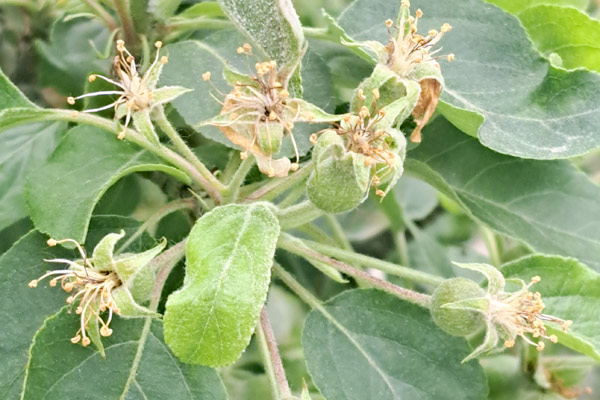
In May, in fruit crops not affected by spring frosts, the formation and enlargement of fruit sets will take place. In vineyards, inflorescence separation will be observed, and at the end of the month – the flowering stage. These stages are critical for infection with downy mildew and powdery mildew.
Rust diseases in common winter wheat
Frequent precipitation in May will create conditions for an increase in the infection background of a number of fungal diseases: in wheat – rusts (brown, yellow) and Fusarium head blight; downy mildews in vegetable crops and vineyards.
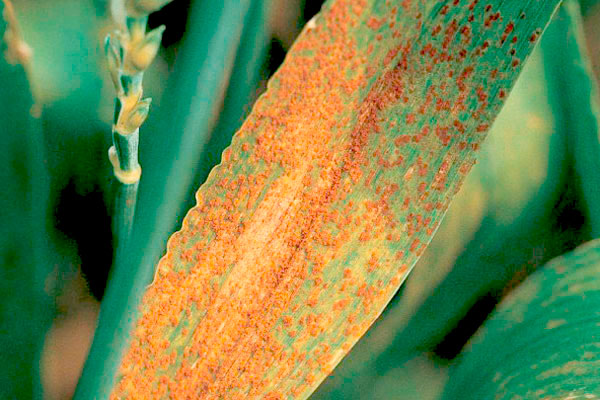
Brown leaf rust in wheat
At the end of the first and the beginning of the second ten-day period, the possibility of frost formation cannot be ruled out, which must be taken into account when transplanting vegetable seedlings.
During the second ten-day period of May, an increased probability of hailstorms is forecast. In case of hail damage, it is advisable that the affected crops be treated at the first opportunity with copper-containing fungicides to promote faster healing of wounds and reduce the risk of secondary infections by pathogens.
Plant protection in vineyards in May
In May, monitoring of winter cereal crops for pests must continue: sunn pest, cereal leaf beetle, and when their population density exceeds the economic threshold of harmfulness, treatment must be carried out at the first opportunity.
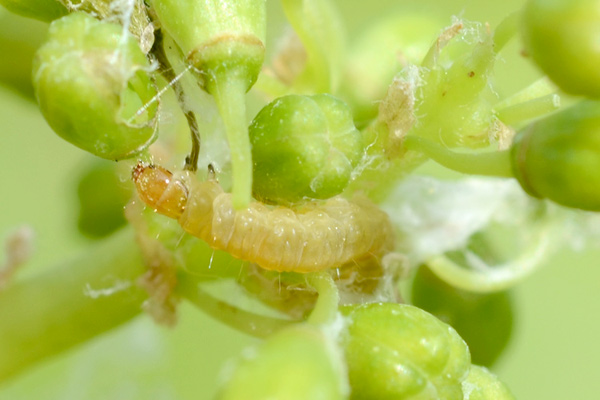
In vineyards, it is necessary to monitor the appearance of caterpillars of the first generation of the European grapevine moth and damage caused by mites (yellow grapevine mite).