

![MultipartFile resource [file_data]](/assets/img/articles/посев-заглавна.jpg)
After the brief cold spell at the end of the second ten-day period of March, with negative minimum temperatures and critical values below minus 3°C for fruit trees that had entered the flowering stage, at the end of March the agrometeorological conditions will undergo a change. During most days of the period they will be determined by unstable weather, with above-normal temperatures that will accelerate the vegetation of agricultural crops.
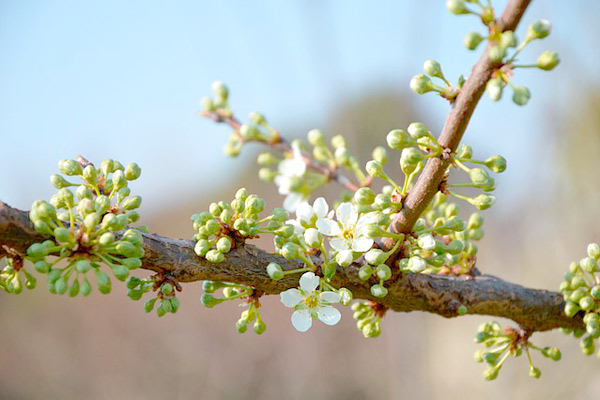
For the fruit crops, without risk of critical minimum temperatures, the following stages will proceed: bud swelling, budding and flowering in stone fruit species.
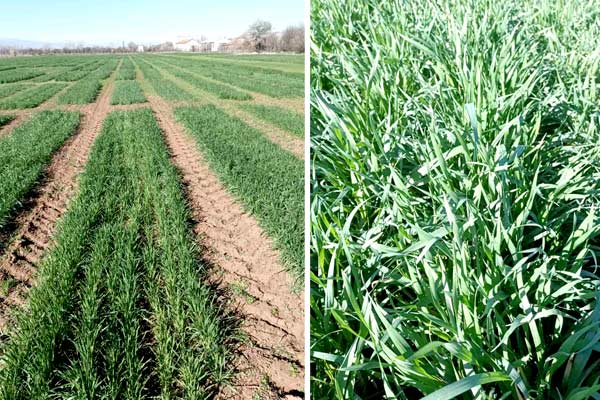
Photo© Assoc. Prof. Zlatina UR and Assoc. Prof. Evgeniy Dimitrov
During the third ten-day period of March, winter wheat will be predominantly in the tillering stage.
“The condition of winter crops for the third ten-day period of March in the region of Central Southern Bulgaria is good,” share Assoc. Prof. Dr. Zlatina Ur and Assoc. Prof. Dr. Evgeniy Dimitrov from the Institute of Plant Genetic Resources, Sadovo. This year, unlike the past 5–6 years, snow fell which, in addition to replenishing soil moisture, also protected the plants from the cold (negative temperatures). Due to the adjusted sowing period – from the end of October to the beginning of November, wheat emerged in November and, as in recent years, it did not enter winter dormancy. The plants tolerated well the cold spell in the second half of February and no yellowing of the stands (plant scorch) has been observed. As a result of the spring temperatures from 5 to 17 March 2025 in the region of Central Southern Bulgaria, the vegetation of common winter wheat accelerated. At present, the stands are in the tillering stage – intensive tillering. So far, there have been no economically significant precipitations in the region, but we hope that the forecast rainfall amounts will materialize and will help in forming normal plants.
After thorough inspections by a plant pathology specialist, no attacks by economically important diseases have been established. The expected rainfall may trigger the development and spread of powdery mildew. Top dressing of the stands with nitrogen fertilizer has been carried out with part of the fertilizer rate, as well as treatments with foliar fertilizers. Spraying with an insecticide to control the cereal leaf beetle (Lema melanopa) is forthcoming.
The cereal leaf beetle poses a serious threat to wheat yields
The expected showers during the period will improve the moisture content in the upper soil layer. Soil moisture reserves in the 50 and 100 cm layers under winter cereal crops in many parts of the country, with the exception of some eastern areas, are unsatisfactory for the beginning of spring. Unusually low, below 65% of field capacity, is the level of soil moisture reserves in places in Northwestern Bulgaria, Nikolaevo agrometeorological station.
The forecast frequent showers over the next period will hinder the implementation of plant protection spraying in fruit crops against the causal agents of a number of diseases: scab, blossom blight (early brown rot), peach leaf curl. More suitable conditions for soil tillage and sowing of medium-early spring crops will occur at the beginning of the period. The next period coincides with the agrotechnical deadline for sunflower sowing in Southern Bulgaria.
Source: NIMH