

During the past period, the agrometeorological conditions were determined by warm weather with above-normal temperatures and without precipitation of economic significance. The limiting factor for the development of agricultural crops was the continuing atmospheric and soil drought. The insufficient water content in the upper soil layer hindered quality soil tillage and the sowing of wheat and barley within the agrotechnical time frame. According to information from the observation plots of the agrometeorological network of NIMH, the phenological development of the autumn crops is different, depending on the available water reserves in the surface soil layer. At the stations of Knezha, Sliven and Ivaylo, the pre-sowing preparation has been carried out, but sowing has not started. In Karnobat, sowing has been completed, but germination has not been recorded. The most widely observed phase is germination, which has been recorded in Nikolaevo, Razgrad, Tsarev Brod, Shabla, Yambol, Plovdiv and Haskovo. The beginning of emergence has been reported in Bazovets, and mass emergence in D. Chiflik and Silistra. The most advanced in their development are the early-sown stands in Novachene, Pavlikeni and Glavinitsa.
During the next seven-day period, the weather will again be characterized by temperatures above the climatic norm, and precipitation of economic significance is unlikely. During this period as well, the factor limiting the normal development of the autumn crops will be the insufficient moisture in the surface soil layer. The germinated stands are expected to enter the emergence phase.
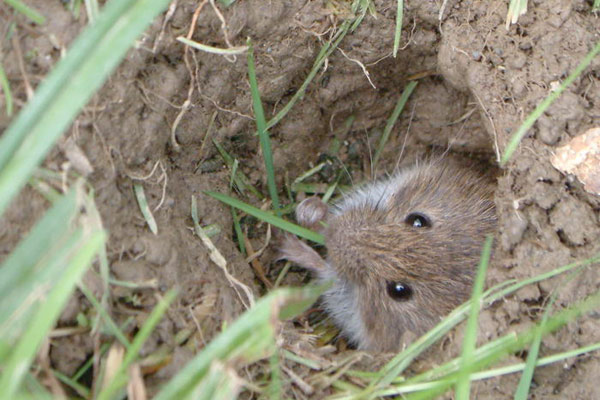
During the period, in wheat and barley stands undergoing leaf formation, monitoring for the occurrence of the common vole should be carried out. Control measures against the pest must begin when two active colonies per decare are present.
The conditions will be suitable for carrying out autumn plant protection spraying in orchards. For pome fruit species (apple, pear), treatment with a 5% urea solution is recommended to limit scab infections. After mass leaf fall, in stone fruit species it is necessary to apply spraying with a 2% Bordeaux mixture against bacterial blight, peach leaf curl, shot hole disease and early brown rot.
Source: NIMH