

The average monthly temperature in June is between 18-22℃ for the lowland areas and 11-16℃ for the high fields. Precipitation during this month ranges from 60 to 90 liters per square meter.
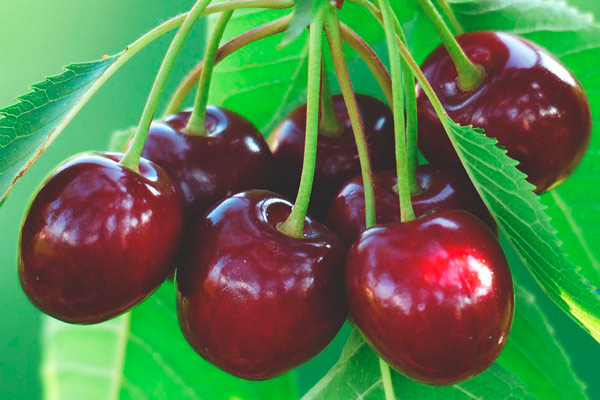
In June, cherries, sour cherries and strawberries ripen massively, as well as early varieties of raspberries, apricots, peaches, pears and apples. Care for the protection of the fruit crop and the trees continues.
In June, spraying of apple trees continues against scab and powdery mildew, the codling moth, San Jose scale and aphids. For pear trees, treatments against scab, white and brown leaf spots, and against the common pear psylla must be continued.
For quinces, it is necessary to spray against brown rot and fruit moths.
In June, care continues for the protection of pear, quince and apple from fire blight. To limit the damage, sanitary pruning is carried out to remove infected branches and shoots (cut 30-40 centimeters below the point of infection), after which the wounds are coated with oil-based paint to which copper-containing products are added – Bordeaux mix 20 WP, Bordeaux mixture, Funguran OH 50 WP, Champion WP. Pruning tools are disinfected after each cut with methylated spirit or in bleach diluted with water in a ratio of 1:10. In addition to pruning, to protect trees from infection, spraying is also carried out with: Bordeaux mixture – 1%, Funguran OH 50 WP – 0.15%, Champion WP – 0.15%. Under favorable conditions for the development of the disease, in susceptible varieties, cool and humid weather, as well as in the presence of infection that was not contained in May, preventive spraying is carried out at intervals of 5-7 days.
Medium- and late-ripening cherry varieties and sour cherries at the beginning of June need to be protected from cylindrosporiosis (white rust), brown rot and cherry fruit fly.
For peach, spraying continues against powdery mildew, shot-hole disease, brown rot, Anarsia, oriental fruit moth and aphids.
One of the following fungicides is used against powdery mildew:
For raspberry at the beginning of June, spraying is carried out against didymella, anthracnose, cane blight (leptosphaeriosis), grey mould, raspberry agrilus, raspberry gall midge and raspberry beetle.
For spraying against diseases and pests in fruit crops to be effective, they must be carried out in a timely and high-quality manner. It is also very important to determine the need for a given treatment, which is related to specific monitoring to determine the pest population density and, when the economic thresholds of harmfulness are exceeded, to carry out spraying.
Information on fungicides and insecticides authorized for use can be found in issue 5/2018 of the journal “Plant Protection”.